































 Subscribe to my YouTube
 Join My Facebook Group
 Connect on Linkedin
 Free SEO Tutorials
 SEO Case Studies
 Links That Rank


Link building is dead, right?
Wrong!
The truth is that there is a ton of evidence to show that backlinks still are one of the top SEO ranking factors.
Link building statistics show that your backlinks are like social proof in the eyes of Google. The more social proof you get from links, the more Google will trust your website.
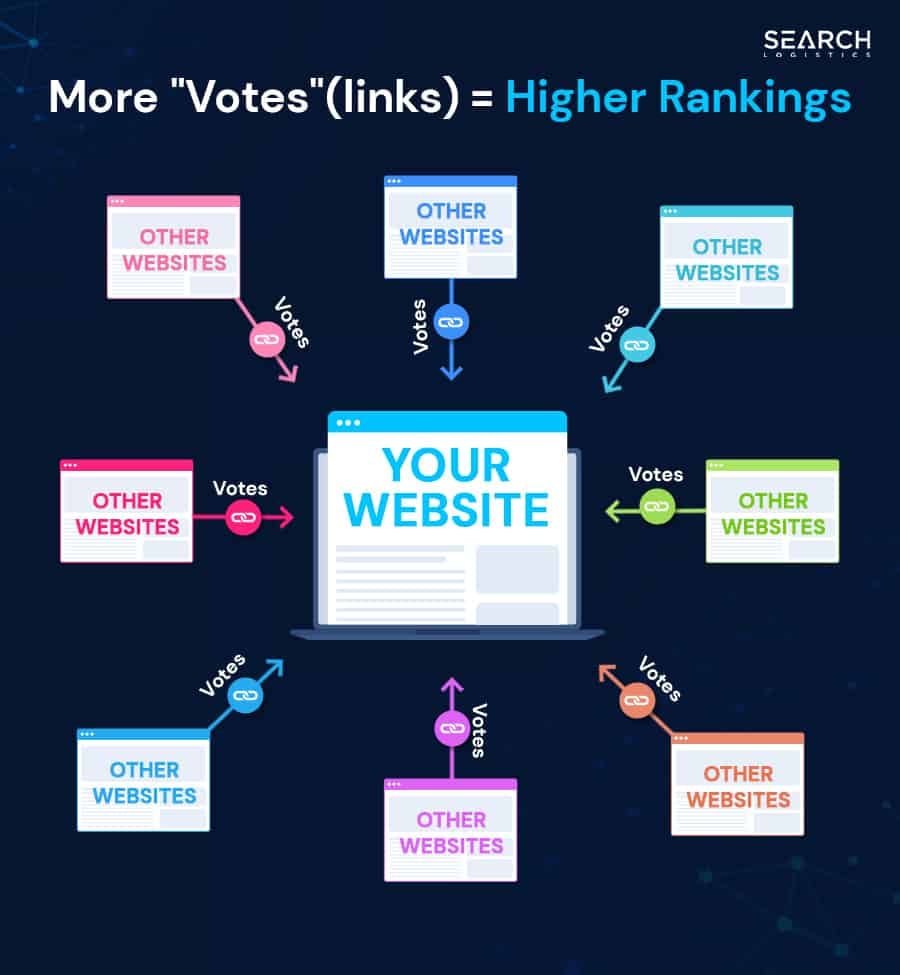
More trust = higher rankings.
But before you go out and start building tons of links, there are some things you need to know.
How you build backlinks and the quality control you implement will play an important role in how much they impact your website.
The following link building statistics explain why quality links are now more important than ever and what kinds of links you should be building.
What Will I Learn?
Key Link Building Statistics
SEO experts still say link building is one of the 3 most important SEO ranking factors. But what sort of results can you expect from quality link building?
These are the key link building statistics that you need to know:
- 73.2% of SEO professionals believe backlinks influence the chance of appearing in AI search results.
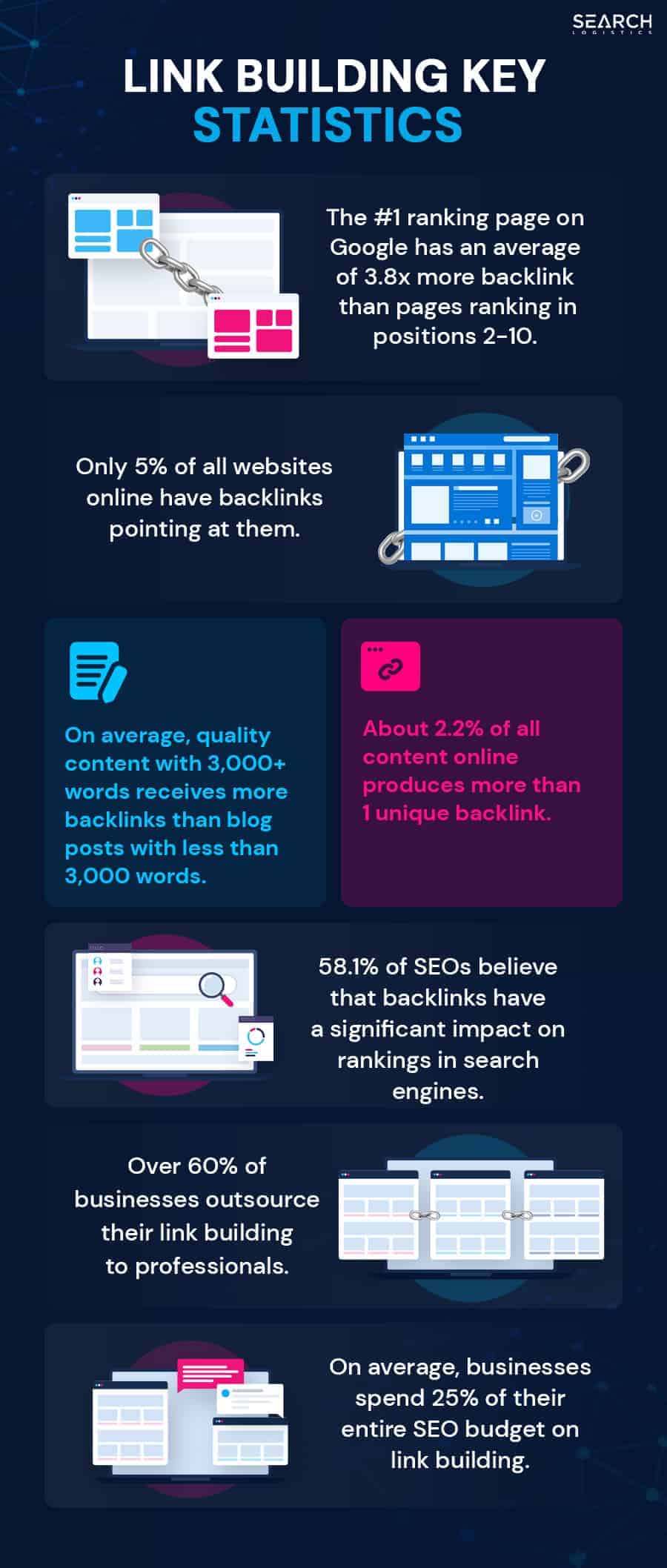
- The number 1 ranking page on Google has an average of 3.8x more backlinks than pages ranking in positions 2-10.
- Only 5% of all websites online have backlinks pointing at them.
- Quality content with 3,000+ words receives more backlinks on average (about 3.5 times more), than shorter articles.
- About 2.2% of all content online produces more than one unique backlink.
- 58.1% of SEOs believe that backlinks have a significant impact on rankings in search engines.
- 53% of marketers believe that link building will continue to have a significant impact on rankings in the future and 41% believe it will have less of an impact.
- 92% of marketers believe that links will still be a key ranking factor in Google’s algorithm in the next 5 years.
- 41% of SEO experts consider link building to be the single most challenging part of search engine optimisation.
- Over 60% of businesses outsource their link building to professional agencies and contractors.
- 13% of SEO experts believe that link building is the most valuable SEO tactic today.
Most marketers and SEO professionals believe link building is an essential part of SEO today and will continue to be in the future.
Link Building Trends Statistics
Looking for the latest trends in link building?
Here are 6 link building trends that you need to understand and take advantage of right now.
Trend #1 – Digital PR Has Become The Most Popular Link Building Tactic
The link building game has changed.
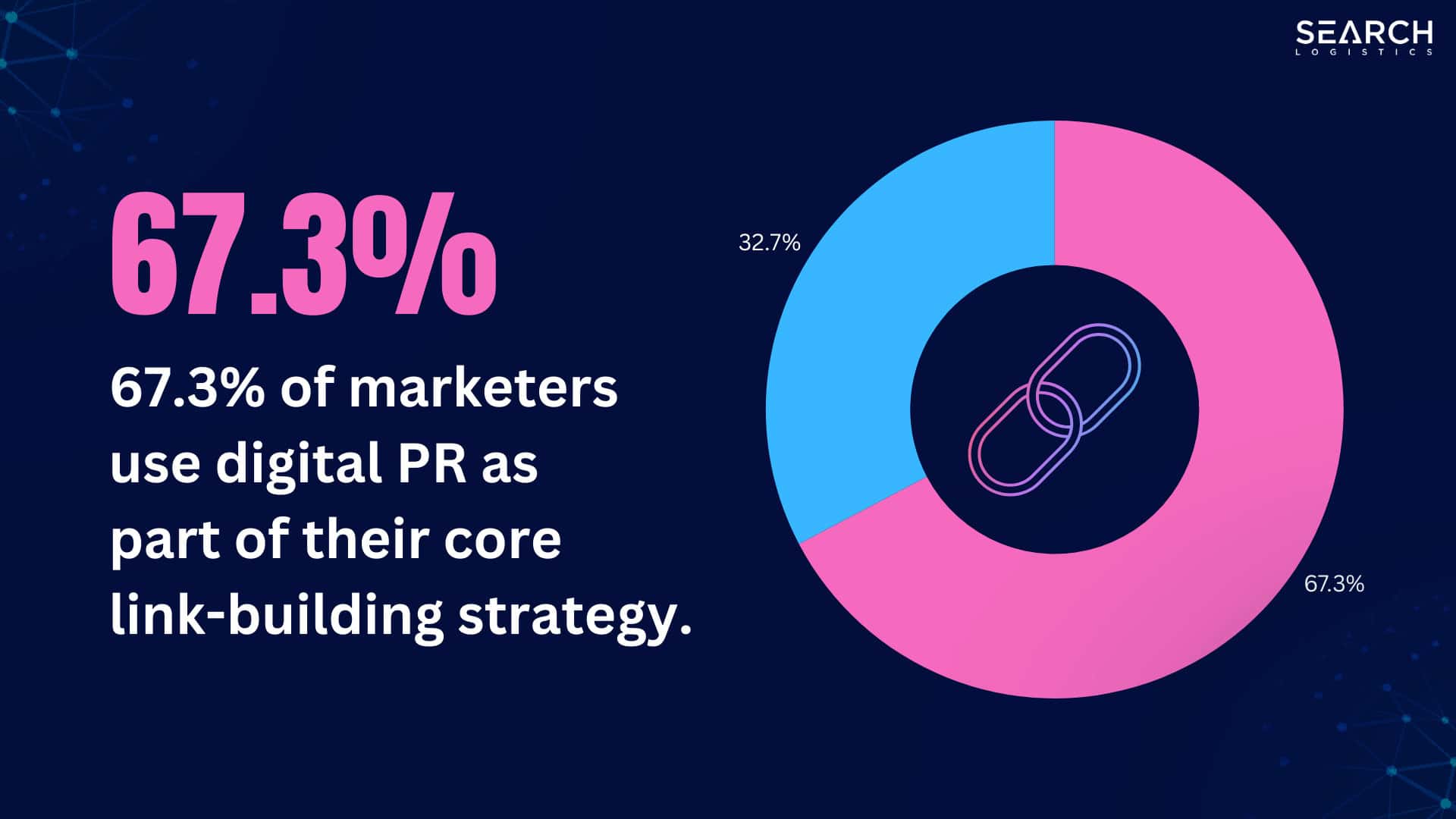
Digital PR is now the king of all link building strategies, with 67.3% of marketers using it as part of their core link building strategy.
Why this shift?
Short answer: Digital PR generates quality links from major publications.
The kinds of links you can’t buy and have to earn. They offer unmatched authority, and one campaign could result in 40+ high quality links.
But Digital PR is expensive, and you aren’t guaranteed to get any quality links.
In fact, on average, it takes 38 days to get your first link and often 3-6+ months before you see any real traction.
And it’s not cheap…
The average digital PR agency will charge $3,000+ to execute a high-level digital PR campaign.
That’s why SEO agencies and in-house teams are 3x more likely to use digital PR compared to independent website owners.
Here’s the breakdown of digital PR popularity as a link building tactic:
| Type | PR Link building Popularity |
|---|---|
| Website Owners | 6.02% |
| Freelancers | 13.59% |
| In-House SEO | 23.78% |
| Agencies | 31.95% |
As you can see, only 6% of website owners use digital PR regularly, which is significantly less than the 23.78% of SEO agencies.
While digital PR is the most popular link building strategy right now, it’s not for everyone. Campaigns are expensive, and it takes much longer to execute.
Trend #2 – Link Builders Use AI SEO Tools To Get Backlinks
AI tools have completely invaded the SEO world.
But one area that AI has really taken over is link building.
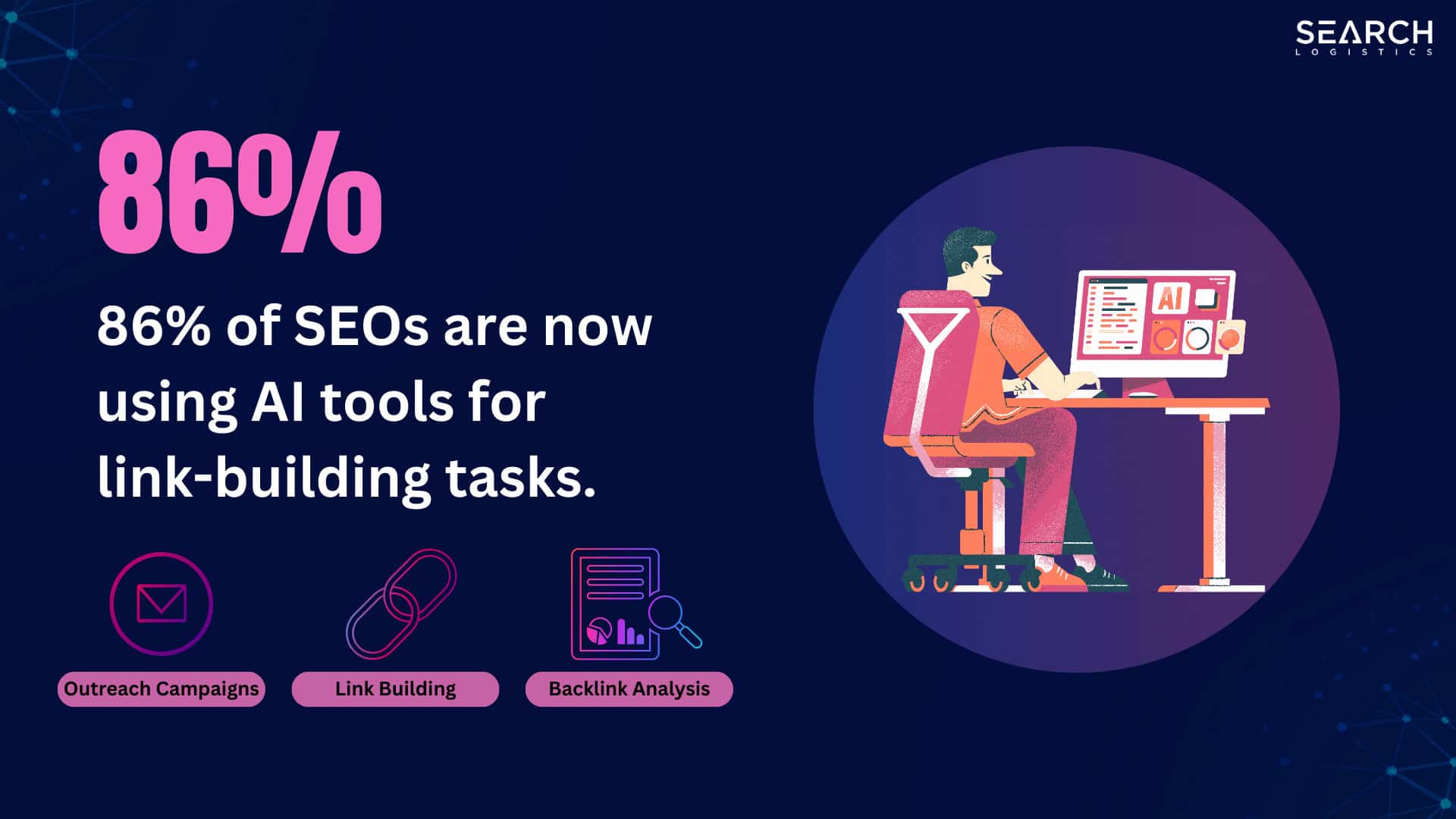
86% of marketing professionals are now using AI SEO tools for link building campaigns, backlink analysis and outreach.
If you build links and aren’t taking advantage of AI, you’re in the minority.
Let me explain:
AI isn’t just used to write content.
It actively helps SEOs find, evaluate, outreach and secure high-quality backlinks faster than ever before.
Here’s the old way of link building before AI…
You manually comb through hundreds of websites, checking:
-
- Domain authority
- Relevance
- Link profiles
…and content to figure out which websites were worth reaching out to. It often took days just to build a decent prospect list.
That’s not the case anymore.
AI is transforming link building.
83% of link building platforms are using AI for advanced link quality assessment.
What took hours now takes seconds as AI can comb through hundreds of links, reducing the risk of spammy and toxic backlinks.
52% of digital marketers are using AI to predict and prioritise link prospects that will provide the biggest SEO impact on their site.
It’s never been easier to predict which links will boost your SEO the most based on real-time competitor and SERP data.
And it’s not just necessarily marketers and SEOs using AI for backlinks…
Over 70% of major search engines now use AI technology to detect, devalue and penalise sites building low-quality links.
Trend #3 – Unique Content With Original Research Attracts Backlinks
Everyone knows that you need unique content.
But what you might not know is that publishing original research is one of the best ways to generate a ton of natural backlinks organically.
What is original research?
Any kind of test or research that you do yourself. It’s as simple as writing content about how you conducted the test and your results.
Easy, right?
Here is an example of my original research with the fastest WordPress hosting:
- I signed up for 12 different hosting companies
- I ran three tests to see which one was the best

This single post has attracted hundreds of powerful links from other sites.
Think about your own niche and look for questions that people are always asking. This can help you come up with ideas for doing your own original research.
Trend #4 – Link Building Is Getting More Competitive Than Ever
Most website owners now know the value of a link.
There are also more and more people:
- Building their own links
- Investing in link building services
That means that the link building industry has become very competitive.
Outreach results are falling. Broken link building is tedious and rarely worthwhile. Even guest posting has become a costly strategy.
What do you do then?
Simple – Go back to the proven and value-driven link-building strategies that generate quality links consistently.
My favourite link building strategy for this is competitor backlink analysis.

It has the highest return and has helped me consistently build thousands of links over the years. Competitor backlink analysis has also been a great way to build relationships with other website owners in my niche.
Trend #5 – Small Niche Keywords Get More Backlinks
SEO as an industry is getting competitive.
That means ranking for the big, high-traffic keywords is harder than ever.
Most SEOs consider keyword search volume as the most important factor for keyword research.
It makes sense right…
You want more traffic, so you go for the bigger volume keywords.
This is the old way of thinking. You already know that one of the biggest secrets to high rankings is building quality links.
The 1st ranking position in the Google SERPs gets 3.8x more backlinks than all the other results on the page.

Therefore your goal should be to find niche keywords where you can rank your content in the first position.
This will help you attract the backlinks you need to start targeting more competitive keywords.
Trend #6 – Cold Outreach Is Over-Saturated
The truth is that website owners receive hundreds of emails every day.
What’s more?
Only 8.5% of cold emails used for link building generate results. That doesn’t mean that cold outreach is completely dead.
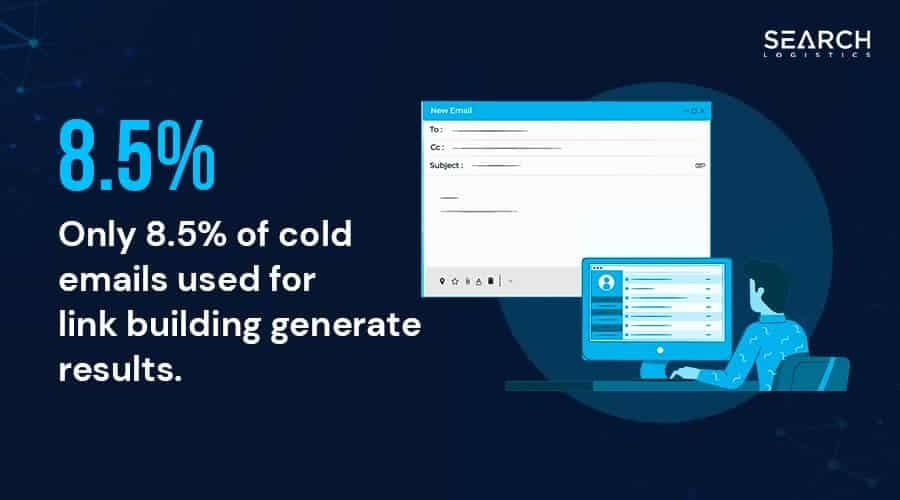
It just means that building links at scale through cold outreach is a numbers game. You need to send out hundreds of outreach emails just to net yourself a couple of good links.
And if you are targeting major publications, the results are even worse.
The average editor gets around 400 emails per day. The odds are slim to none that they will even open your email, let alone reply with a favourable response.
But if your favourite link building strategy is still cold outreach, here are some tips that will improve your chances of success:
- Use a template for your outreach but make sure you personalise and tailor each email to the receiver.
- Outreach emails that are sent mid-week receive up to 2x higher response rates. Send your emails on Tuesday or Wednesday.
- Send at least 2x follow-up emails 5-7 days apart if you don’t get a reply to your initial email.
Remember:
Being successful with email outreach has just as much to do with the link building strategy you pair with your outreach strategy.
Take advantage of any of these link building strategies to combine with your outreach efforts and maximise your results.
Link Building Process & Strategies Statistics
There are tons of link building strategies that you can take advantage of.
But not every link building strategy delivers the results you want. Here are the latest link building statistics about processes and strategies.
Most Used Link Building Strategies
If you know anything about link building, you’ll know that original content is still one of the best (and passive) ways to attract high-quality backlinks.
- “Why” posts
- “What” posts
- Infographics
…receive 25.8% more links than “how to” posts.
The truth is that “how to” posts are very beneficial for your readers, but they don’t attract as many natural backlinks.
90% of marketers use quality content as their core strategy for link building.
Most SEOs believe that content and backlinks work best together as the main way to increase organic traffic.
What sort of content should you be creating?
Short answer – Long form content.
Long-form content gets an average of 77.2% more links than shorter articles.

A recent study also showed that quality content with 3,000+ words receives 3.5 more backlinks on average than blog posts with less than 3,000 words.
The bottom is that you should consistently create high-quality and valuable long-form content that covers topics comprehensively.
This is the type of content that will bag you more backlinks.
But content alone isn’t enough anymore to consistently acquire new links…
Other than creating quality content, there are some other link building tactics that are proven to be effective.
The link building landscape has evolved, and strategies are shifting with it.
These are what SEO pros consider the most effective link building tactics right now:
| Link Building Strategy | Percentage of Link Builders |
|---|---|
| Digital PR | 48.6% |
| Guest Posting | 16% |
| Linkable Assets | 12% |
| Backlink Exchange | 9.3% |
| Niche Edits | 4.6% |
| HARO Link Building | 4.1% |
| Other | 5.4% |
Digital PR is considered by almost half of SEOs to be the most effective link building tactic.
And as I mentioned before, 67.3% of SEOs are using digital PR as their primary link building strategy.
It’s important to mention that digital PR isn’t always going to be an effective strategy in all circumstances.
Why?
Three reasons:
- Success depends on other tactics (like creating a quality linkable asset)
- It doesn’t suit all types of businesses and industries
- Outsourcing to professionals is expensive and may not be worth it
The interesting part about all this is that 64.9% of link builders use guest posts as part of their link building strategy, but only 16% use it as their main way to build links. Linkable assets also remain a quality strategy, with 12% of SEOs using it as their primary strategy
These are two proven strategies that are as old as link building itself.
Link exchanges are no longer used as a top link building strategy. In 2024, link exchanges were used by 10.9% of SEOs.
The reason for the drop off is most likely due to the fact that search engines and LLMs are getting better at detecting them.
And that can land you in some serious hot water with Google penalties.
Here’s the big takeaway from all of these link building statistics…
Diversity is key.
Don’t just focus on one strategy. Pick the top 2-3 link building strategies like digital PR, guest posts and creating linkable assets.
This is the most effective way to build a diverse backlink profile and acquire quality links consistently.
And if you’re worried about spreading yourself too thin, outsource part of your link building efforts to a trusted link building service.
Focus on strategies you’re best at while letting experts handle the rest. That’s how the pros do it!
Most Popular Link Building Tools And Metrics
Here’s the truth:
It’s very difficult to build links at scale without the right tools.
There are a ton of link building tools that you can use for the job. But some tools are far better than others.
What are the link building tools that SEOs are using day-to-day?
These are the most popular link building tools ranked by SEOs as their favourites:
| Tool | Share of SEOs |
|---|---|
| Ahrefs | 59.1% |
| Semrush | 28.2 |
| Other | 6% |
| SE Ranking | 2.7% |
| SEO PowerSuite | 1.5% |
| Moz | 1% |
| Majestic | 0.6% |
| Mangools | 0.6% |
| SEOptimer | 0.2% |
| Serpstat | 0.2% |
What’s interesting is that Ahrefs completely dominates the link building tool game, with 59.1% of users saying it is their favourite tool.
Semrush picks up the next majority with 28.2%.
The remaining tools only share about 13% in terms of popularity.
And that makes sense because Ahrefs and Semrush have been dominant all-in-one SEO tools for the last 15+ years – especially when it comes to link building.
My personal favourite link building tools are:
These are the top 3 pro link building tools that my team uses for our link building services for clients.
But the truth is that building links is just part of the process.
The best SEOs know how to measure the quality of links before they even start building.
518 SEOs were asked if they were only allowed to use one domain authority metric, which one would they pick?
Here are their answers:
- Domain Rating (Ahrefs) – 64.1%
- Authority Score (Semrush) – 15.4%
- Domain Authority (Moz) – 11.6%
- Trust Flow (Majestic) – 8.9%
This is what’s really interesting about this data:
For the last decade, Moz’s Domain Authority (DA) metric has been considered the most accurate way to measure website authority.
But in the last couple of years, there has been an overwhelming move to Domain Rating (DR) from Ahrefs.
Almost two-thirds (64.1%) of surveyed SEOs prefer Domain Rating.
And I’m in the same boat…
My team has consistently found that Domain Rating has been a more accurate measurement when choosing how many links are needed to rank for a specific keyword.
But more important than metrics are results…
And 38% of marketers say that SEO rankings are their top KPI to determine the effectiveness of link building.
This means they build links to a specific page and wait to see if the rankings for that page increase.
As AI tools and features start to take over SEO, it’s clear that the efficiency, scale and effectiveness of campaigns are greatly increased.
Companies using AI features as part of their link building campaigns achieve 40% higher link acquisition rates from high authority domains of DR50+ or more.
What’s more?
Enterprise SEO agencies using AI saw response rates increase by 37% and link placement rates increase by 28%.
They also said they saw their link-acquisition time reduce by 22% compared to traditional outreach using AI tools.
This is mostly due to the fact that AI can personalise outreach at scale, meaning emails feel more authentic. 67% of users said that outreach personalisation was making the biggest difference in their campaigns.
AI tools are now an essential part of building quality links.
Outsourcing To Qualified Link Building Services
What about outsourcing your link building?
The truth is that link building is hard work and requires a lot of skill. That’s why tons of businesses (even SEO agencies) outsource their link building.
In fact, SEO agencies spend an average of 32.1% of their entire client campaign budget on link building alone. And the latest link building data proves why outsourcing is often worth it…
Experienced link builders generate an average of 3.57 times more links compared to beginners.
That’s not a small difference, and it’s why a lot of businesses, agencies and freelancers outsource their link building needs to experienced link building services.
This is how link acquisition rates scale with experience:
| Experience | Link Acquisition Per Month |
|---|---|
| Less than 1 year | 7 links |
| Between 1 to 2 years | 13 links |
| Between 2 to 5 years | 15 links |
| Over 5 years | 25 links |
Notice the jumps?
A person with 1 to 2 years of experience can build almost twice as many links as someone with less than a year of experience.
Then the next big jump is when you get to over 5+ years of experience.
Here’s why this matters so much:
Agencies have the highest number of experienced link builders, with 59.4% having over 5 years of experience.
But the big takeaway?
Unless you’re committed to putting in the time to learn link building, it’s often better to outsource. It is important to know the cost in terms of the time it takes to get good at building links.
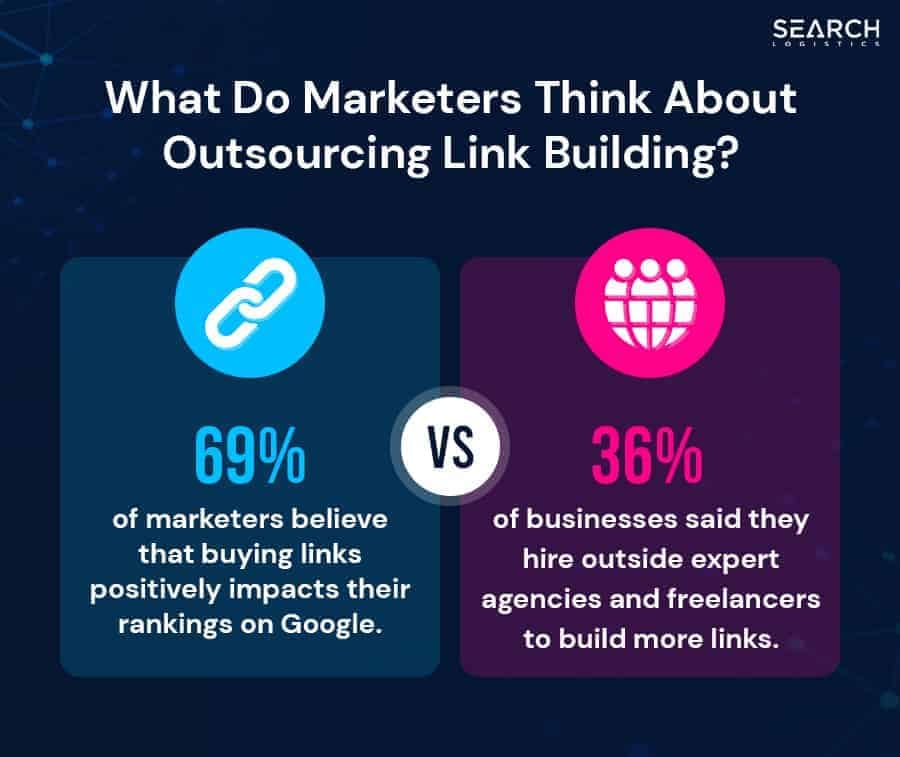
69% of marketers believe that buying links positively impacts their rankings on Google. 36% of businesses said they hire outside expert agencies and freelancers to build more links.
Based on the latest Editorial.Link survey of 113 SEO experts, a striking 92% of respondents believe that their competitors are actively buying links.
Outsourcing your link building to trusted link building services is a proven way to get quality backlinks without taking up all of your time.
In most cases, you’ll get a better ROI. You can focus on growing your business while someone else takes care of the links.
Link Attribute Statistics
“Dofollow” links are the main links that every SEO wants.
But 80% of SEO professionals still believe that nofollow links have a positive impact on rankings. More than that, 48% of marketers reported that “nofollow” link building is a part of their process as well.
Google is on record for saying that nofollow tags are a signal to the algorithm but can still impact your rankings.
When asked the question – “what link building activities do you spend the most time on” here’s what SEO professionals answered:
| Link Type | Percentage of SEOs |
|---|---|
| External Links | 34% |
| Internal Links | 24% |
| Equal Time Spent On Both | 42% |
There is no doubt that external links have a big impact on your search engine rankings.
But what most people don’t know is that internal linking is also extremely important. Internal links are links that point from one page on your website to another page on your website.
Most SEOs believe internal link building to be one of the top SEO strategies today.
What’s more?
51% of SEOs believe bloggers should include two to three internal links in a blog post.

A further 36% of SEOs say 3 to 5 internal links should be included in each post. Ensure you add consistent and relevant internal links to your content.
It’s no secret that anchor text plays a role in the value of a backlink.
But 52% of marketers also believe that having brand mentions in the anchor text of a backlink impacts organic search rankings significantly.
Make sure to diversify your anchor text to include brand mentions as well.
Watch this anchor text strategy video to learn more about developing a powerful anchor text strategy.
Effectiveness Of Link Building
Over 78% of SEO professionals report that link building delivers a positive ROI for their clients, citing it as an essential SEO strategy.
But measuring that ROI isn’t always easy.
52.9% of SEO professionals say accurately measuring their ROI is one of the hardest parts of link building. This is mainly due to attribution issues, delayed ranking improvements, and the indirect impact links have on conversions.
How long does it take before a link starts to help your rankings?
51% of marketers say it takes about one to three months before they actively start to see the impact of their link building efforts.
Our own agency data shows that it’s about 6 weeks before clients see the impact of our own link building services through LinksThatRank.
But the real question is…
What sort of results does link building really drive?
67.5% of businesses find that consistent link building significantly improves their rankings in the Google search engine results pages (SERPs).
And it’s more than just positive effects on Google, too.
73.2% of SEO professionals believe that backlinks significantly influence whether you are recommended in AI answers like ChatGPT and AI search engines, like Perplexity and Google AI Overviews.
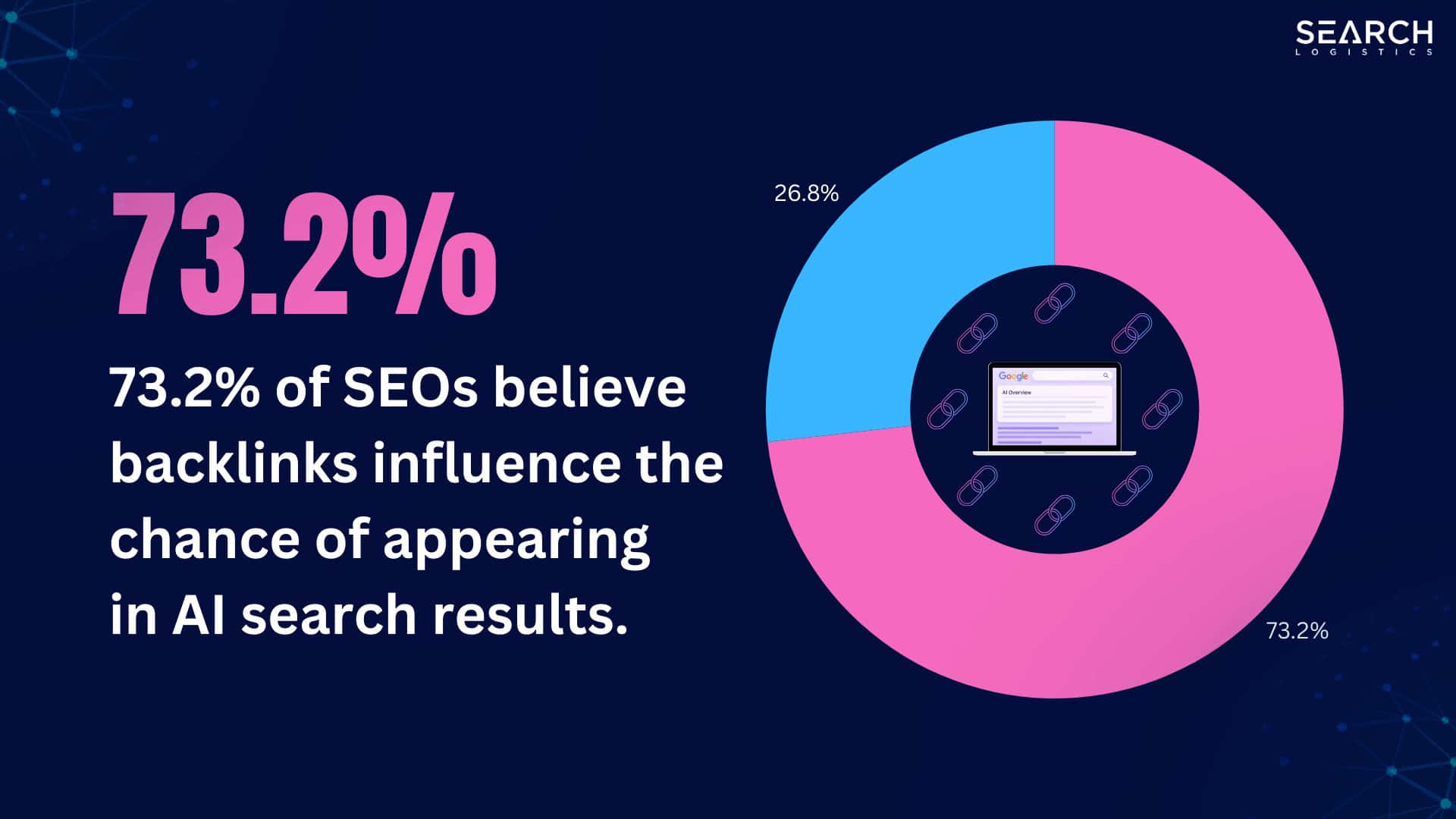
That means that link building will benefit your rankings in traditional search as well as in the future as AI search becomes bigger.
AI Impact On Link Building
Here’s how AI is changing the link building game…
1. Automated Prospecting And Outreach
65% of SEOs use AI tools for automated prospecting and personalised outreach. This is a big win for link builders, taking care of one of the most time-consuming parts of link building.
The AI essentially finds relevant link opportunities and crafts personalised emails at scale. The personalisation can be anything from finding unique information about the prospect or referencing a recent social media post.
2. Link Quality Assessment
83% of link building platforms use AI for advanced link quality assessment.
This can be anything from flagging spammy links to filtering out link opportunities that aren’t relevant.
AI has significantly increased the ability to build higher-quality, more relevant links for your site that actually boost rankings.
3. Predictive Analytics
52% of digital marketers use AI-based predictive features to prioritise which sites are worth targeting for links.
AI can analyse competitor backlink profiles and SERP data in real time to predict which links will deliver the biggest impact on SEO.
Who doesn’t want that, right?
But just as AI makes it easier to build links, it also makes it easier for search engines to stay on top of black hat link building.
Over 70% of major search engines use AI technology to identify, devalue and even penalise low-quality links that violate their guidelines.
That means Google is getting better at spotting site owners building bad links in order to manipulate their algorithm.
Building quality links that look natural and are highly relevant to your site remains more important than ever.
The bottom line is that AI is having a significant positive impact on link building as a whole.
Not only does it allow you to build links faster, but it also makes it easier to acquire higher-quality, relevant links that are more effective for your site’s SEO specifically.
Link Building Cost Statistics
Tons of businesses, agencies and freelancers outsource their link building needs to qualified link building services.
But how much is it likely to cost?
Here’s how much the average link costs from a quality link building service:
| Link Type | Domain Rating/Authority | Cost Per Link (USD) |
|---|---|---|
| Low Power | 20 to 34 | $150 – $200 |
| Mid Power | 35 to 49 | $220 – $300 |
| High Power | 50 to 80+ | $310 – $500+ |
- Low-authority links with a domain rating between 20 to 34 will generally cost between $150 – $200 per link.
- Mid-authority links with a domain rating of 35 to 49, you can expect to pay between $220 – $300 per link.
- High-authority links with a domain rating of 50 to 80+, the cost will be between $310 – $500+ per link.

High-power links with a domain rating of 50+ are extremely hard to acquire. That’s why you pay a lot more for the level of quality.
It’s true that you can find backlinks for cheaper from lower quality link building services.
Here’s the problem:
Building quality links takes a lot of time and resources. The reason link building services can build backlinks for a lower price is because they cut corners.
Cutting corners puts you at risk of receiving a Google penalty. It’s just not worth the risk.
You will notice that all trusted link building services charge a similar amount per link.
The average company that outsources link building completely spends 25% of its entire SEO budget on link building alone.
Remember that link building is essential to SEO and works best when combined with an effective content plan.
46% of marketers said they spent $10,000+ each year on link building. 22% said that they spend between $1000 and $2500 annually.

Think of link building like a trade off between time and money. You can do it yourself, but it will cost you a lot of time.
That’s why marketers and businesses choose to outsource it so they can focus on other areas of their marketing strategy.
Here’s the truth:
Website owners are waking up to how important links are. Because of this, the challenge of getting links and the cost of link building has increased.
And it doesn’t look like that’s going to change in the future. 41% of SEOs believe that the cost to acquire new backlinks will only increase in the future because of search competition.
What’s more?
69% of marketers said buying links from quality link building services positively impacted their rankings for very difficult keywords.
If you are looking for an edge in the search results, there is no doubt that link building can give it to you.
Wrapping It Up
Now is the time to start embracing link building.
These link building statistics show how effective link building can be and its impact on your search engine rankings.
Use one of these proven link building strategies to start building backlinks that move the needle forward. You can also do a competitor backlink analysis to help you find potential links you can build to your site.
Remember:
Link building takes a lot of time. Be prepared to commit the time needed to get the results you want before you start.
Don’t have time to build links?
I recommended outsourcing your link building efforts to a trusted service like LinksThatRank. They have the highest quality links online and a proven reputation for building links that improve SEO.
You can check out their latest client results on the home page.
Want more statistics posts? Take a look at these blogs:
![Small Business Statistics 2026 [US Edition]](https://www.searchlogistics.com/wp-content/uploads/2023/04/business-statistics-featured-203x122.jpg)