






































 157
157
 +700%
+700%


People aren’t just turning to Google anymore.
They’re getting their answers from AI platforms like:
- ChatGPT
- Perplexity
- Gemini
…and AI Overviews.
If your content isn’t structured in a way that’s easy for AI to read, extract and summarize, these systems will skip you and you won’t be part of the answer.
In this case study, we show how making content more trustworthy, improving AI extractability, and adding structured data helped our client drive more qualified referral traffic from ChatGPT and Perplexity.
The results?
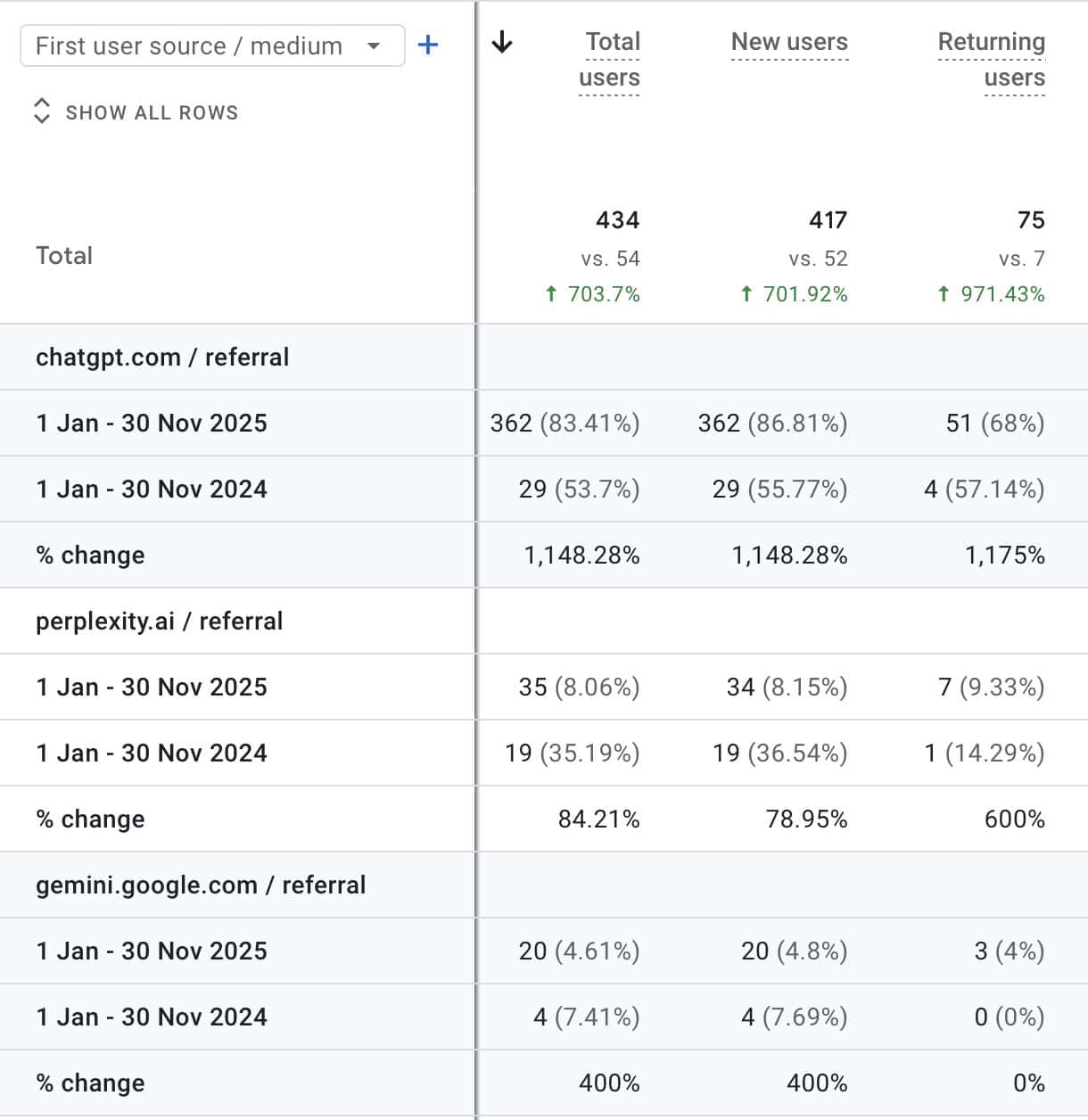
The client’s AI referral search traffic from LLMs like ChatGPT, Perplexity and Google’s Gemini since this year, has increased by over 700% when compared to the same period last year.
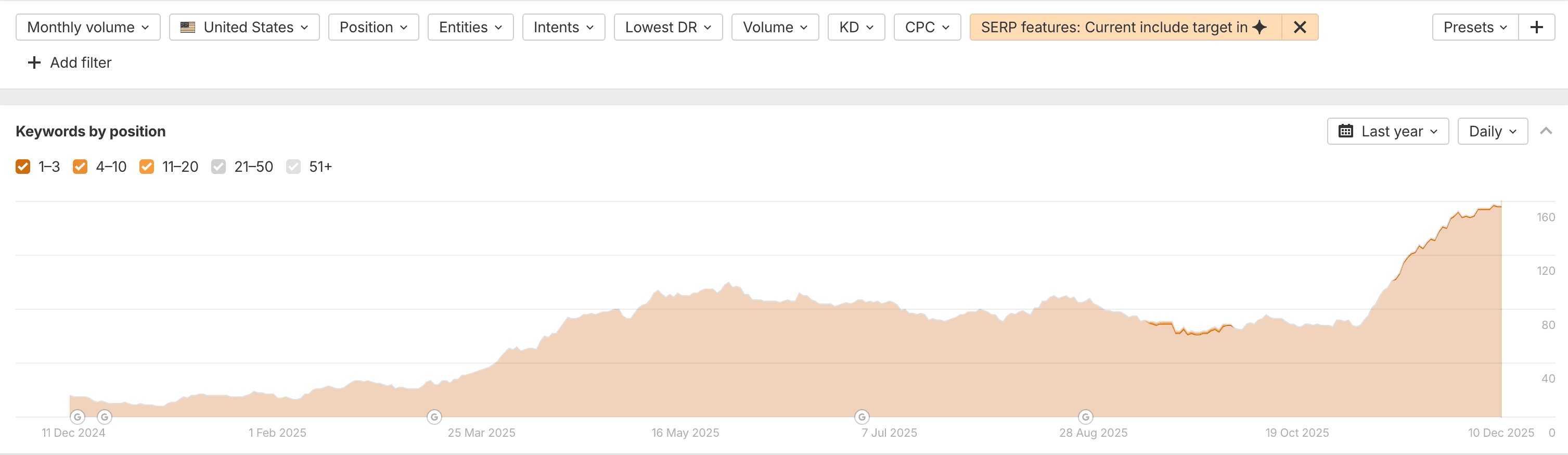
The site is also now surfacing for an all-time high 157 AI Overviews in the United States.
How did we achieve this?
- Made the content more trustworthy by clearly showing expertise on key pages.
- Organized the content so AI tools can easily find, understand, and summarize the most important information.
- Added the right structured data to priority pages so AI understands the content better and shows it more often in AI search results.
Before we outline the strategy, let’s take a closer look at the client’s website and what was preventing them from appearing in AI search results.

What Will I Learn?
A Closer Look At The Case Study
 Before working with Search Logistics, the client was barely showing up in AI-generated search results, even for topics where they already ranked well in traditional search.
On top of this, their competitors were consistently being cited and recommended by AI tools.
Our goal was to build their visibility in AI search by making their content more trustworthy, better structured, and far easier for AI systems to understand and surface.

The Biggest Challenges We Had to Overcome
The most pressing challenges that we overcame during the course of this campaign were:
- Improving content credibility so AI could trust and confidently cite the site.
- Organizing content to make it easier for AI systems to understand and pull key information.
- Adding structured data to priority pages to give AI models clearer signals about what the content covers.

Create a Plan of Attack
Follow our framework if you’re facing similar issues with your own website.
Step #1: Make Your Content More Trustworthy
Content that appears in AI search results starts with clearly demonstrating Experience, Expertise, Authority, and Trust (E‑E‑A‑T).

Why Should Your Content be Trustworthy?
AI tools like ChatGPT, Perplexity, and Claude favor content that’s accurate and trustworthy.
It’s similar to doing research where you’d rely on expert sources or studies instead of an anonymous blog when looking for solid information.
Similarly, AI relies on trust signals and authority to determine which sources it uses for its answers.
How to Make Your Content More Trustworthy
✅ Demonstrate Your Real Expertise:
Share insights from experts and clearly highlight their credentials so AI (and readers) know who’s behind the content.
Add bylines and author bios to clearly show who is providing the advice.

✅ Show Experience Through Data and Case Studies:
Don’t just claim you’re an expert at what you do, you need to prove it.
Publish original research, client success stories, or first-hand insights on your website and clearly attribute them so AI can see the credibility behind your content.
✅ Cite Credible Sources:
Back up statements that you make with references from academic studies, government research, or industry-recognized publications and experts.
This helps AI systems recognize your content as reliable and improves visibility in AI-powered recommendations.
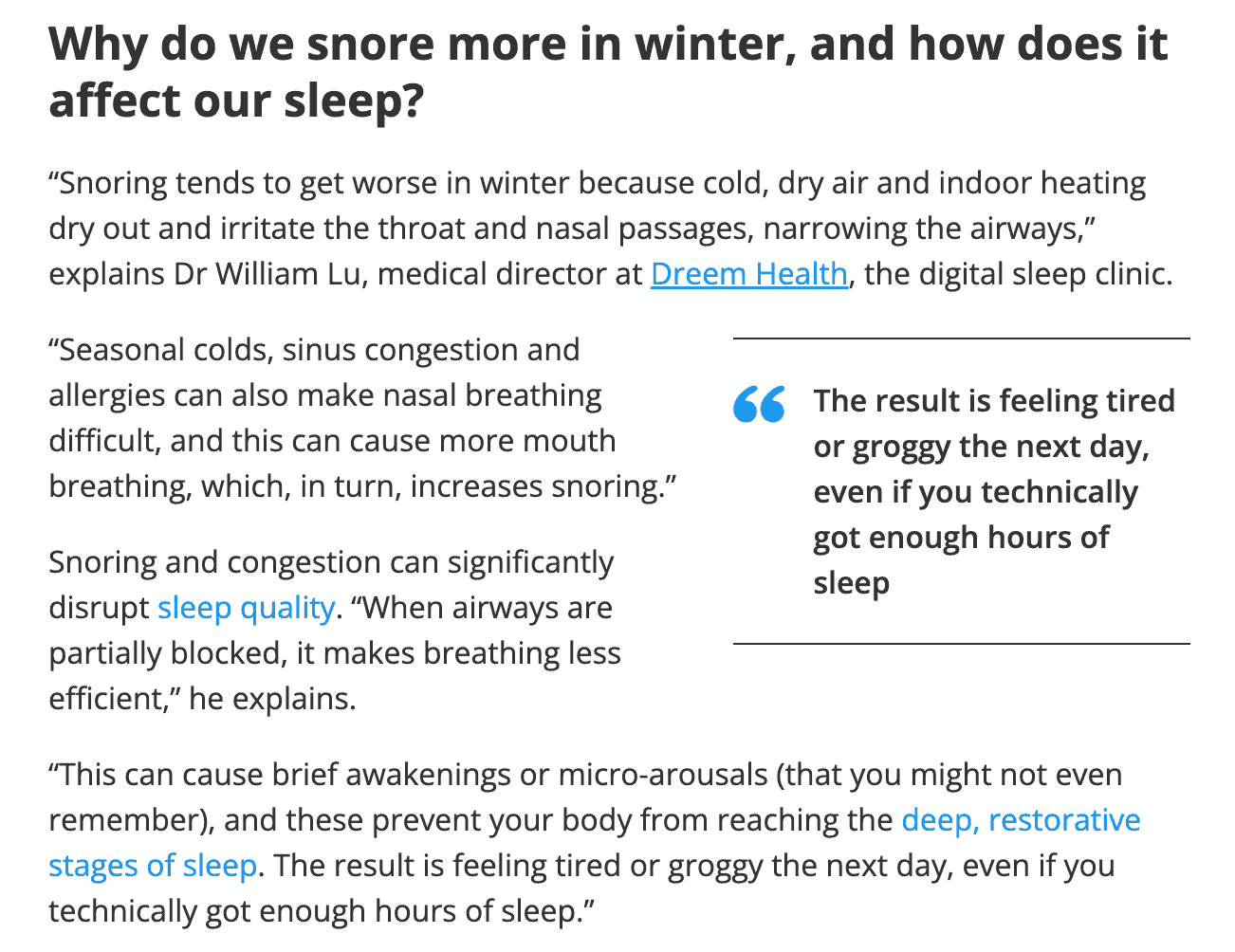
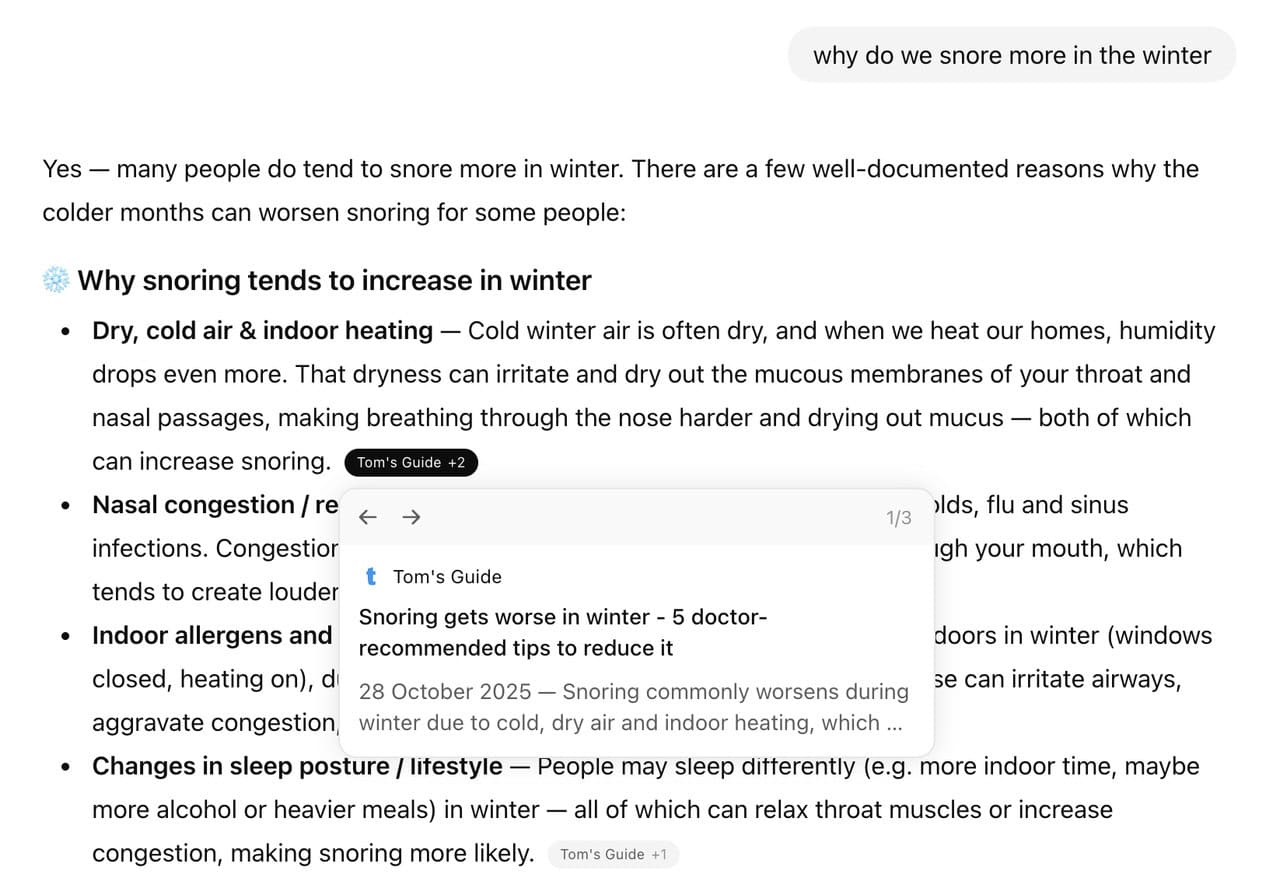
For example, the above page is the very first page cited by ChatGPT for its answer to the question:
“Why do we snore more in the winter”.
✅ Build Brand Authority and Transparency:
Optimize your About page and key company pages to make it easy for AI systems to understand your business, expertise, and offerings.
Include:
- Clear descriptions of your products, services, and areas of expertise
- Team member bios with roles, credentials, and relevant experience
- Organization information such as logo, founding date, headquarters location, and verified contact details
- Awards, certifications, or industry recognitions that signal credibility
Pro tip: Make sure your business information matches across the web, on your Google Business Profile, Yelp, Trustpilot, and other sites.
Even small differences can confuse AI.
For example:
If your About page says “123 King Street, London” but your Google Business Profile shows “123 King St, London,” AI might not be sure which is correct.
When your info is consistent, AI is more likely to trust your brand and reference your site in answers.
Implementing these tips ensures your content isn’t just useful, but is recognized as trustworthy and authoritative by AI search platforms.
Step #2: Structuring Content for AI Extractability
People are now using ChatGPT, Perplexity, Claude to find answers to their questions.
This means that your content now needs to be structured in a way that these AI systems can instantly see what matters, and use it within its AI-generated answers.
What Does “AI‑Readable” Content Look Like?
AI prefers content that’s easy to read and logically arranged.
Well-structured pages are more likely to show up in AI summaries, voice answers, and Overviews.
How to Structure Content for Maximum AI & Human Readability
Here are three actionable tips you can use to make your content more AI search-friendly.
✅ Be Direct & Write Concisely:
Write in a clear, confident, and unambiguous style.
AI systems prioritize content that communicates answers quickly and directly, so avoid vague language or overly long explanations that dilute your key points.
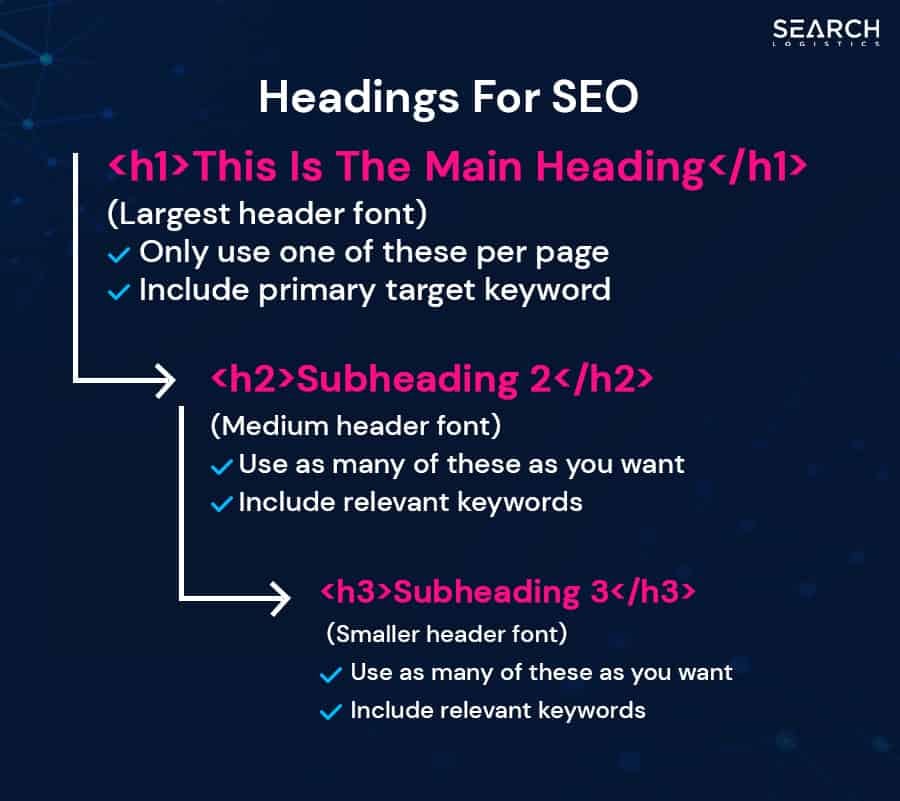
✅ Use a Clear Heading Structure:
Structure your page with a proper hierarchy of H1, H2, and H3 tags.
Headings act as signposts, helping AI and users quickly understand your content’s organization.
- H1: Main topic of the page
- H2: Major sections or questions
- H3: Sub-points under each H2
Here’s an example of a well structured recipe page:
- H1: How to Bake Perfect Chocolate Chip Cookies
- H2: Ingredients You’ll Need
- H3: Dry Ingredients
- H3: Wet Ingredients
- H2: Step-by-Step Instructions
- H3: Preparing the Dough
- H3: Baking the Cookies
- H2: Tips for Best Results
- H3: Adjusting Baking Time
- H3: Storing Cookies
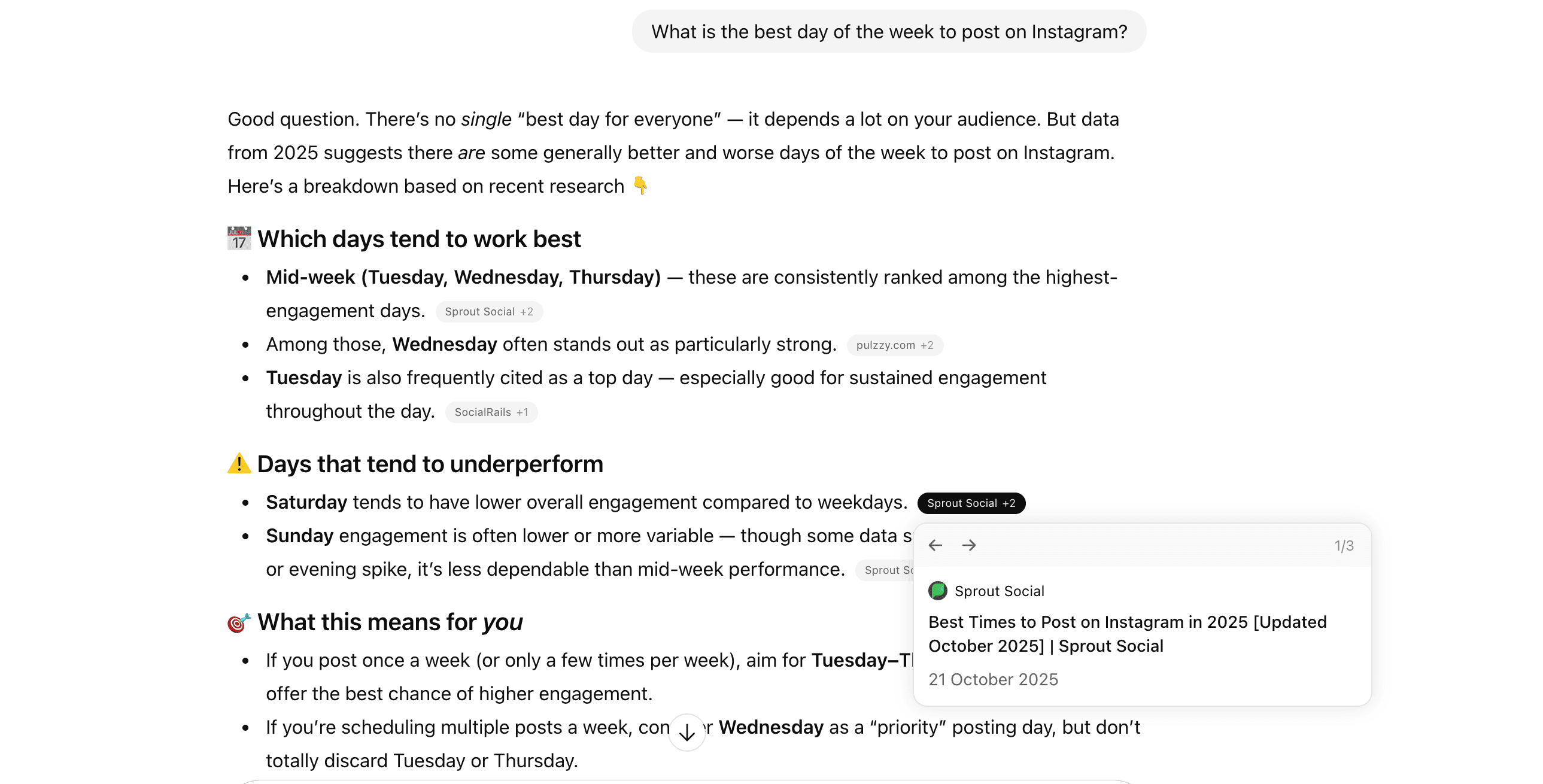
This SproutSocial blog post has a very clear heading structure which makes it easy for users to navigate, and for AI to extract information quickly.
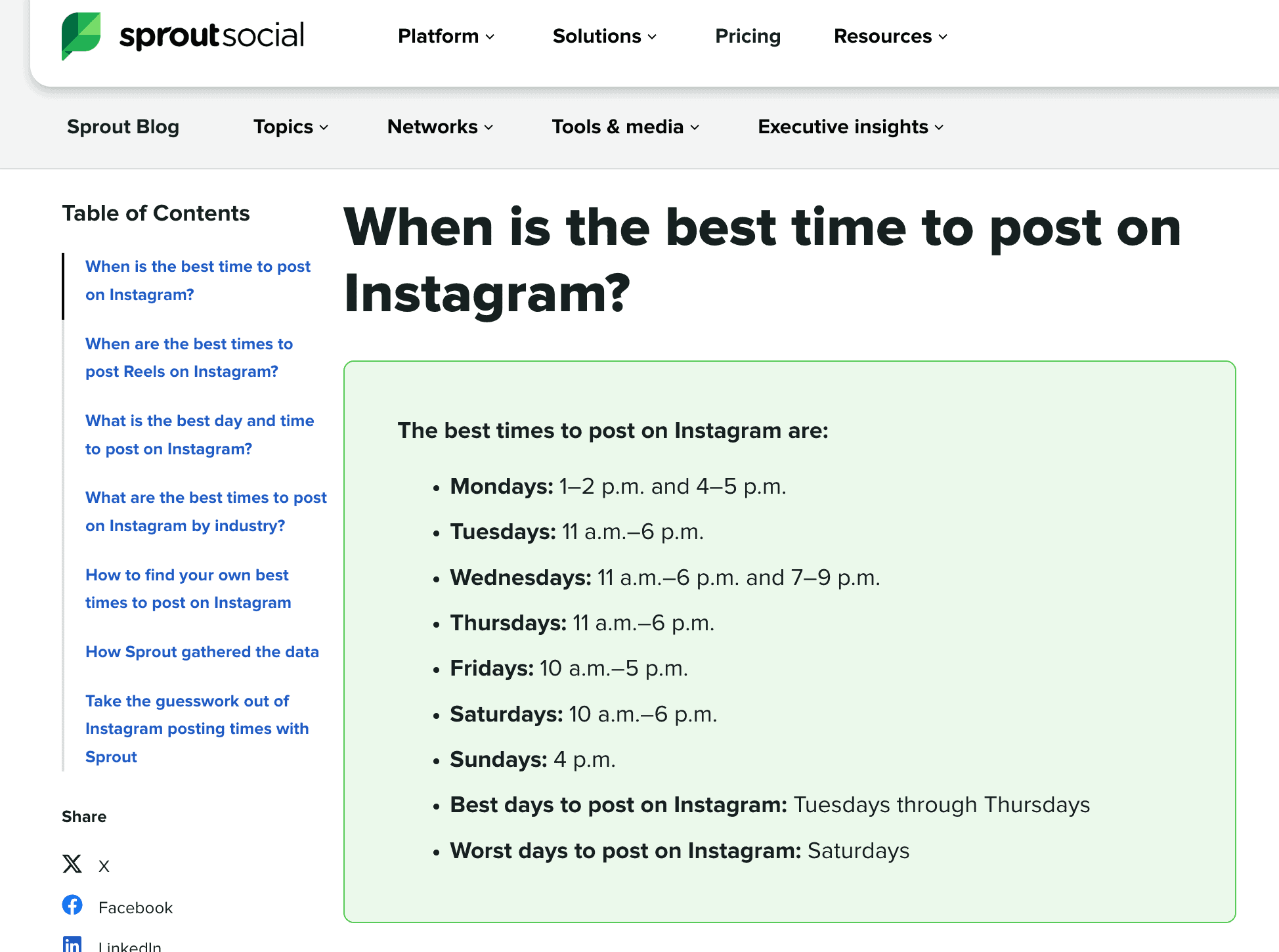
As a result, it’s one of the cited sources for the prompt:
“What is the best day of the week to post on Instagram?”
✅ Add Summaries and Key Takeaways:
Start articles with a TL;DR (Too Long; Didn’t Read) summary or bullet-pointed “Key Takeaways” section.
This helps AI quickly extract the most important information, and improves human readability.
- TL;DR: Short, 2–4 sentence overview of your content
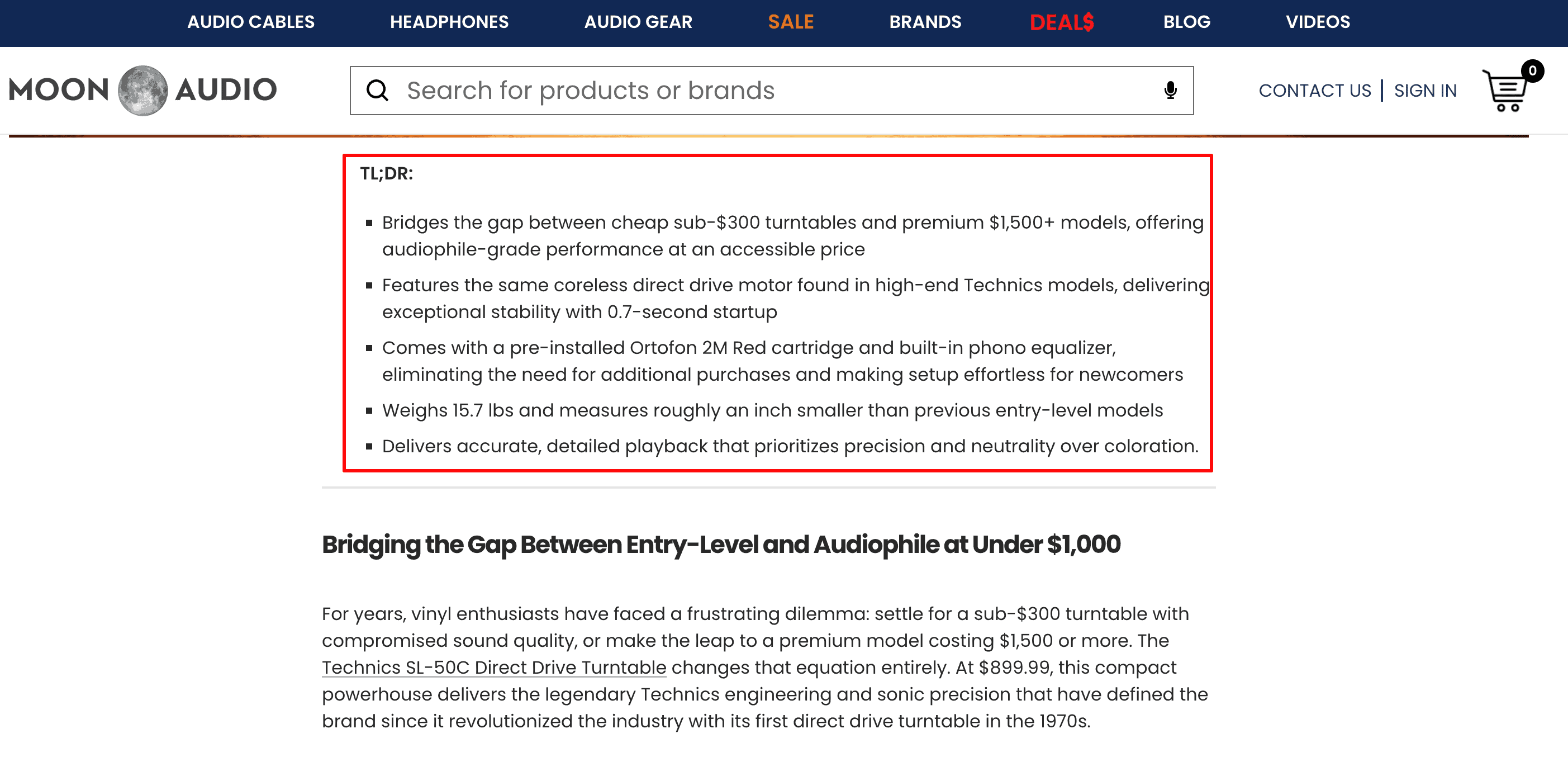
- Key Takeaways: Bullet points summarizing main ideas or steps
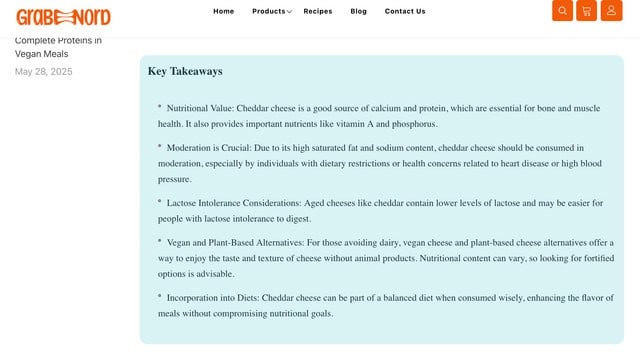
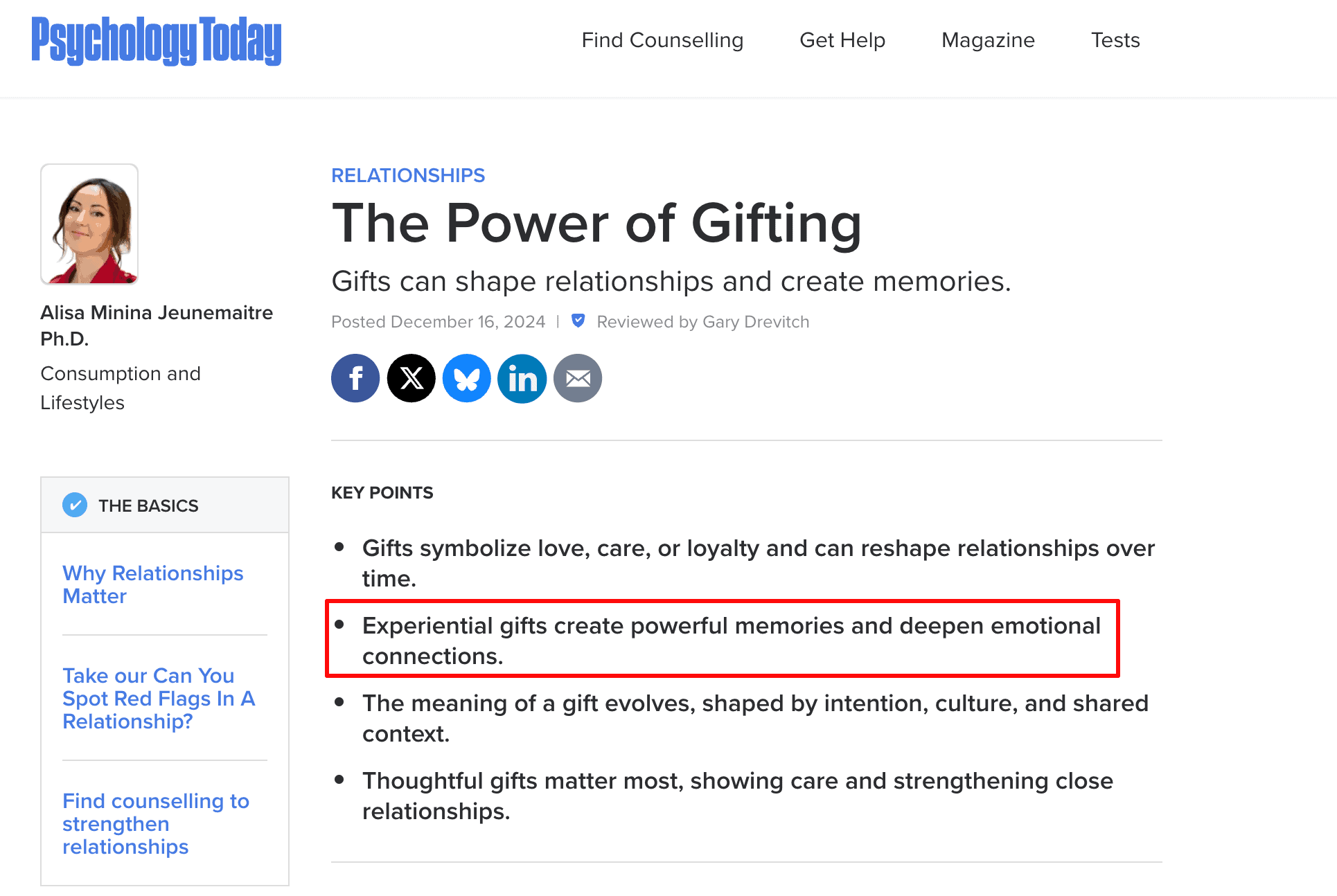
This blog post about gift giving mentions the importance of creating powerful memories as its second key takeaway.
This idea is used by ChatGPT in its AI-generated response to:
“What makes the best christmas gifts?”.
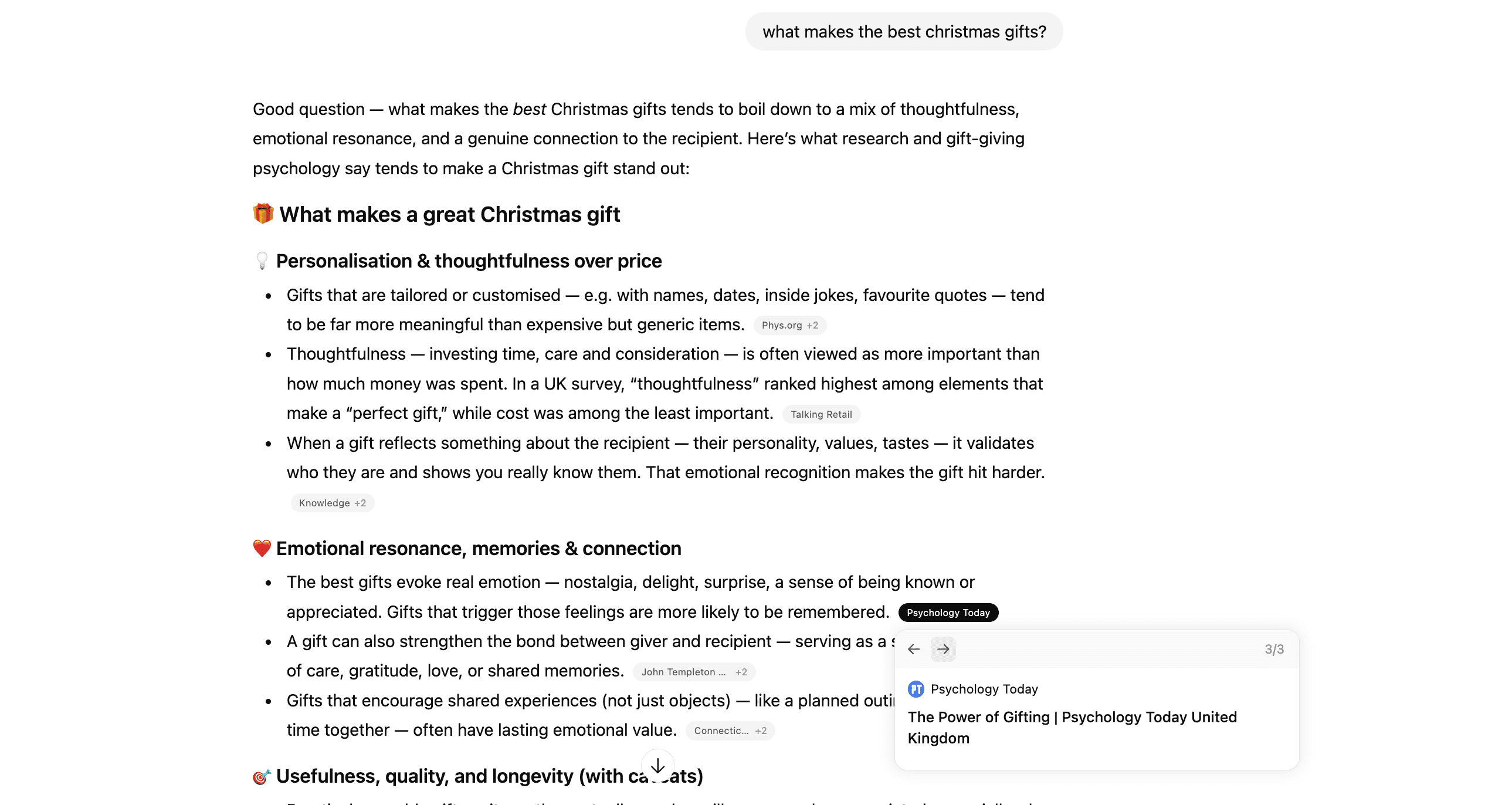
Structuring your content increases your chances of AI systems using your website as a source within its answers.
Step #3: Helping Google Understand Your Content With Schema Markup
When writing content, your main focus should be on making it more valuable for your audience.
BUT:
There are also ways to make it easier for search engines and AI to understand your content.
Using structured data (schema markup) gives Google clearer context, increasing your chances of appearing in AI Overviews and AI Mode.
Google recommends it as a best practice for strong performance in its AI search features.
What is Structured Data?
Structured data (or schema markup) is a standardized code embedded within your HTML.
Its purpose is to label specific content elements, such as:
- Products
- Events
- Recipes
- Reviews
…and FAQs.
This labeling provides vital context, enabling search engines and AI systems to more accurately interpret, categorize, and showcase your content.
Why Bother with Structured Data for AI SEO?
Adding structured data to your content has several advantages:
✅ Better Understanding:
Schema markup helps Google and AI understand exactly what your page and website on the whole represents.
✅ Enhanced Visibility Across AI Features:
Whether it’s an article, product, FAQ, or service page, marking up for your content increases your chances of being included in AI Overviews and other AI-powered results.
✅ Future-Proofing for AI Search:
As Google leans more heavily on structured, machine-readable signals for AI Overviews and AI Mode, schema markup becomes one of the simplest ways to strengthen your content’s visibility in these emerging experiences.
Key Types of Structured Data for AI Search
Here’s a breakdown of some of the most important and useful types of structured data to boost your visibility in AI search.
Informational Schema Types
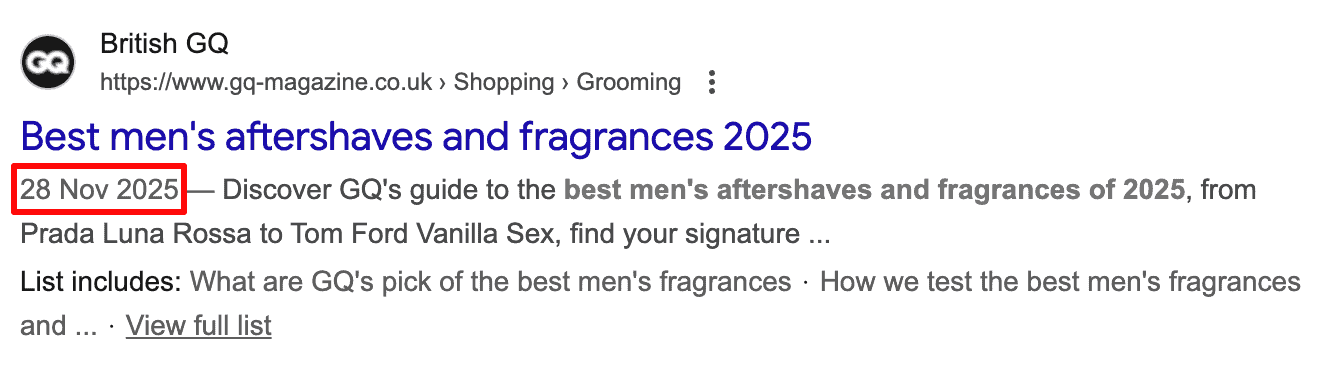
- Article / BlogPosting Schema
Essential for publishers, blogs, and informational sites. This markup helps AI systems understand your content’s topic, author, and context.
Include properties like:
- Headline
- Author
- DatePublished
- Image
…and mainEntityOfPage to give AI a comprehensive view of your content.
- FAQPage Schema
Ideal for support content, service pages, or blog articles that address your audience’s questions.
FAQ schema allows Google and AI assistants to extract clean Q&A pairs for AI-generated snippets, voice responses, and SERP rich results.
- HowTo Schema
Perfect for step-by-step tutorials. Google relies on this structure to pull instructions directly into AI Overviews for “how to” queries.
Brand Schema
- Organization Schema
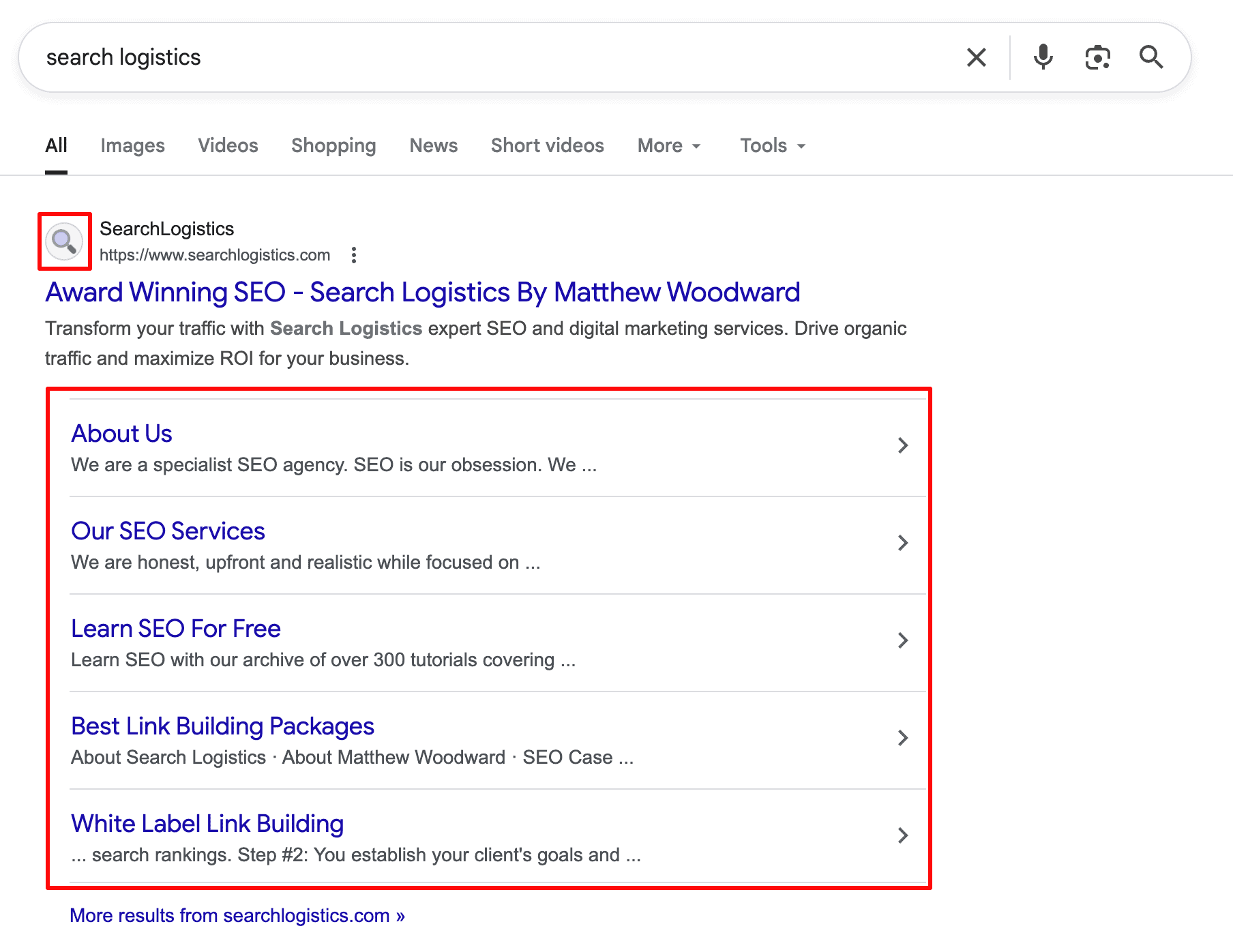
This is one of the important schema types for AI search (and SEO in general).
It provides Google, LLMs, and entity-based systems with essential signals about your business, including:
- Business name
- Logo
- Website and contact info
- Social profiles
- Headquarters location
- SameAs profiles (LinkedIn, Wikipedia, Crunchbase, etc.)
By defining your business clearly, you make it easier for AI systems to identify your brand as a trustworthy entity, understand your expertise, and reference your website when generating recommendations in AI Overviews and conversational search results.
How to Use AI to Generate Structured Data
AI tools make it easy to generate JSON-LD markup (this is the format that Google recommends) accurately.
Provide a few key details such as the headline, author, URL, images, publish dates, etc, and request the specific schema type you need.
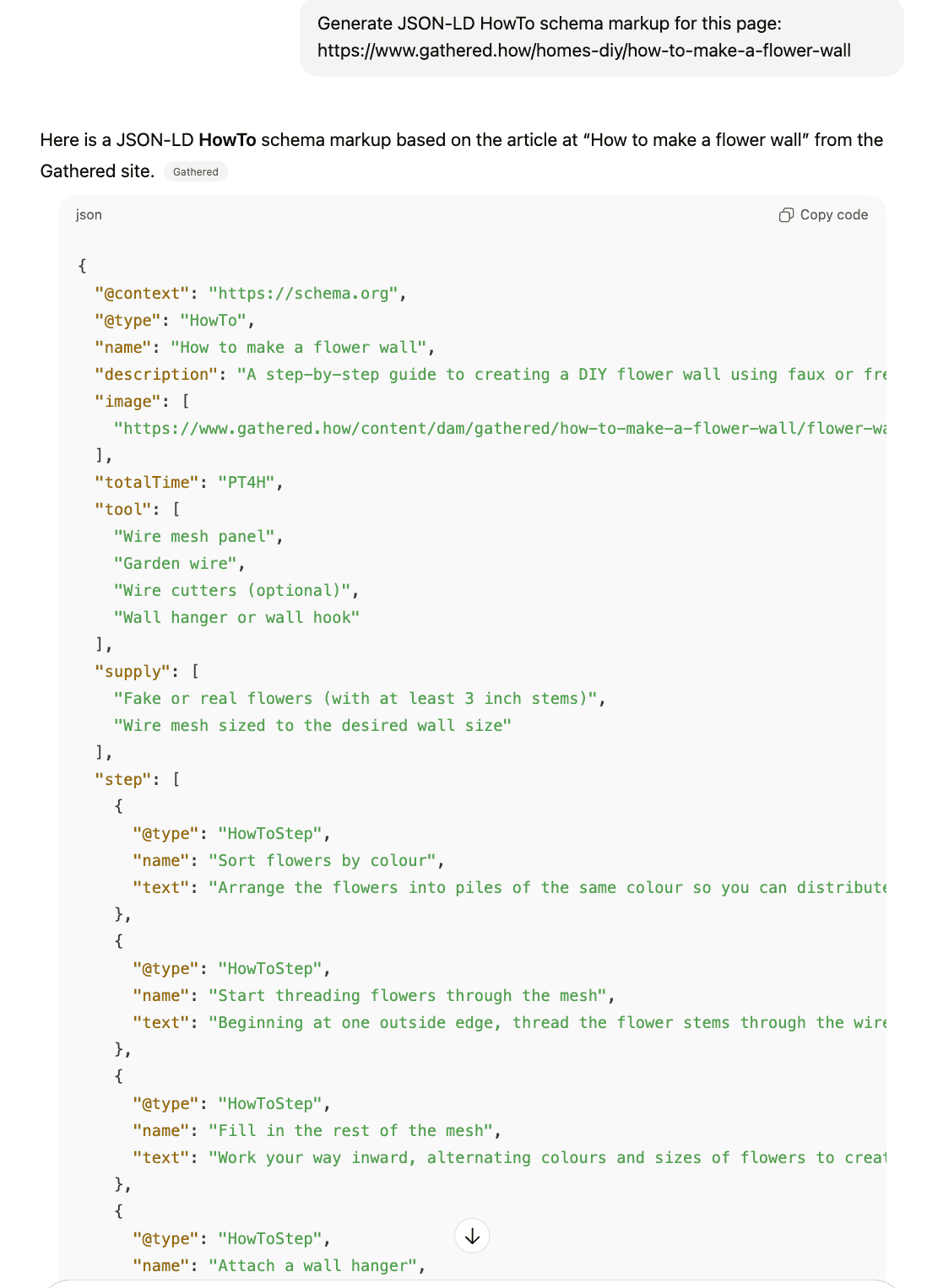
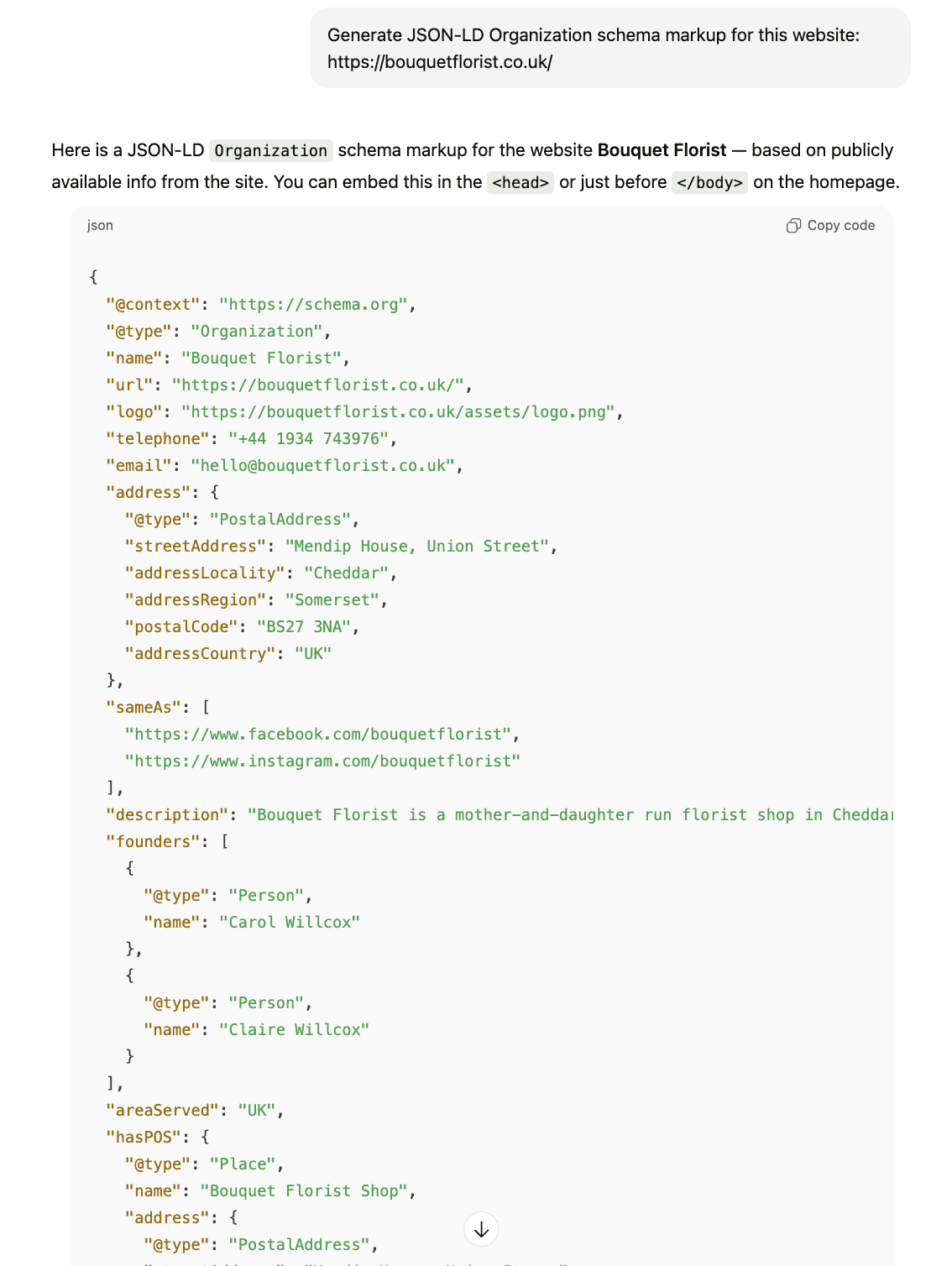
Use this simple template to generate structured data with ChatGPT’s Web Search feature:
“Generate [type of schema] for the following [url]”
AI will output clean JSON-LD you can validate and paste into your site.
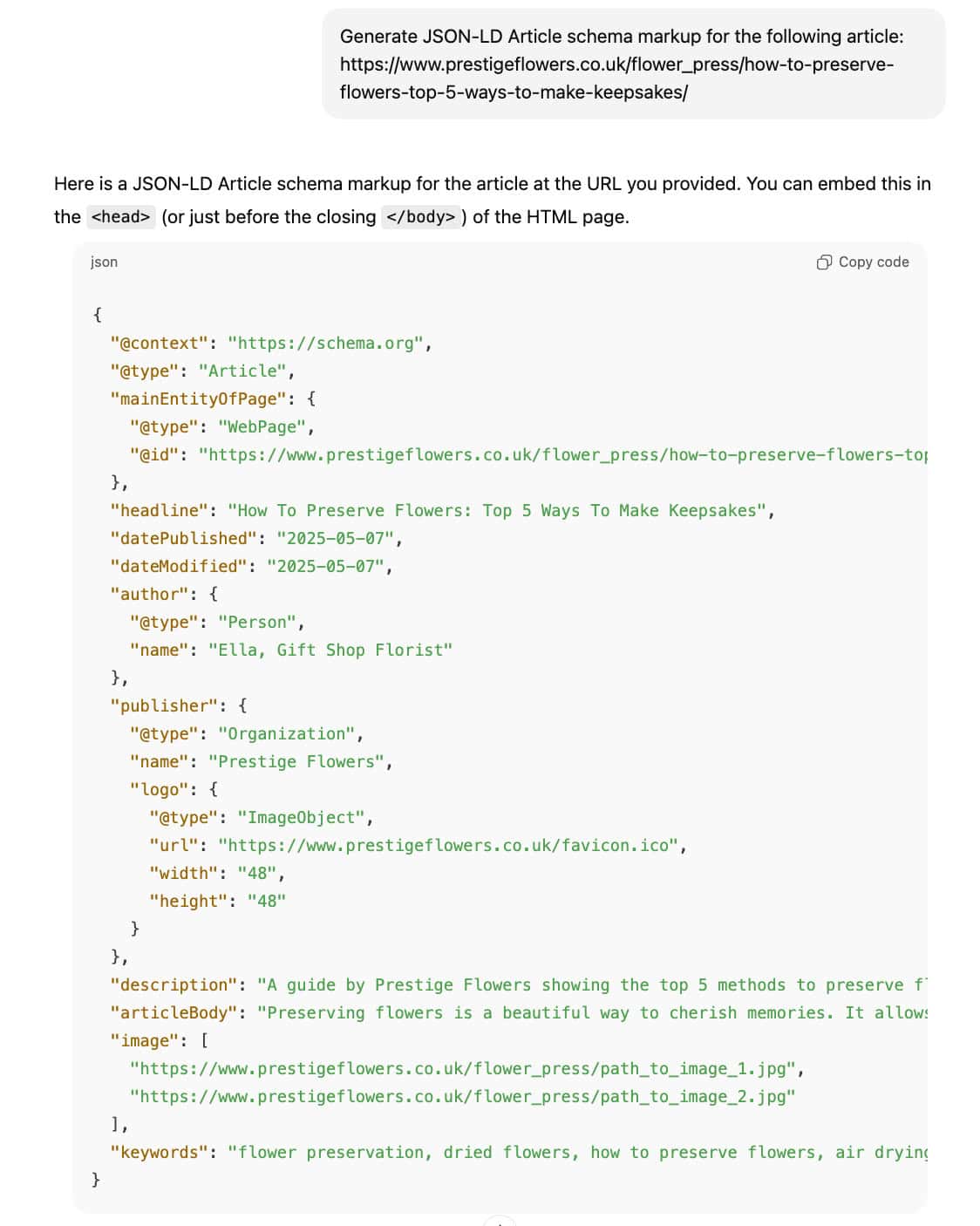
Article
Here’s an example of a ChatGPT output:
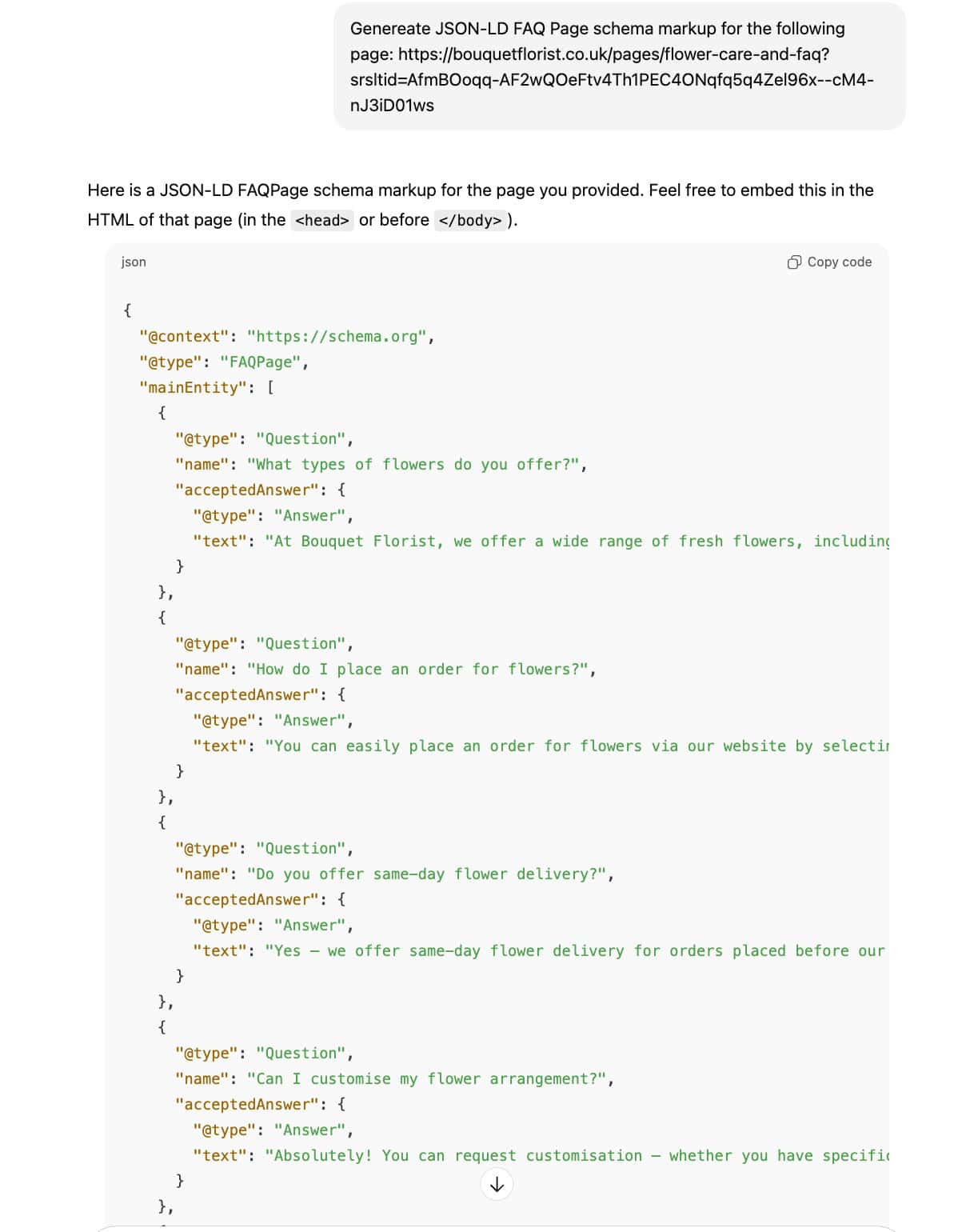
FAQPage
Here’s an example of a ChatGPT output:
HowTo
Here’s an example of a ChatGPT output:
Organization
Here’s an example of a ChatGPT output:
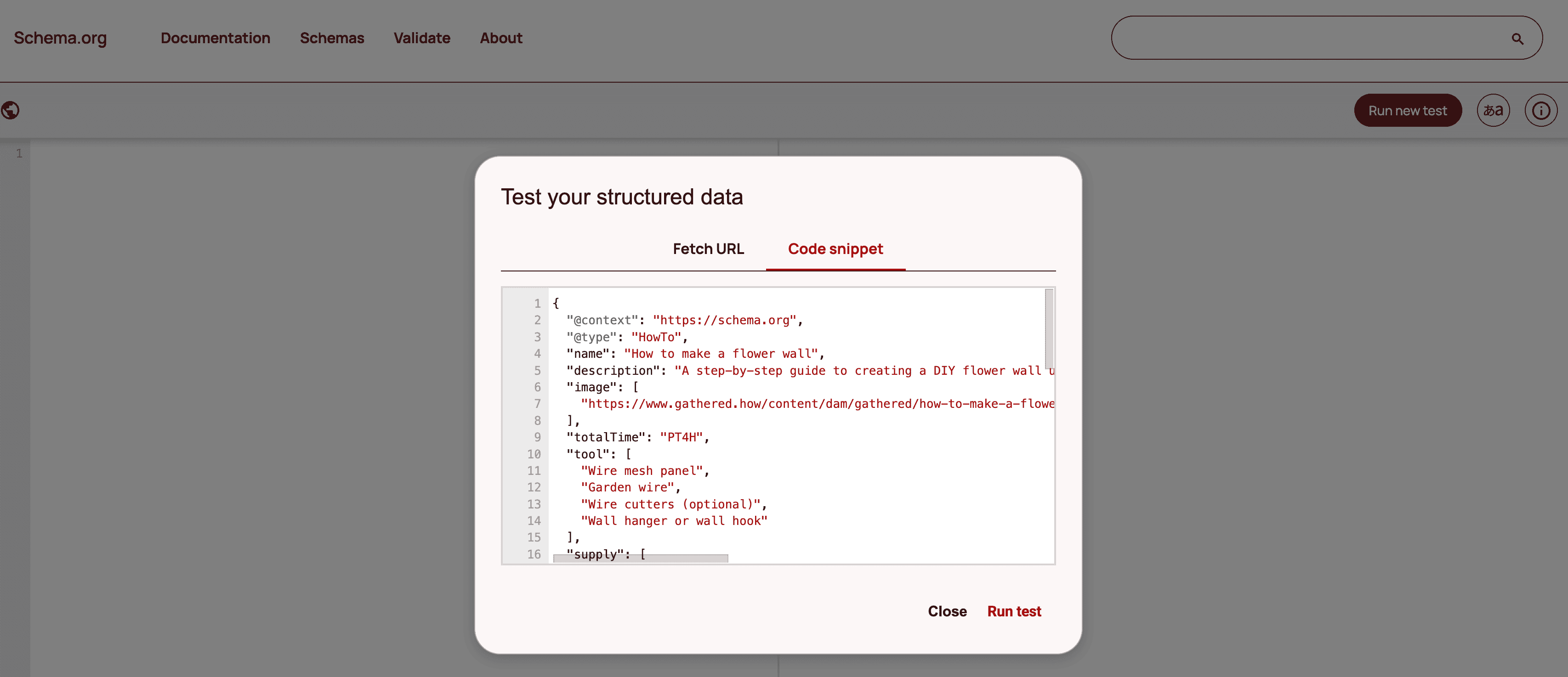
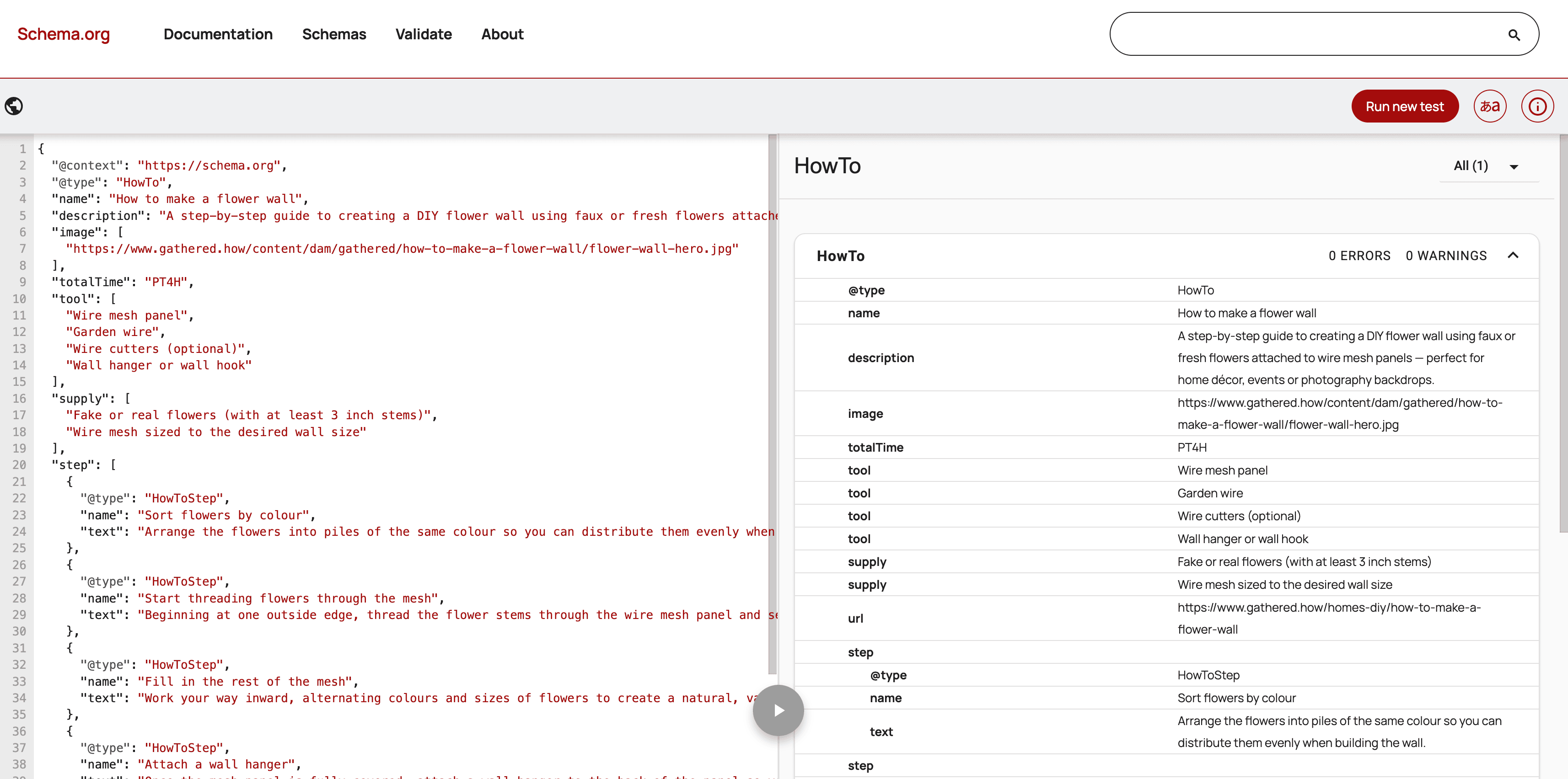
Once you’ve created your markup, verify it using the Structured Data Testing Tool.
Simply copy and paste the code into the tool and click “Run Test”.
If there aren’t any issues, you’ll see this:
… and if you have some errors, you’ll see something like this:
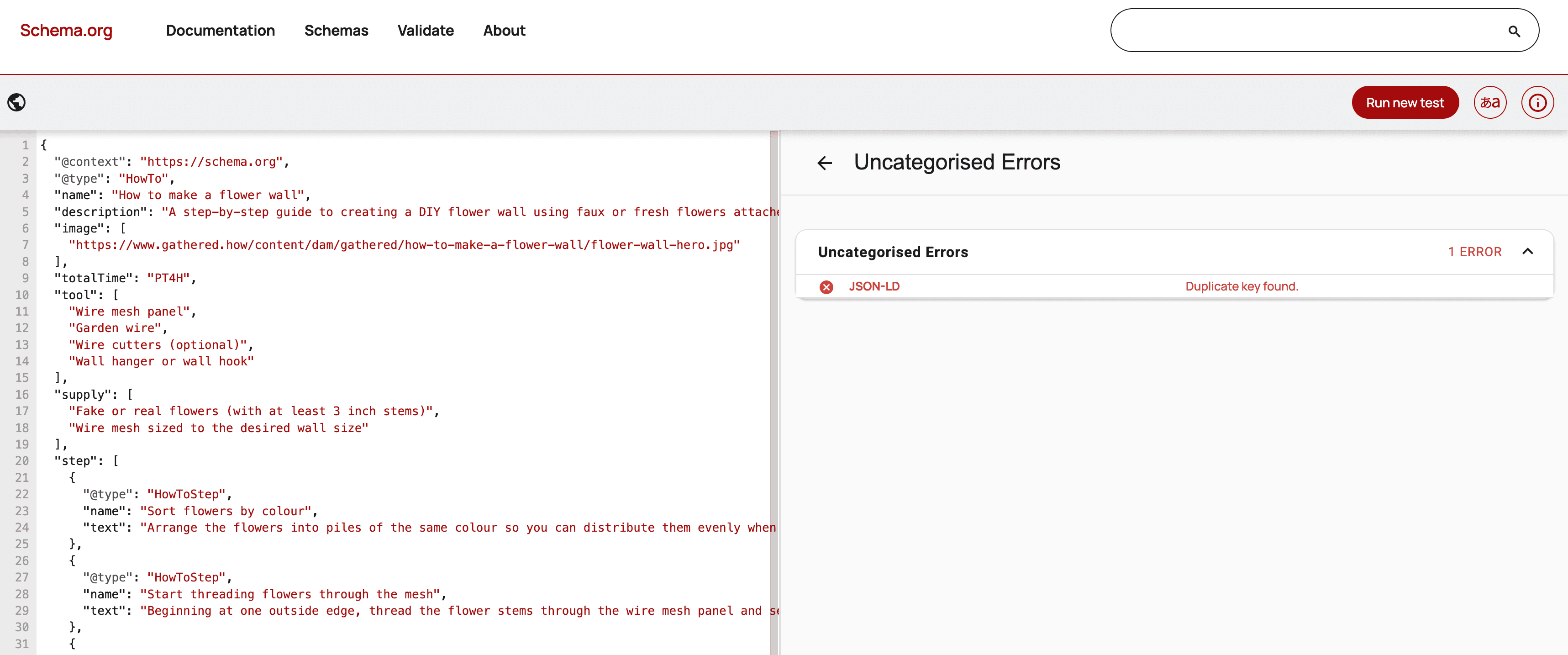
Once it’s been validated, add the structured data to the section of your web page inside a tag.

Results
The client’s AI referral search traffic from LLMs like:
- ChatGPT
- Perplexity
…and Google’s Gemini since this year, has increased by over 700% when compared to the same period last year.
The site is also now surfacing for an all-time high 157 AI Overviews in the United States.




 +50%
+50%


 +12,583


