






























 Subscribe to my YouTube
 Join My Facebook Group
 Connect on Linkedin
 Free SEO Tutorials
 SEO Case Studies
 Links That Rank


68% of online experiences start with a search engine, and 91% of marketers report a positive ROI from SEO.
SEO is one of the most effective marketing channels for any business.
But it’s also changing fast…
Google AI Overviews now reach over 2 billion users per month. And 60% of Google searches now result in zero clicks to websites.
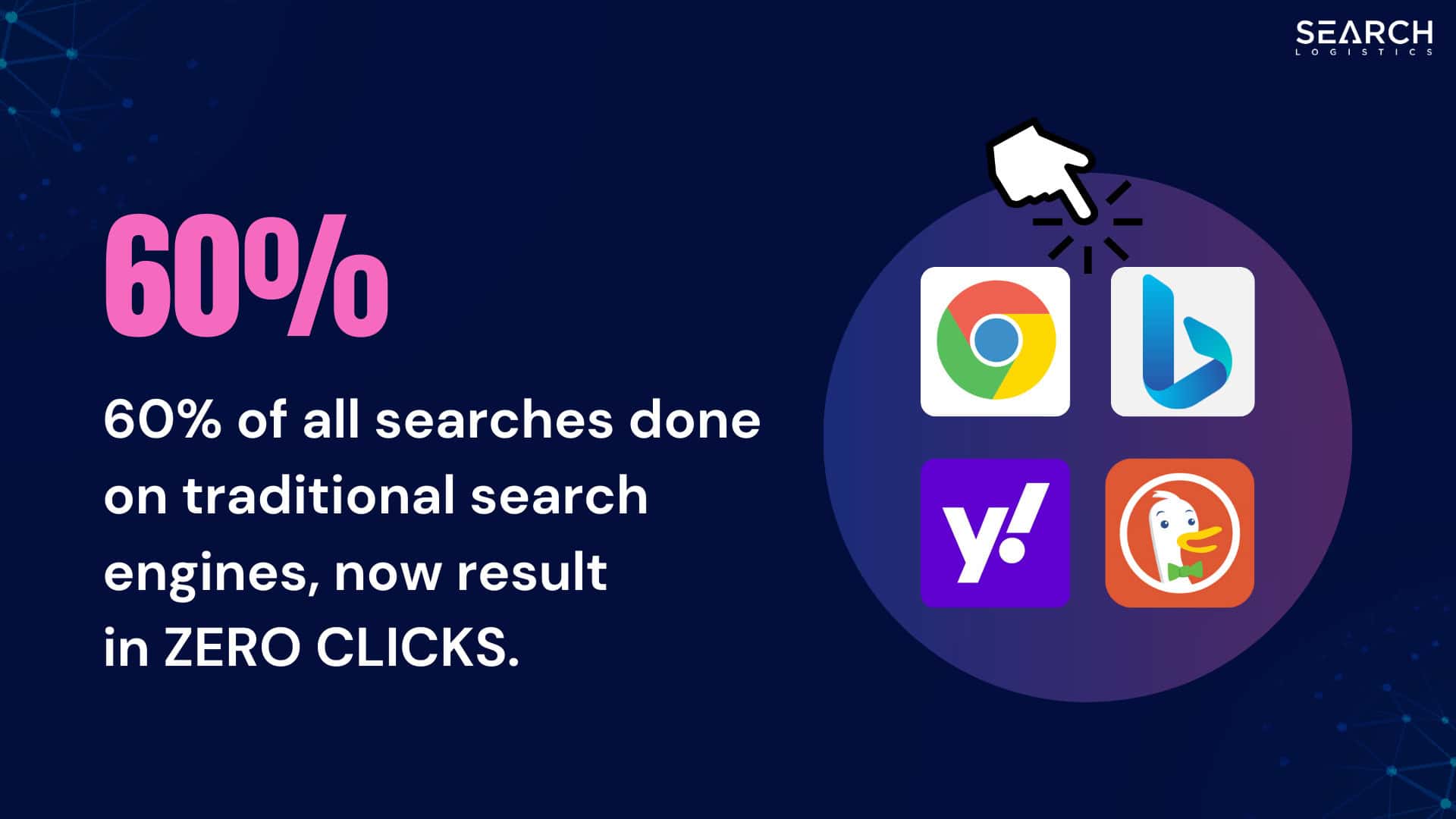
AI tools like ChatGPT, Gemini, Claude, Perplexity and Grok have changed the way that users search online.
37% of users now start searches with an AI tool instead of Google.
But with change also comes opportunity.
The problem?
Most business owners, marketers and SEOs still don’t know what to focus on.
They’re stuck doing what worked five years ago or chasing new shiny tactics that go nowhere.
So, I’ve pulled together the latest SEO statistics for 2026. It covers everything from AI search to link building and even changes within local SEO.
These are the numbers that will shape your SEO strategy this year.
What Will I Learn?
Key SEO Statistics
These are the most important SEO statistics you need to know:
-
- Google is still the number one search engine with about 90% marketshare
- Google processes over 16.4 billion searches per day
- ChatGPT now has over 1 billion weekly active users
- Google AI Overviews reach over 2 billion users per month
- 60% of online searches in Google don’t result in a click to a website
- 52% of sources cited in Google AI Overviews rank in the top 10 search results
- Content over 3,000 words wins 3x more traffic, 4x more shares and 3.5x more backlinks
- 95% of pages on the internet have zero backlinks
- The top-ranking page has 3.8x more backlinks than the results in positions 2–10
- 75.7% of marketers now regularly use AI tools to complete their work
- The 3 biggest disruptions for SEO right now are Generative AI, Google E-E-A-T and zero-click searches
With those in mind, let’s dive in a little deeper.
5 Latest SEO Trends In 2026
SEO is changing fast.
If you want to remain competitive, you need to adapt your SEO strategy.
These are the latest SEO trends shaping the entire industry right now.
Trend #1 – AI Search & AI Overview Optimisation Is Essential
AI Overviews are no longer a small experiment by Google.
55% of Google searches now show an AI Overview.
The effect is that clicks have now reduced by 35%, and only 4 out of 10 searches on Google result in a click to a website.
That’s a big hit to organic traffic.
And it’s the same for AI tools like ChatGPT, Perplexity, Gemini and Claude. 37% of people now start their search with an AI tool instead of Google.
Research also shows that searches on AI platforms have less than 1% click-through-rate.
This is not a drop everything and panic moment.
The reality is that Google still drives up to 345x more traffic than all other major AI search engines combined.
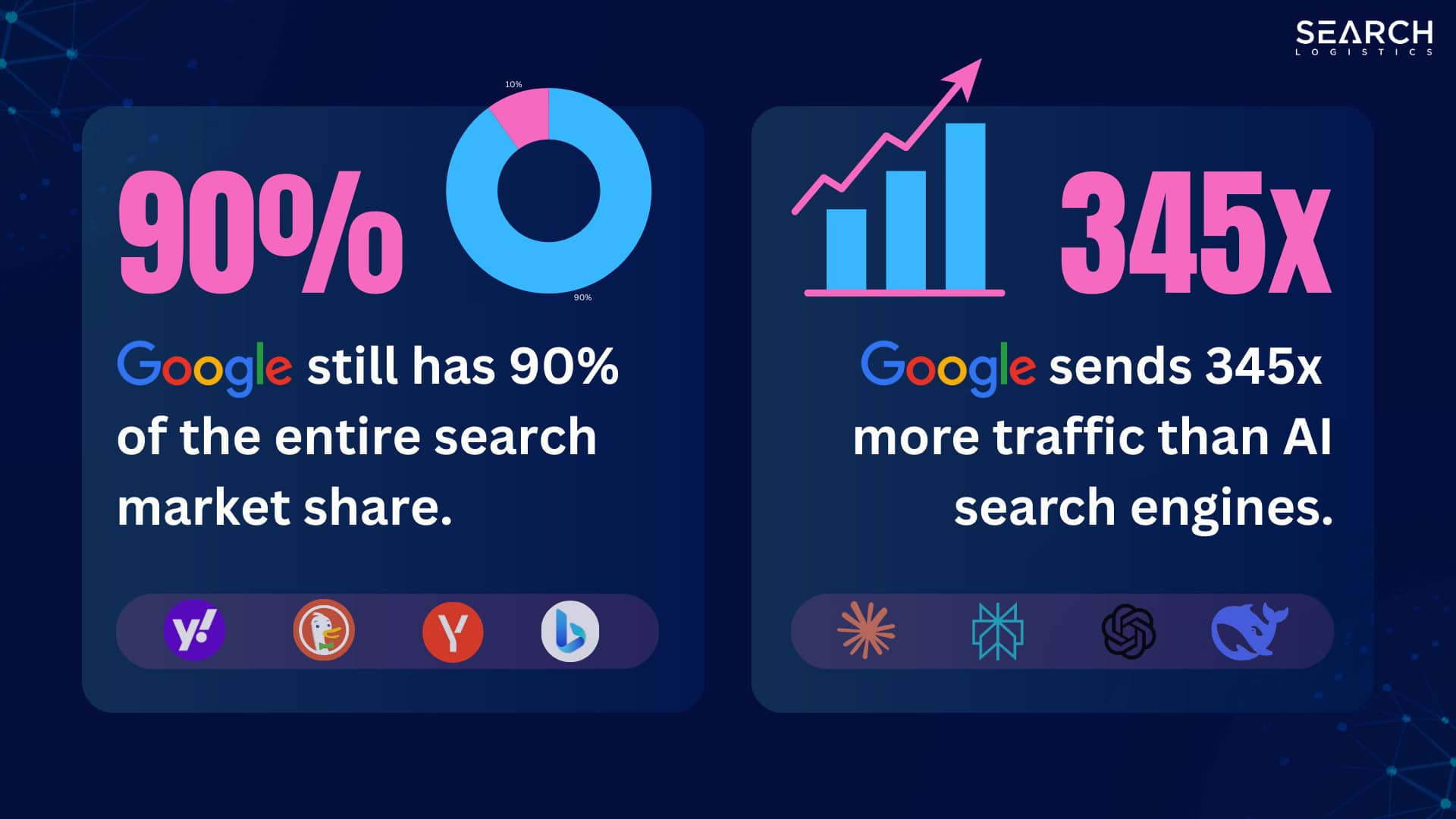
But it is a sign that AI visibility should now be a core part of your overall SEO strategy. Businesses that adapt now will have the advantage in the future.
Trend #2 – E.E.A.T And Brand Authority Are Critical Ranking Signals
This applies to both AI search tools and traditional Google search.
Search is no longer just about content. It’s about trust.
A survey of 181 SEO experts showed that the most impactful E-E-A-T signals were:
-
- Citations
- Backlinks
- Brand mentions
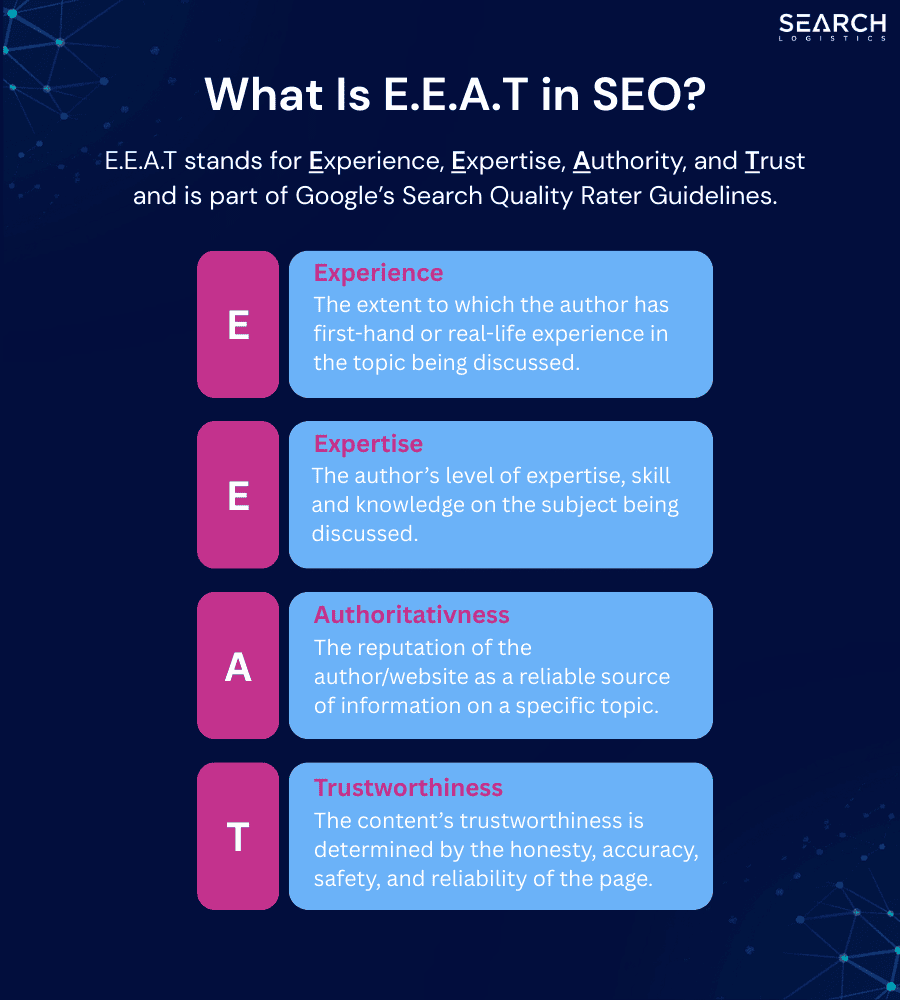
Think about it like this…
Both Google and AI search tools need to verify that your brand is trustworthy before they rank and cite your pages.
That means they look outside of your website for poof.
They’re checking who mentions you, who links to you and whether your brand shows up in credible places around the internet.
If they don’t see any external proof, you won’t get any visibility. Simple as that.
Trend #3 – Backlinks Are Still The Biggest Authority Signal
Backlinks are still the number one way to increase your rankings and AI visibility.
The #1 ranking result on Google has 3.8x more backlinks on average than the pages ranking in positions 2-10.
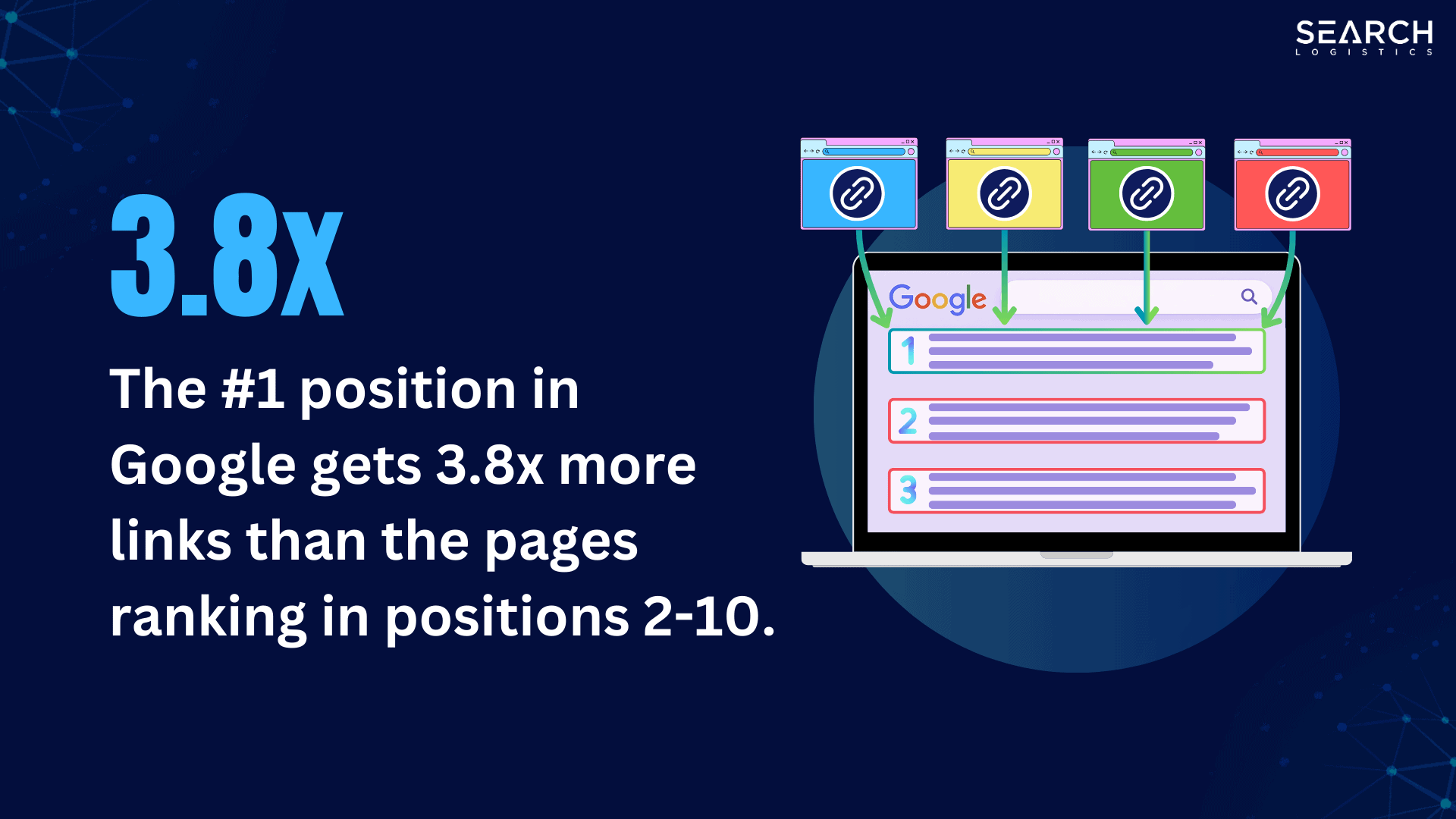
More than that, the number of linking domains has the strongest correlation to ranking higher on Google.
Ready for the good news?
95% of all pages on the internet have zero backlinks, and 93.5% of top-ranking pages have at least one backlink.
Not only does this point to the fact that links are an essential part of SEO still, but it also shows that just building a handful of backlinks to a page can have a positive impact on rankings.
Ensure you have a strong link building strategy in place or outsource to trusted link building services.
Trend #4 – In-Depth, Long-Form Content Wins Search Visibility
Long-form content with over 3,000+ words wins:
-
- 3x more traffic
- 4x more shares
- 3.5x more backlinks
In an age where 50% of all new content is AI-generated, quality, long-form content is the key to ranking well and standing out from the slop.
Don’t compromise your content quality.
Spend the time to make genuinely useful, unique, high-quality content that benefits your readers.
You’ll be rewarded with more links, more traffic and better rankings.
Trend #5 – You Should Now Think of SEO As Multi-Platform
Google and AI platforms are not the only search players anymore.
Instagram processes up to 6.5 billion searches per day, and TikTok now has over 1 billion.
To put this into context, Google processes an estimated 16.4 billion searches per day.
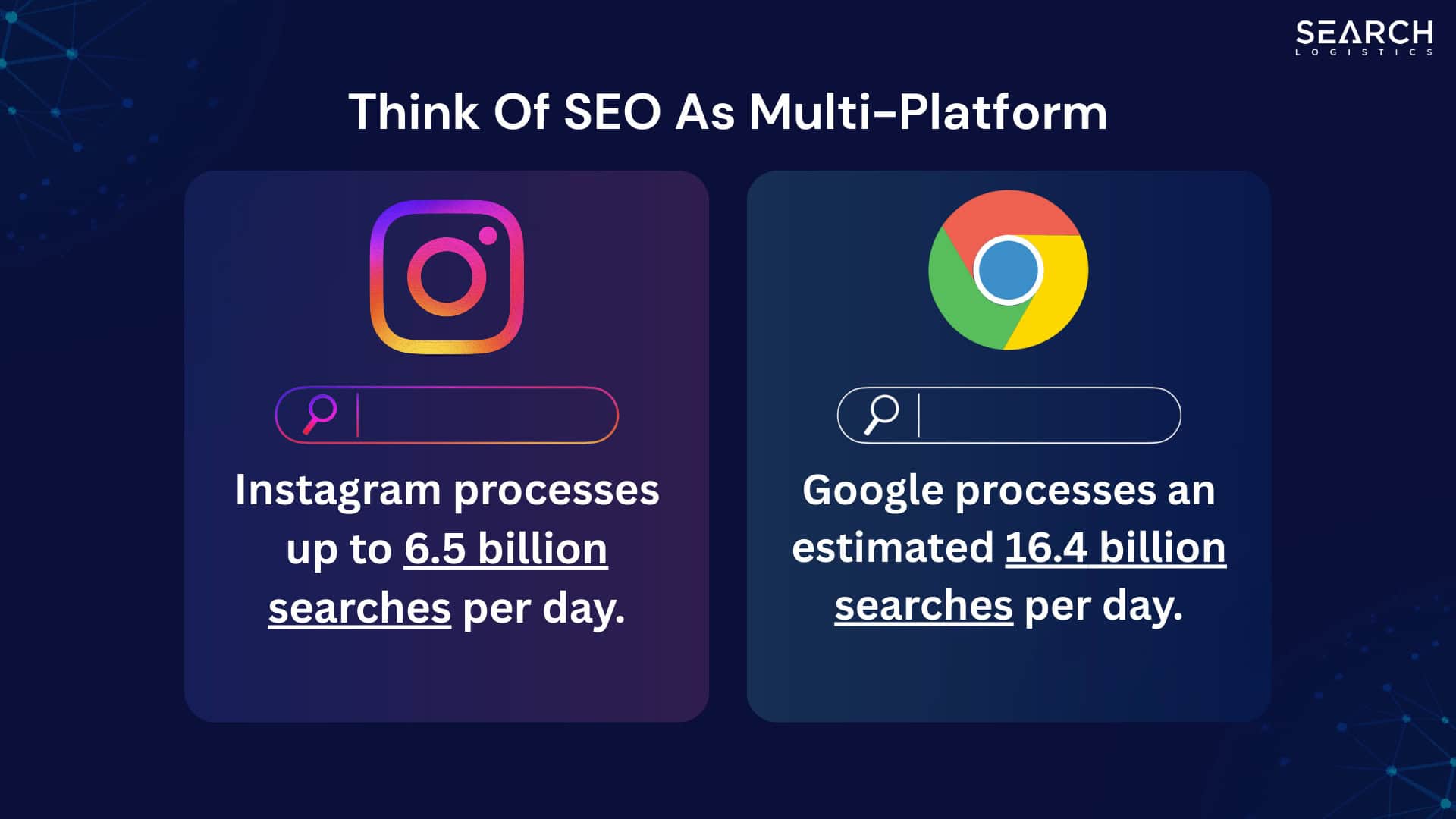
So there is still a way to go before social media catches up.
But the trend is undeniable.
78% of all global internet users have used social media to research products and brands.
49% of all US consumers regularly use TikTok for search, and about 40% of Gen Z prefer TikTok or Instagram over Google for specific types of searches.
If you’re not including social media as part of your overall search strategy, you’re missing out on a massive opportunity.
SEO Traffic And Conversion Statistics
SEO is the most powerful marketing channel on the planet.
68% of all online experiences start with a search engine.
That means before most people-
-
- Buy anything
- Read anything
- Visit a physical location
…they search first.
And that’s not all:
53% of all website traffic comes from organic search.
To put that into perspective, SEO drives 1,000% more traffic than organic social media does.
If you want more targeted traffic, leads and sales, there isn’t a better marketing channel than SEO.
Google Is Still The Dominant Search Engine
Google handles over 16.4 billion searches every single day and has about 90% of the search engine market share.
Approximately 99,000 searches occur every second on Google.
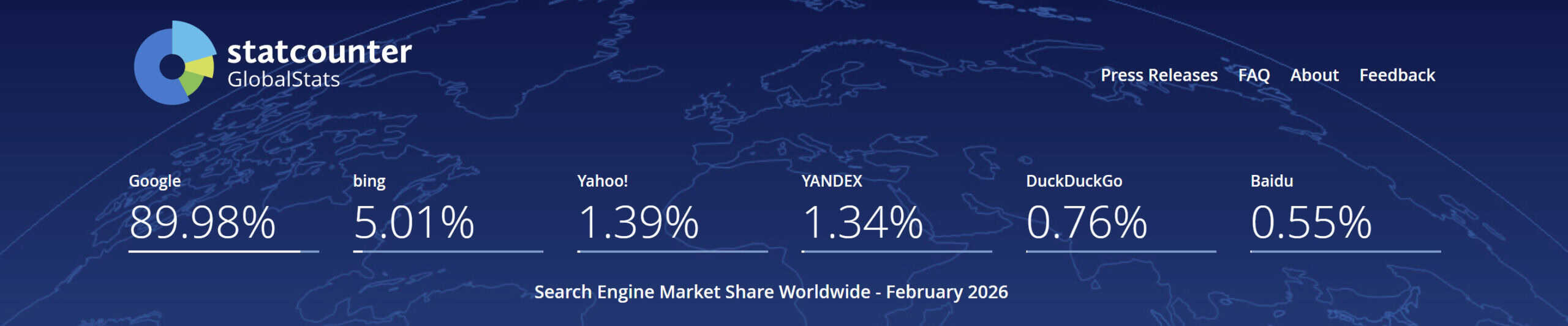
To put that into perspective, here’s a breakdown of the current search engine market share:
| Search Engine | Share (%) |
|---|---|
| 89.98% | |
| Bing | 5.01% |
| Yahoo | 1.39% |
| YANDEX | 1.34% |
| DuckDuckGo | 0.76% |
| Baidu | 0.55% |
As you can see, Google dominates with almost 90% market share.
The next closest is Bing with just 5%.
And that’s not all..
About 64% of clicks on Google end up staying inside Google’s ecosystem, including YouTube, Google Maps, Google Images and Google Ads.
That means for every 1,000 clicks on Google, only 360 of them are going to independent websites organically.
The bottom line is that Google is still the primary focus when it comes to SEO.
They have the most users, process the most searches and send the most website traffic.
SEO Generates More Leads Than Any Other Channel
This is where it gets really interesting for business owners.
61% of B2B marketers say that SEO generates more leads than any other marketing channel or strategy they implement.
And it’s not just about quantity either.
59% of marketers say that inbound marketing is the best source of high-quality leads.
SEO is the number one inbound marketing channel.
Think about it…
The power of SEO is that you are meeting potential customers right at the moment they’re actively searching for information about products or services you offer.
Compare that to social media, where you’re pulling their attention away in order to try and get a conversion.
The data backs this up.
Leads from SEO have an average close rate of 14.6%, whereas the average close rate from paid social media ads is just 3%.
That’s nearly 5x better.
Let’s not forget you’re also paying for every click with paid ads too.
70% of marketers say that SEO continuously outperforms PPC consistently when it comes to generating sales.
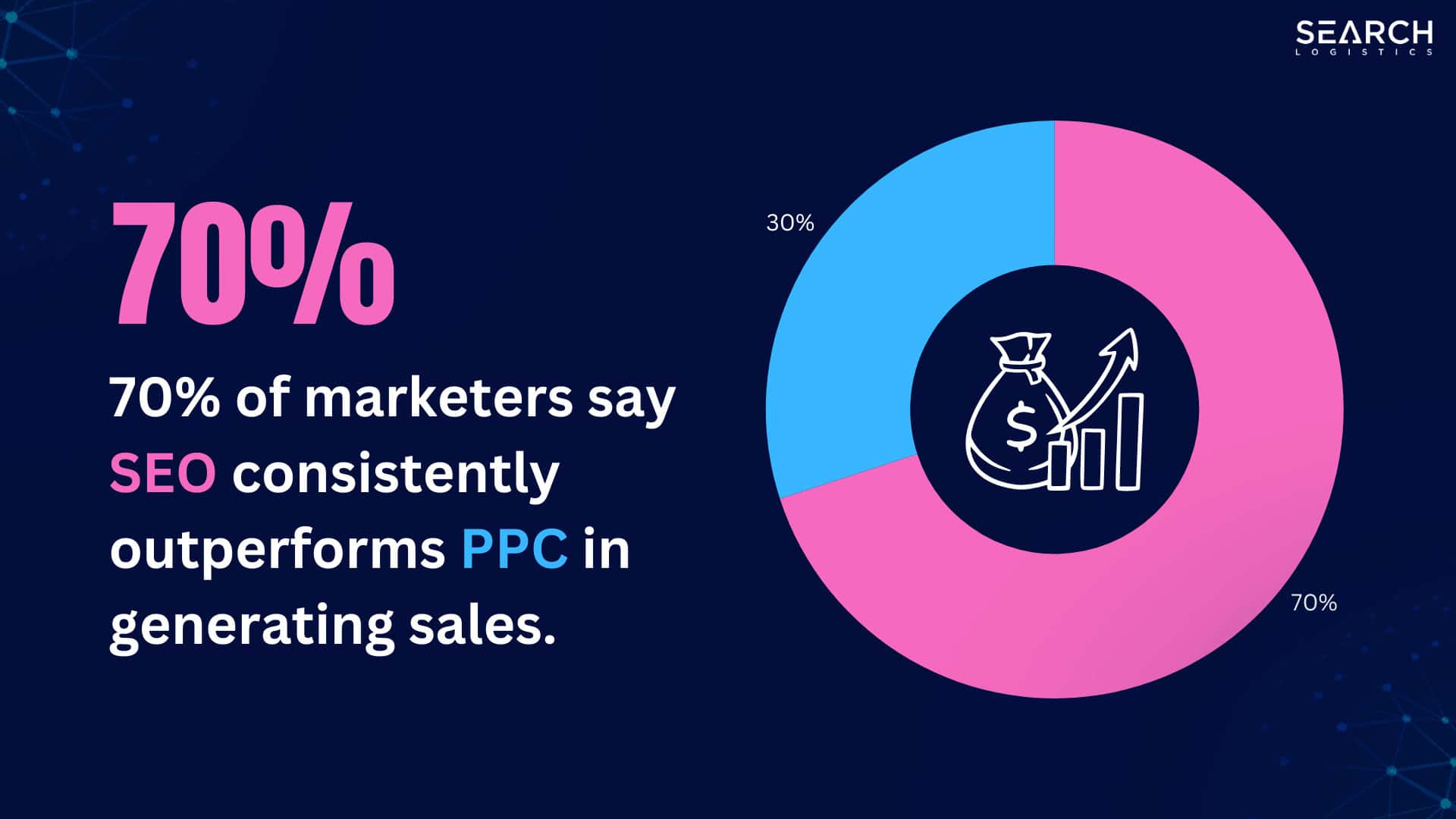
The big takeaway here is that not only does SEO drive a higher number of leads on average, but the quality is also better. That’s a win-win.
People Search Before They Buy
66% of people research online before they decide to purchase a product or service.
And 63% of shopping journeys begin online, even if the person ends up at a physical store.
The interesting part for all businesses is that your average potential customer has already done the research before they visit your store or website.
That means you should focus more on conversion over education.
A common misconception is that SEO is only good for capturing people ready to buy. But that couldn’t be further from the truth.
39% of all buyers are influenced by a related search query during their buyer journey.
What does that mean?
Search is part of discovery. People don’t just type in one search and buy.
They start with a general search and get more and more specific as they get closer to finding a solution.
Use SEO to reach people at different stages of the buyer journey.
Search Is A Part Of Everyday Life
81% of all internet users use a search engine at least once per month.
What’s more?
The average user performs 3 to 4 searches per day.
There are an estimated 6.04 billion internet users worldwide, which means about 4.89 billion people use a search engine regularly.
This is only expected to grow as AI search becomes more accessible.
The bottom line for business owners is that your potential customers are searching every single day.
SEO provides a unique and proven opportunity to reach them.
Google Ranking & CTR Statistics
Ranking on Google isn’t just about visibility.
It’s about driving targeted traffic to your website.
And the position you rank makes a massive difference.
Your Ranking Position Still Matters A Lot
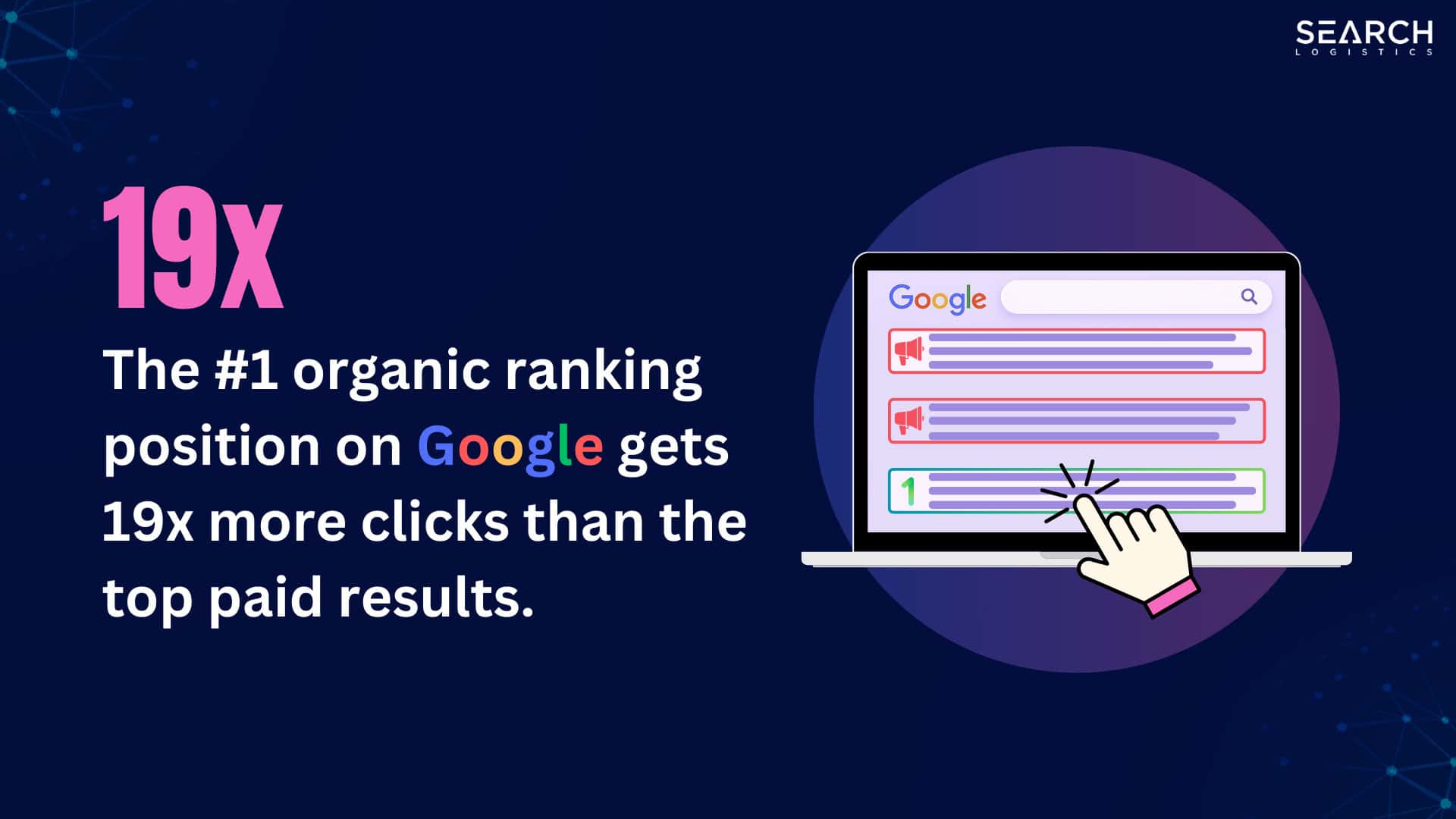
The #1 organic ranking position on Google gets 19x more clicks than the top paid results.
Think about that for a second…
For a user to see your website, they have to scroll past the paid Google ads at the top.
Even then, the first ranking position has 1900% more traffic than those ads. And the advertisers have to pay for every click.
Moving from position #2 to position #1 increases your clicks by up to 74.5%.
That’s not a small jump!
Moving up just a single position could have a massive positive impact on your business’s bottom line.
These are the organic Google click-through-rates based on each ranking position:
| Organic Ranking Position | Average Click-Through-Rate (CTR) |
|---|---|
| 1 | 27.6% |
| 2 | 15.8% |
| 3 | 11.0% |
| 4 | 8.4% |
| 5 | 6.3% |
| 6 | 4.9% |
| 7 | 3.9% |
| 8 | 3.3% |
| 9 | 2.7% |
| 10 | 2.4% |
The number 1 ranking position gets 27.6% of all organic traffic.
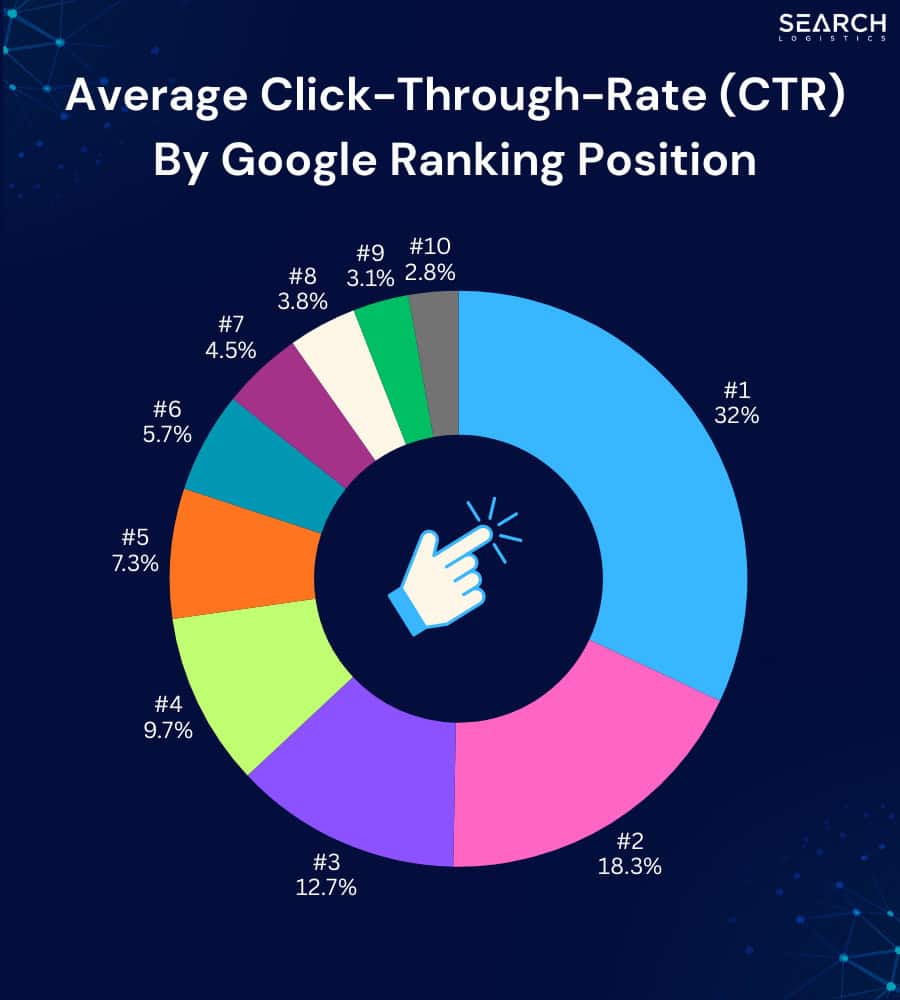
That’s 10x more than positions #9 and #10.
More interesting than that is the fact that 54.4% of all organic traffic goes to the top 3.
The reality is that ranking on the first page is not as valuable as it used to be.
Your goal should be to have your average ranking position in the top 3 on Google.
And if you’re on page 2 of Google?
Well, you’re essentially invisible.
Only 0.78% of users ever click on a site ranking on page 2.
Small Details Impact Your CTR
There are two quick wins that most people overlook…
Pages with the keyword in the URL see a 45% higher click-through rate.
Users look at the URL before clicking. If your URL includes the keyword, you will get more clicks.
The second biggest CTR win is meta-titles.
Google rewrites meta-titles 57% of the time if they’re too long.
Make sure that your meta titles are optimised and are less than 60 characters.
Rankings Take Time
Most SEOs think you publish a piece of content, wait two weeks and wherever the content ranks is where Google thinks it should be.
But the data shows something different…
Only 1.74% of newly published pages reach Google’s top 10 within a year. On top of that, 72.9% of all pages ranking on the first page are more than 3 years old.
The average #1 ranking page on Google is 5 years old.
Back in 2017, it was just 2 years old.
| Date | Average Domain’s Age Ranking #1 On Google |
|---|---|
| 2017 | 2 years old |
| 2026 | 5 years old |
There is no doubt that SEO competition is only increasing.
There are a couple of big takeaways here…
Updating content is more important than you think.
Refresh your content at least once every 6-12 months to give it the best chance to rank highly.
Secondly?
- The best time to create a new piece of content was 5 years ago.
- The second-best time is now.
Remember that even with a high-authority site, rankings take time.
The websites that win SEO play the long game and achieve consistent results over time.
AI SEO Statistics
AI has changed the SEO industry more than ever before.
Generative AI platforms now attract about 7 billion monthly visits, and more than 1 billion people use AI platforms regularly.
This alone has created a new branch of SEO called generative engine optimisation (GEO).
And for good reason…
AI search traffic increased 500% in 2025 and is expected to surpass traditional Google search by 2028.
AI isn’t just a new trend. It’s something you should already be actively incorporating as part of your SEO strategy and optimisation workflow.
ChatGPT Is The Biggest AI Search Platform
ChatGPT now has over 1 billion monthly active users, making it the largest AI platform.

Here’s a table with all the major AI platforms and their monthly active users:
| AI Platform | Monthly Active Users |
|---|---|
| ChatGPT | 1 billion |
| Google Gemini | 750 million |
| DeepSeek | 125 million |
| Perplexity | 45 million |
| Grok | 35 million |
| Claude | 18.9 million |
Gemini is now the second biggest AI platform with 750 million monthly active users.
Back in mid 2025, Gemini had just 400 million users. That’s 300 million more monthly active users added from July 2025 to February 2026.
How?
Short answer: Money.
Google has been pushing massively into AI, projecting up to $185 billion in AI-related capital expenditures for 2026 alone.
That’s more than double what it was in 2025.
52% of Americans now use a major AI platform each week. This is likely to continue to grow as AI tools and software become more mainstream.
AI Overviews Are Reshaping How Google Works
Google has essentially become a hybrid search engine.
They now have AI Overviews at the top of the search results, followed by the traditional blue link SERP structure.
This is what’s causing the biggest shifts in SEO right now.
AI Overviews appeared for up to 25% of search queries in early 2025. But now they appear in 52% of all searches.
| Date | AI Overviews Apparences (%) |
|---|---|
| 2025 | 25% |
| 2026 | 52% |
That’s more than double in less than a year.
The impact?
Clicks to websites have been reduced by about 35%.
That’s not a small number.
Here’s the opportunity:
76% of all sources cited in AI Overviews already rank in the top 10 organic search results.
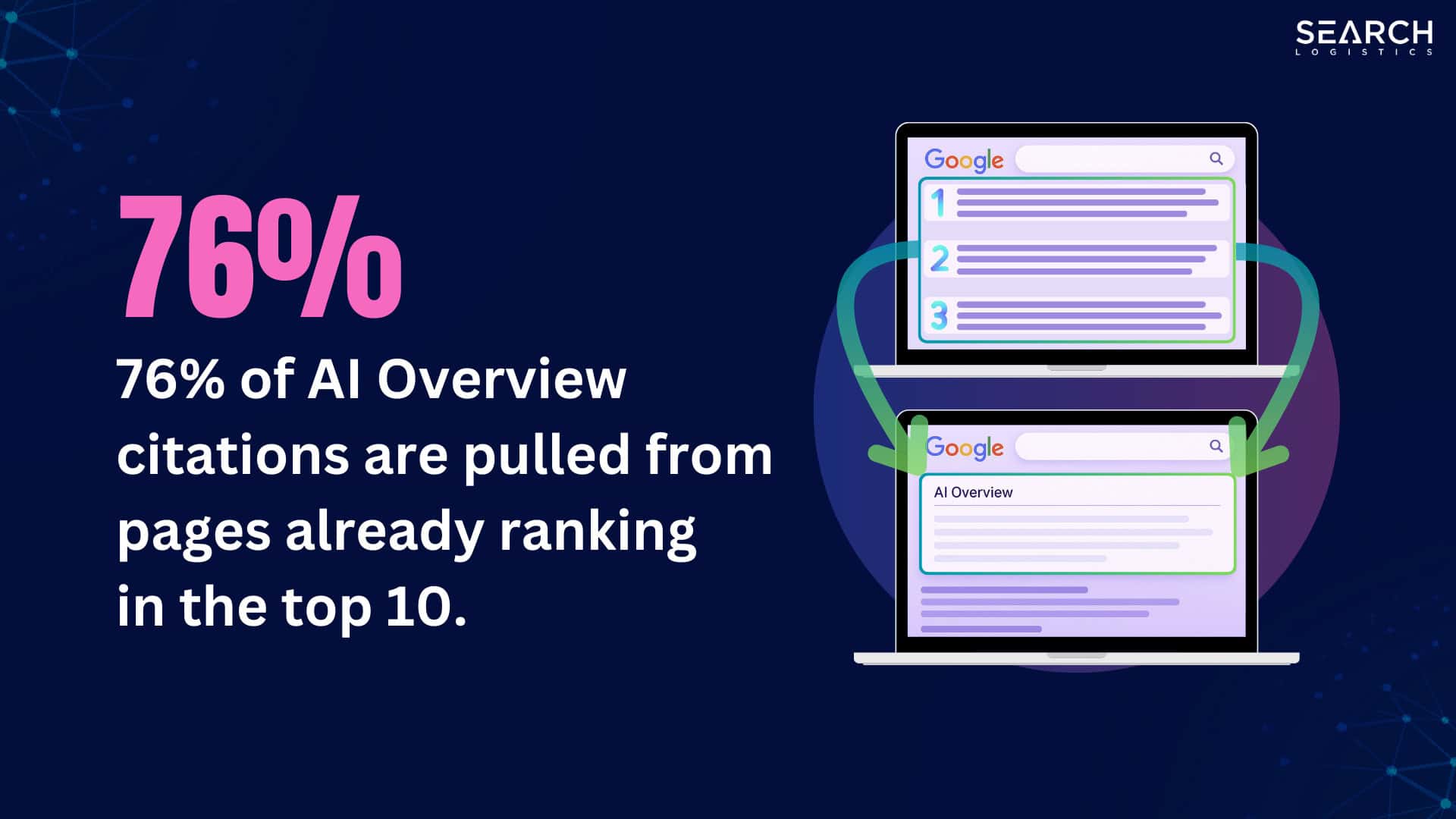
That means that the work you’ve done with traditional SEO is the foundation for GEO.
If you rank well organically, you will rank well in AI Overviews as well.
What’s more?
Organic traffic from AI search is worth 4.4x more than traditional organic traffic.
That means the traffic you do get from Google AI Overviews is likely to convert.
The shift is from just measuring metrics like traffic and rankings to focusing on how well the traffic actually converts on your site.
People Don’t Trust AI Answers
There is no doubt that AI hallucinates regularly
This has had a big impact on people’s trust in the platform.
17.3% of content in Google’s top 20 results is now AI-generated.
And a massive 63% of AI search users say that inaccuracies are the biggest downside of AI tools.
At the end of the day, for quick decisions, AI answers might satisfy users.
But when it comes to bigger decisions, users want to click through to the source and read it for themselves.
Keep this in mind when you’re creating your content strategy.
Be the trusted source that provides unique, valuable and accurate information to your users. You’ll see steady growth long-term as your competitors drop from spamming AI content.
Most Marketers Use AI Tools Everyday
People have been talking about the great AI revolution since ChatGPT launched back in November 2022.
The truth is that it’s already here.
75.7% of marketers use AI tools in their work every day.
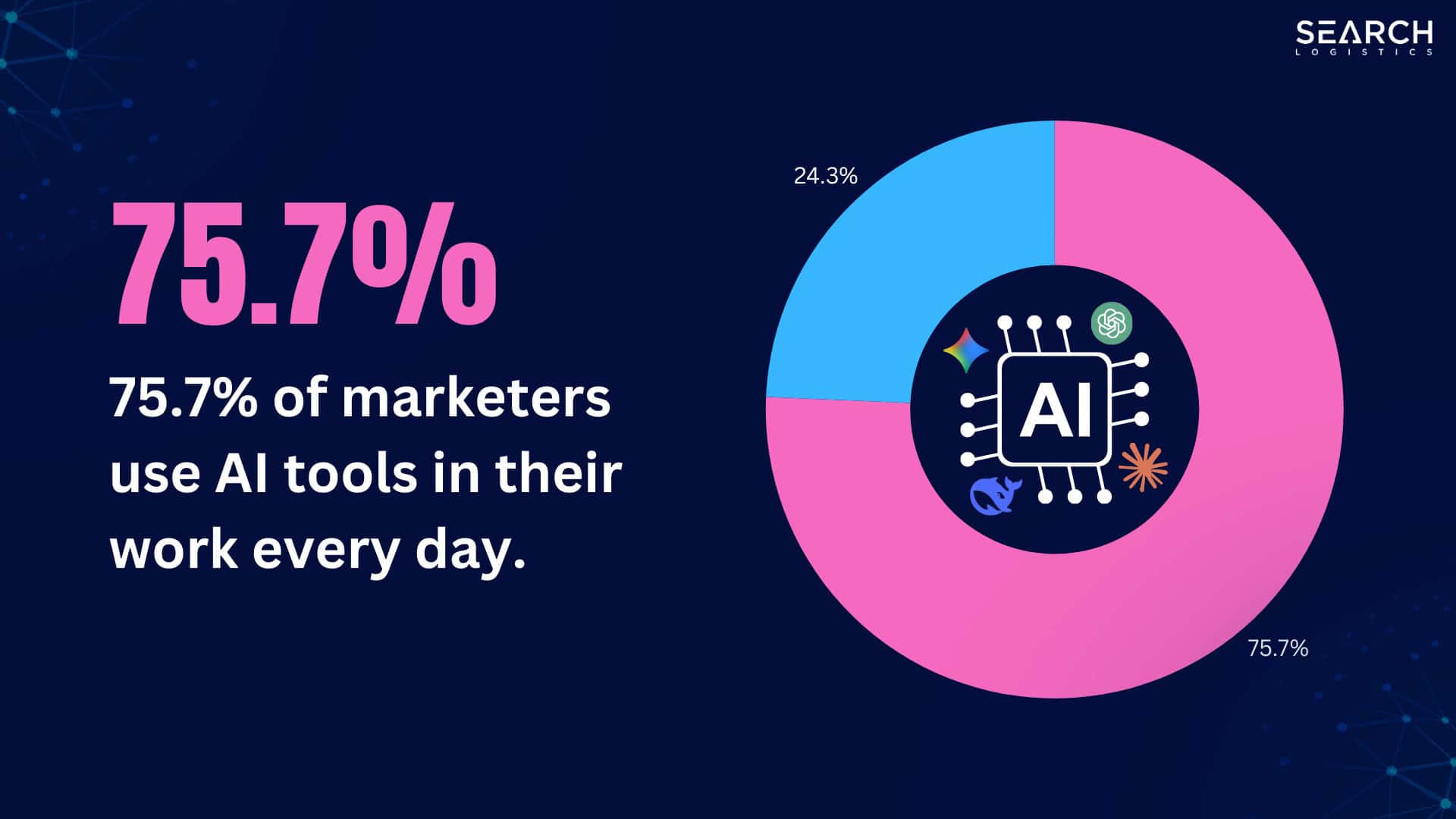
This can be anything from campaign strategy to extracting insights or doing research.
What are they using it for?
Here’s the breakdown of what marketers use AI for most:
-
- 85.1% use AI to write content
- 71% use AI tools to brainstorm ideas
- 40% use AI for strategy development
While creating content (including written, video and images) has always been the primary use case for AI, it’s now gone beyond that.
Marketers use AI as a sparring partner to flesh out ideas and come up with marketing strategies.
57% of SEOs also say AI has increased competition in their niche.
We now have more information and capability at our fingertips than at any other point in history.
That naturally leads to more competition. But here’s the interesting part…
Only 30% of marketers believe that AI will negatively impact organic search.
I’m in that camp.
Change is scary, but it also creates opportunity for those willing to adapt.
Want more statistics? Check out my complete AI SEO statistics page.
Link Building Statistics
If there’s one thing that moves the needle in SEO more than anything else, it’s backlinks.
The reality is that link building is one of the core pillars for both traditional SEO and AI search.
These link building statistics show just how much backlinks impact your SEO results.
Backlinks Are Still The #1 Ranking Factor
The #1 ranking position on Google has 3.8x more backlinks than pages ranking in positions 2-10.
That SEO statistic really tells the whole story when it comes to backlinks.
58.1% of SEOs believe that backlinks make the most significant impact on rankings.
And a massive 92% of marketers believe links will still continue to be a top ranking factor over the next 5 years.
What about for AI search specifically?
73.2% of SEO professionals believe that backlinks significantly impact your chances of appearing in AI Overviews.
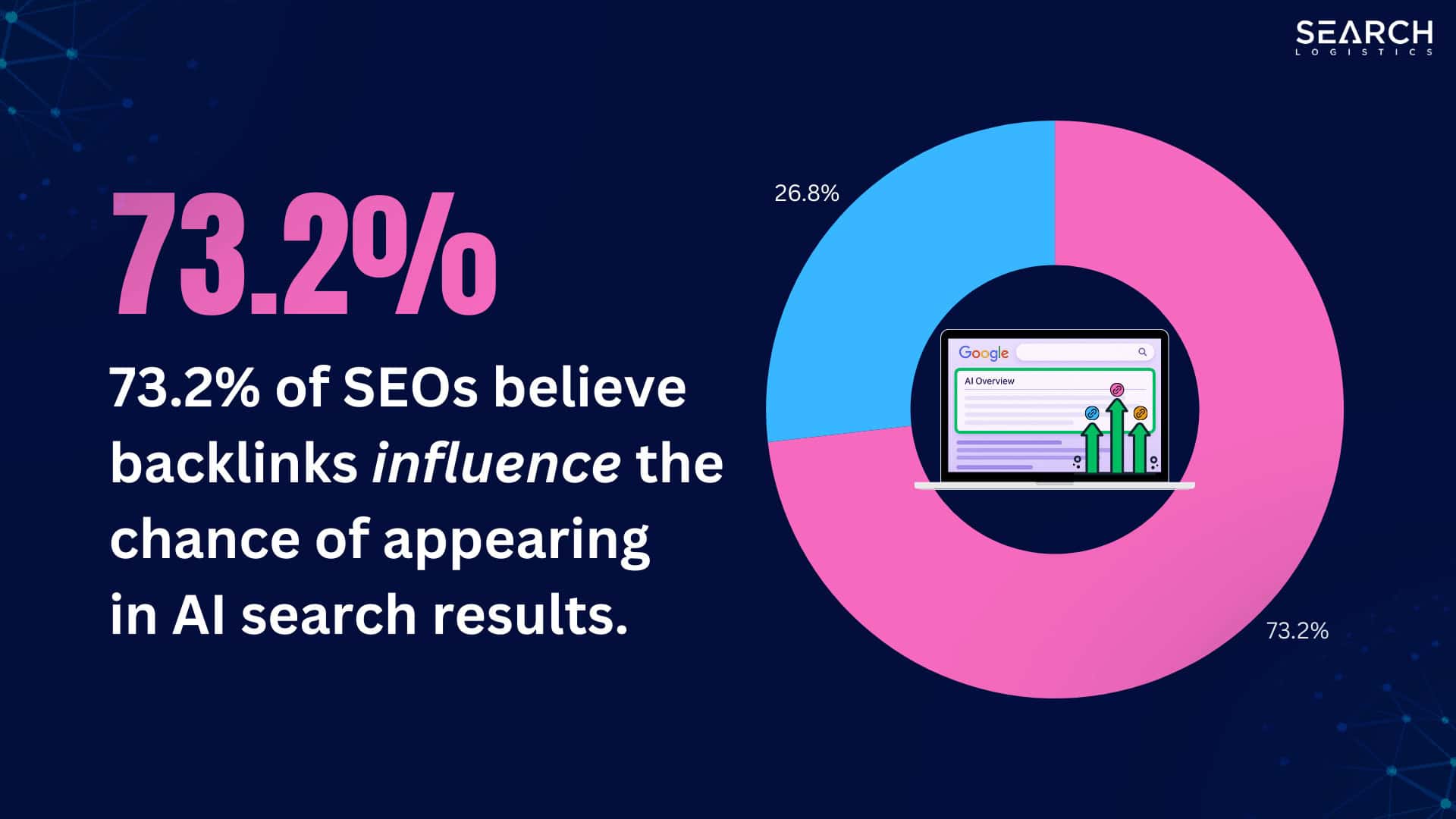
The reality is that backlinks are and will continue to play a huge role in traditional Google rankings and AI search as it grows.
Your Backlink Profile Is A Competitive Advantage
41% of SEO experts say that link building is the most challenging part of SEO.
And that’s for professionals.
Now you can see why most businesses don’t even bother.
But the reality is that:
- Only 5% of pages on the internet have a link pointing at them.
- Only 2.2% of all content published online earns more than one unique backlink.
What does that really mean?
Building just a handful of links each month to your site and key pages creates a moat around your rankings.
Most business owners don’t bother investing in link building, which gives you an opportunity to get ahead.
Over 60% of businesses outsource their link building to professional link building services and contractors.
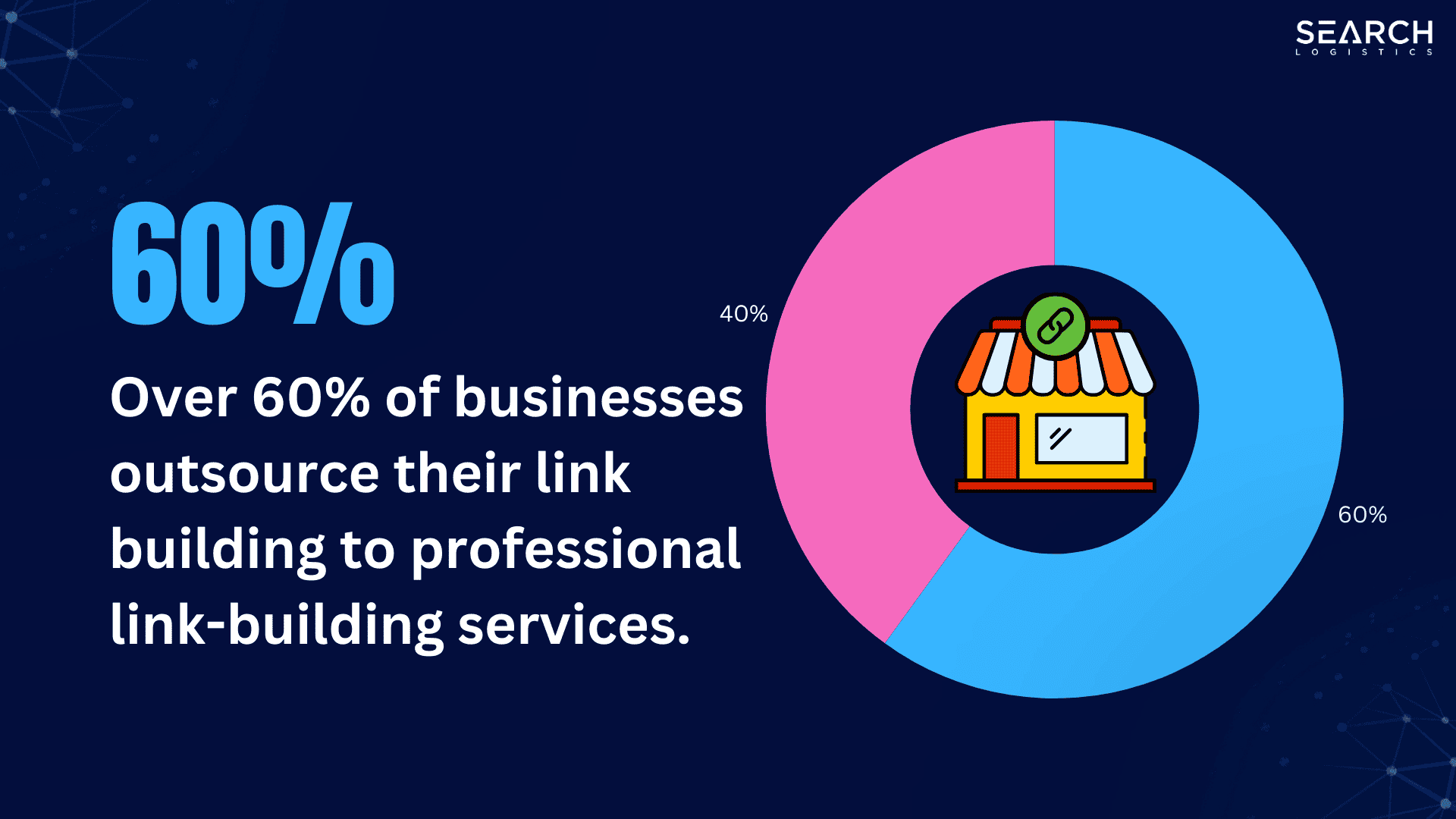
This is due to link building:
-
- Being hard to do
- But being essential for SEO growth
That’s exactly why backlinks will always be one of the biggest competitive advantages in SEO.
Mobile SEO Statistics
58% of all Google searches are performed on a mobile device, and over 51% of all global web traffic now comes from a mobile device.
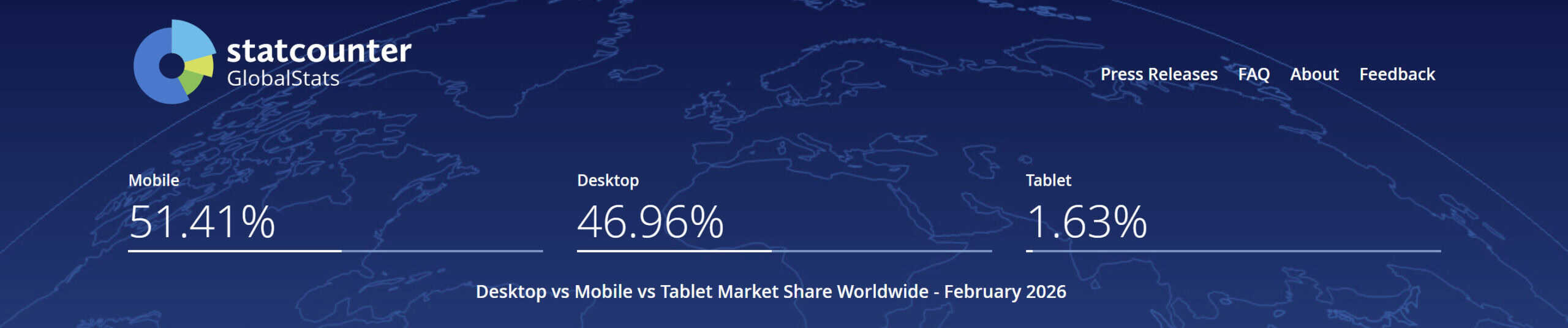
If your website isn’t optimised for mobile, you’re actively pushing away more than half of your web traffic.
And since Google finished rolling out mobile indexing first in October 2023, it should be a primary focus.
But here’s the big reason that mobile is so important…
72% of global internet users access the internet exclusively on a mobile device.
When you think of SEO, think mobile first. The rest will take care of itself.
People Shop On Their Mobile Devices
Mobile has changed how people shop.
Here’s what I mean:
30% of shoppers used a smartphone to buy a product online while looking at the same product in a physical store.
This is big news for ecommerce owners.
You could potentially convert customers online while they’re standing in a competitor’s physical store.
Crazy, right?
But your site has to load quickly.
53% of mobile users abandon a website that takes longer than 3 seconds to load.
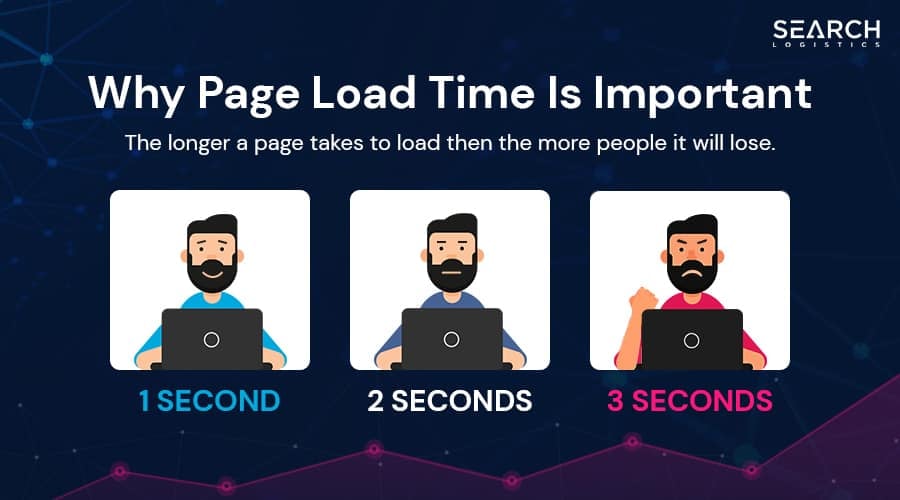
Increase your website speed to boost SEO results and convert more customers.
More than half of smartphone users discover new products through mobile search. And 56% of U.S. consumers use their phones specifically to search for local businesses.
When most people make the mistake of thinking in terms of a desktop when they design and optimise their site.
Mobile is a massive opportunity to reach people right at the time they’re searching and convert them into customers.
Local SEO Statistics
Local SEO has only become more important with the growth of AI search.
46% of all Google searches have local intent, and 30% of all mobile searches are location-specific.
On top of that, searches for “near me” and “where to buy” have increased by 200% since 2017.
The number one way that people discover local businesses in their area is through search. If you run a local business, local SEO is a must.
Local Search Drives Real World Results
This is where search gets exciting for local businesses…
76% of people who search for a local business on their smartphone visit the same business within 24 hours.
Even more importantly, 28% of all local searches result in a purchase within 24 hours.
Let that sink in for a minute.
For every 4 people who search for your business, at least 1 will purchase something from you within 24 hours.
All you have to do is make sure that your business is the one they’re searching for.
Google Business Profile Is The Foundation Of Local SEO
Google Maps is made up of the Google Business Profile (GBP) network.
That’s important because 86% of people use Google Maps to look up business locations.
And 42% of all local searches result in a click on the Google Map Pack specifically.
The Map Pack is the top 3 organic listings displayed at the top of the search results.
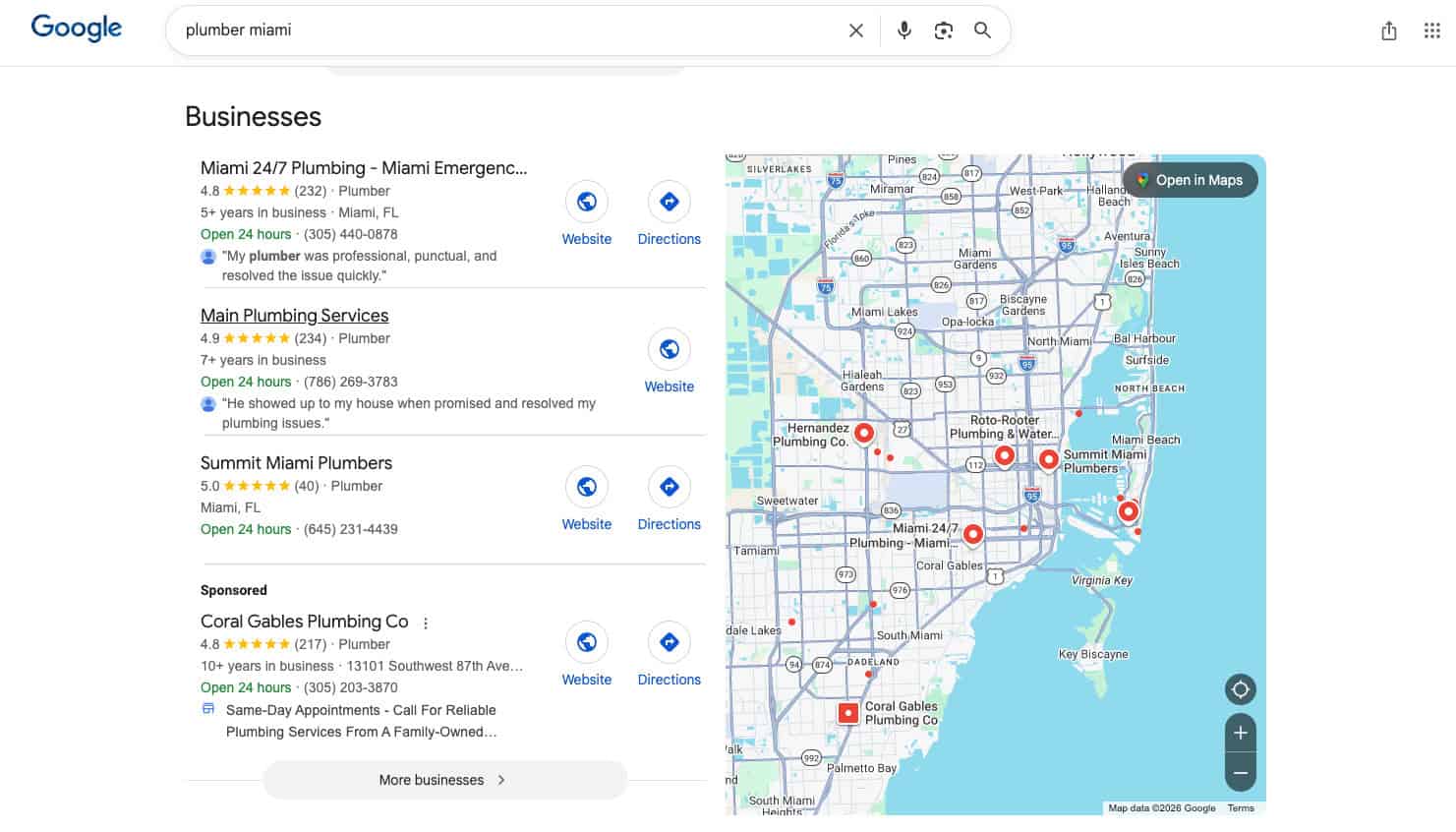
Ranking here is gold for local business owners.
How do you rank there?
Here’s what the data says:
-
- Verified and completed profiles are 80% more likely to appear in the search results.
- 86% of all views on Google Business Profiles come from category and discover searches (e.g. “best coffee”).
- The top 3 ranked profiles typically have over 250 images and average 240 reviews.
- A 4.7-star rating is considered the optimal rating for local businesses.
Here is the most interesting part…
56% of local businesses have not claimed their Google Business Profile listing.
If you run a local business, your Google Business Profile should be your first priority.
Local SEO success stems directly from that.
Reviews Are A Local SEO Ranking Factor
Online reviews and local SEO work hand in hand.
Why?
Because Google and AI tools want to know they can trust you before they start recommending your business. Humans are the same.
97% of consumers read reviews before choosing a local business.

82% of consumers trust online reviews more than they trust a recommendation from a personal friend.
If you don’t have good reviews, you lose the customer before they even truly consider your business as an option.
But recent reviews matter just as much.
74% of consumers only trust reviews written in the last 3 months.
Here’s what that means for local business owners:
Getting reviews is not just a one-time task. You need to create a system that allows you to consistently collect reviews from your customers.
The average star rating also matters:
-
- 68% of customers will not go to a business with a rating of less than 4 stars
- 31% of customers will only use a business with a 4.5+ star rating
- 88% of customers say they’re more likely to use a business that responds to reviews
The main takeaway here is that you need to consistently collect reviews and maintain a 4.5-star rating or higher.
And when you get those reviews, respond to them quickly.
That’s the gold standard for ranking higher and ensuring you convert local searches into real customers.
Voice Search & Video SEO Statistics
Voice and video search are two of the fastest-growing search formats right now.
If you haven’t adapted your SEO strategy already, now is the time to start.
Voice Search Is Growing
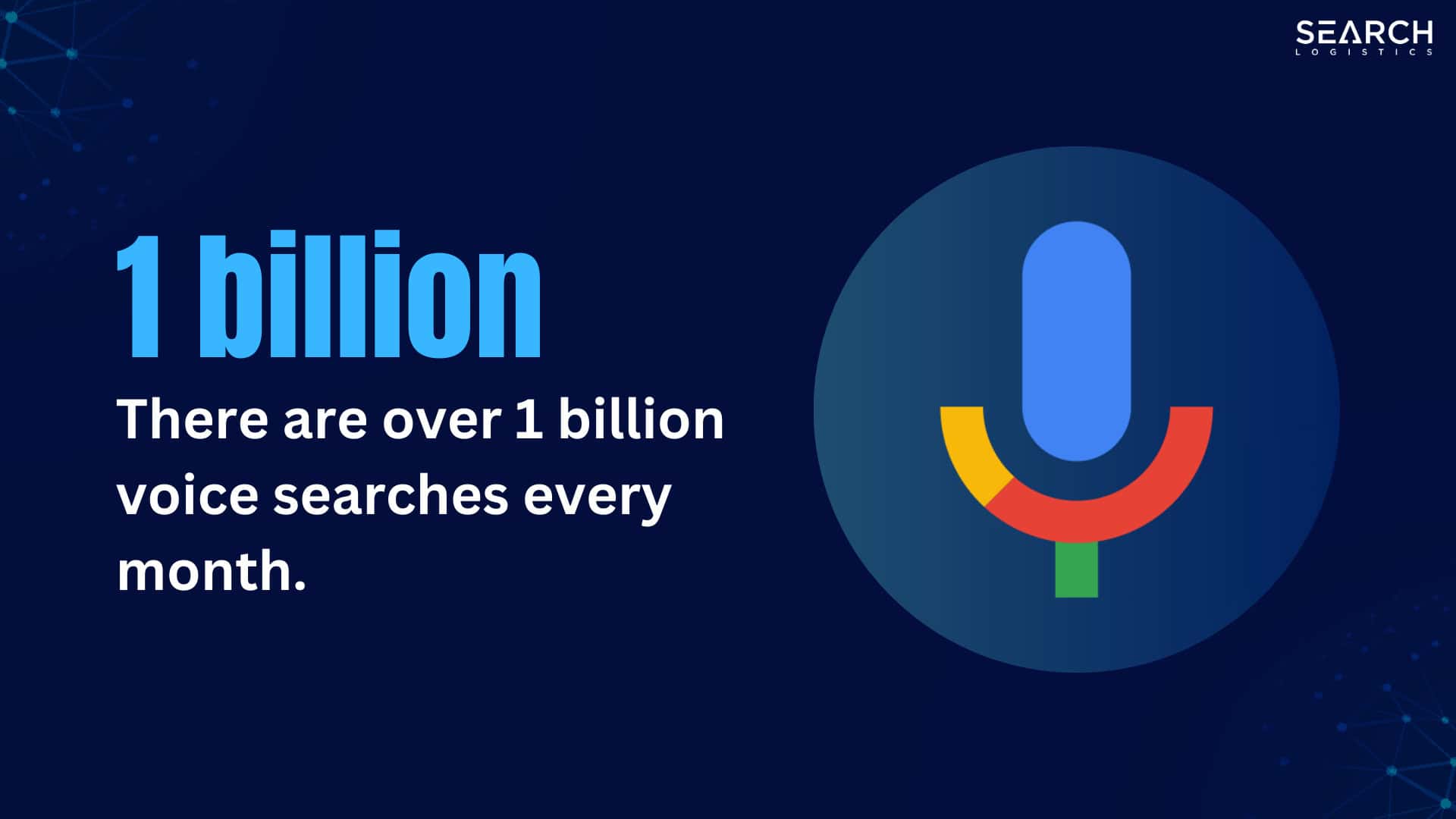
There are over 1 billion voice searches every month, and 50% of mobile users perform at least one voice search every day.
Advancements in AI technology have only improved voice assistants like Alexa, Siri and Google Assistant.
But this is what makes voice search different:
The average voice search query contains 29 words.
For context, a text search is 4 words on average, and an AI search is 23 words.
That means that voice searches are more specific, conversational and personalised.
80% of voice search results are pulled from the top 3 ranking positions.
What does all this mean for your SEO?
If you want to show up in voice search, you need to:
-
- Rank organically in the top 3
- Write in a conversational tone
- Create specific, personalised content
Voice search is expected to grow as a search method.
Optimising your content to answer specific questions clearly and concisely is the fastest way to increase voice search visibility.
Video Content Drives Traditional SEO Growth
Pages with video receive 157% more organic traffic than those that don’t.
That’s not all…
Content pages that include video have a 41% higher CTR.
The truth is that when people think of video SEO, they simply think of YouTube.
But the reality is that you can boost your top organic pages by simply adding a video to them.
You don’t need some crazy YouTube SEO strategy.
Just make a few quality videos and embed them on the relevant pages.
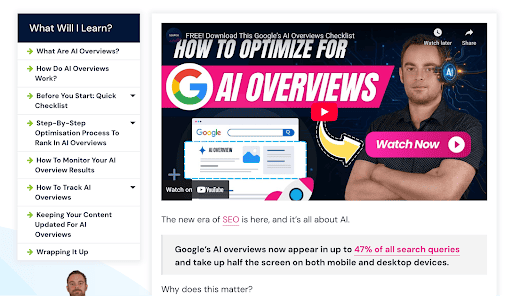
Simple, right?
Video content is also 50x more likely to appear on the first page of Google than a standard content page.
Why?
Short answer: Competition.
There is far less competition for video content. And it’s not uncommon for Google to show at least 3 videos in the organic search results.
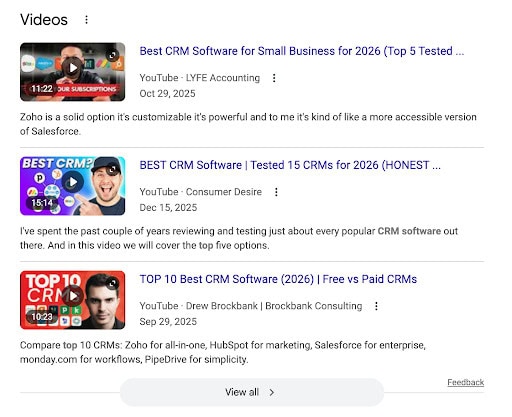
69.7% of Google AI Overviews also feature at least one video.
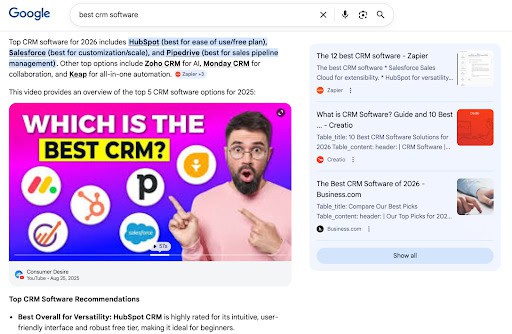
YouTube is the most cited domain in AI Overviews, accounting for over 30% of sources.
Compare that to the average Google SERP that shows video thumbnails in 26% of all search results.
Here’s what this means for your SEO strategy:
You don’t need to create video content and post it on YouTube for each page. Choose your top 5 content pages and aim to create one video for each.
Then, publish the videos on YouTube and embed them into a relevant section at the top of your content.
That’s the fastest and most effective way to improve your SEO, rankings and citations.
Wrapping It Up
There you have it…
The most important SEO statistics you need to know right now.

The big picture is clear.
SEO is still the most powerful marketing channel available to all businesses.
But the industry is changing fast.
Google still dominates search, driving the most traffic to websites by a long way. But AI Overviews, zero-click searches and AI platforms like ChatGPT, Gemini and Perplexity are reshaping how people find and discover information.
Here’s the thing to remember:
People will always need a way to find information, so SEO will always be important.
The reality is that SEO has always rewarded businesses that deliver quality and focus on long-term, consistent growth. That hasn’t changed.
Want more statistics posts? Take a look at these blogs: