






















 Subscribe to my YouTube
 Join My Facebook Group
 Connect on Linkedin
 Free SEO Tutorials
 SEO Case Studies
 Links That Rank


If you want to have success with SEO this year, you MUST focus on brand signals.
Here’s why:
Google and AI search engines like ChatGPT, Perplexity, and Gemini are looking for MORE than just traditional SEO factors.
They only want to send visitors to brands they know and trust.
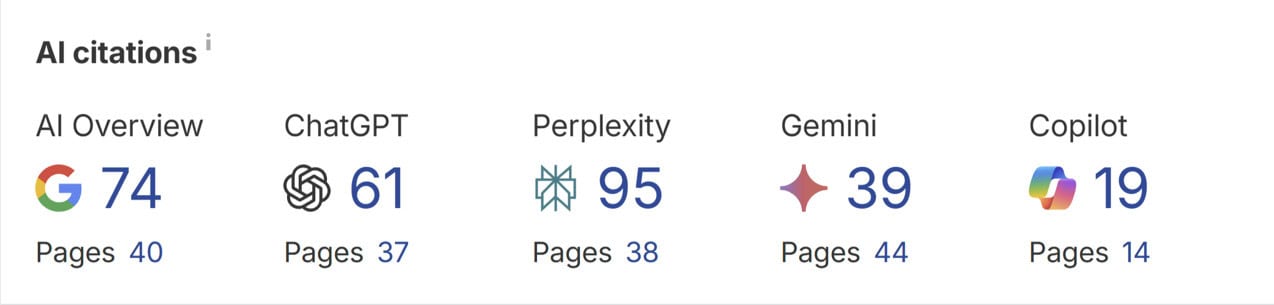
Think about it like this…
If your brand only exists on your website, you will be practically invisible to Google’s entity system and LLMs.
Brand signals are quickly becoming one of the most important ranking factors.
The good news?
Increasing your brand signals isn’t as hard as you think.
You just need to take advantage of my Consistent Brand Descriptor strategy.
In this guide, I will show you exactly how Google uses brand signals for ranking, how LLMs like ChatGPT choose which brands they recommend, and my step-by-step playbook for capturing both.
Let’s get into it.

What Will I Learn?
How Google Uses Brand Signals For Rankings
Google wants to know who you are, not just what you write on your website pages. They don’t just analyse your content.
They build an understanding of real-world entities such as:
- Brands
- Organisations
- People
- Products
This is called “entity understanding”.
And it plays a foundational role in where your pages and content are surfaced for high-value searches.
Google builds a knowledge graph around entities and looks at who those entities are connected to.
The more that Google knows and understands your brand as an entity, the more confidence and trust it has in your brand.
Let’s take a brand like Asics, for example.
When someone searches “mens Asics running shoes”, Google understands:
- Asics as a brand entity
- Mens running shoes as a product category
- The relationship between the two
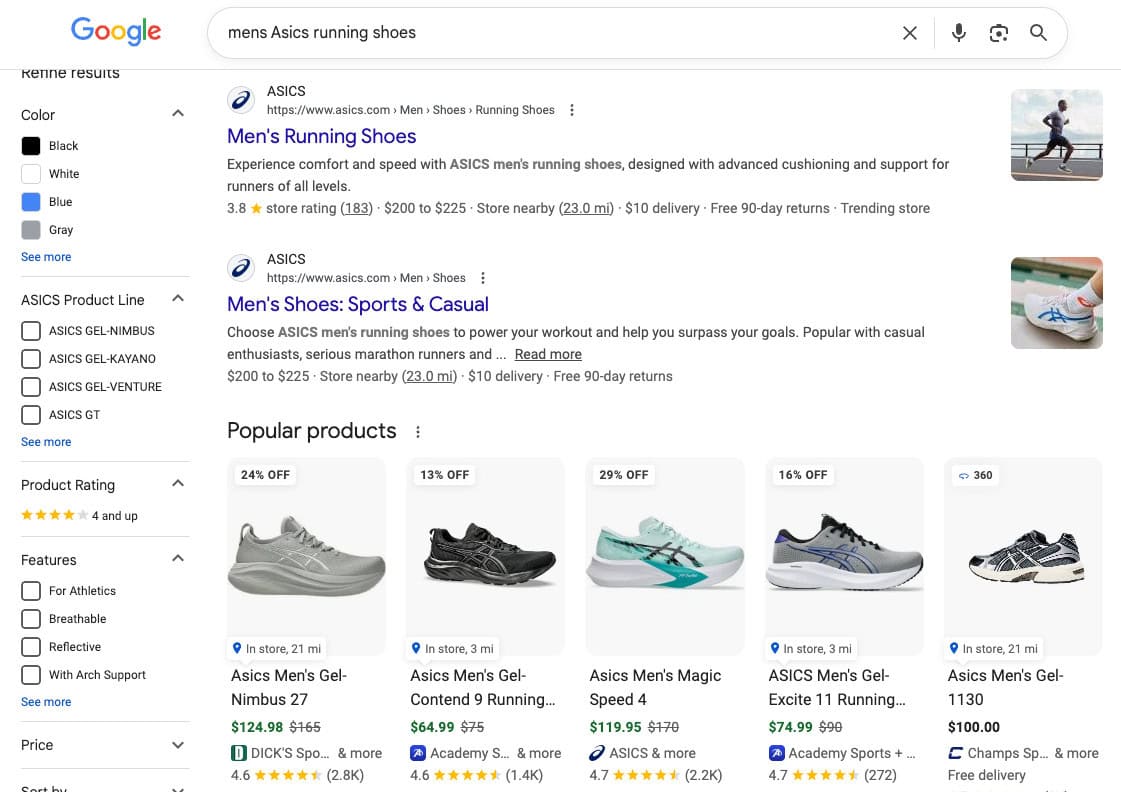
That’s simple enough.
But what happens when we remove the name brand from the search?
For example, “best mens running shoes”:
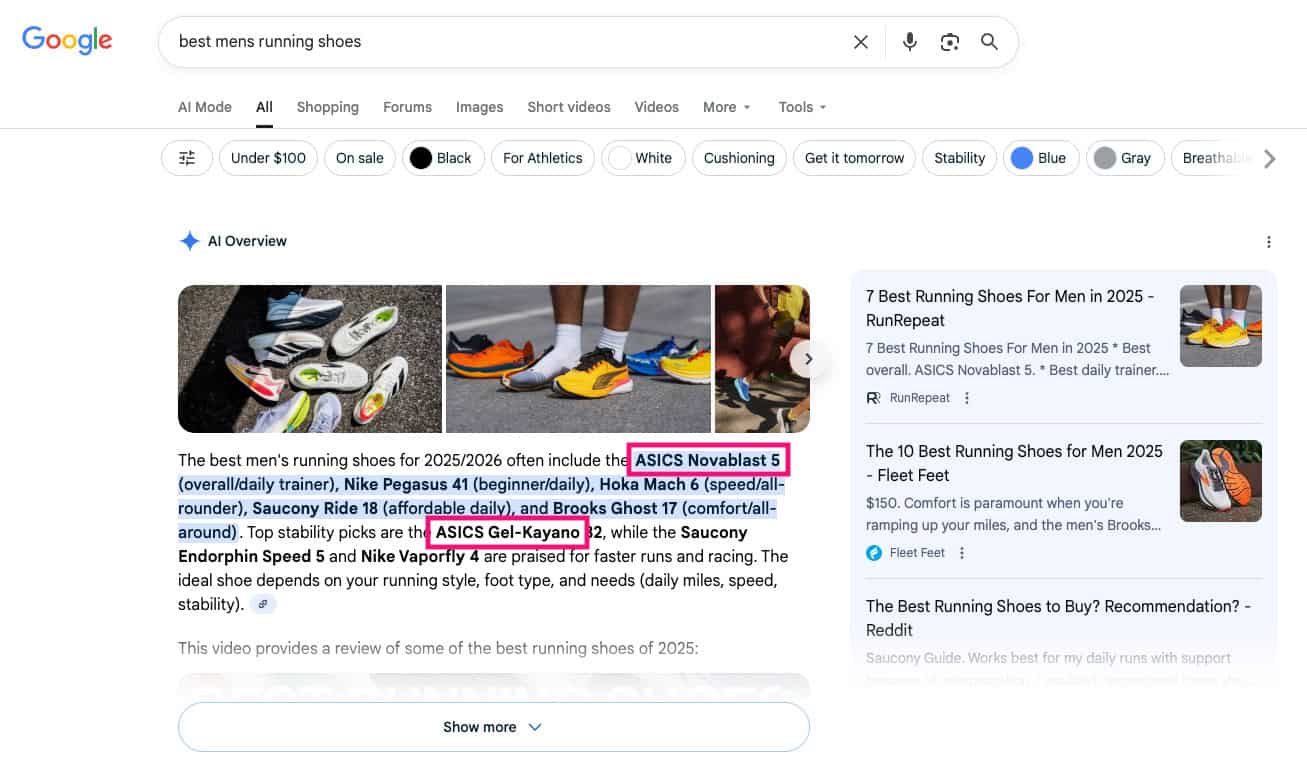
This is where brand signals matter most.
Even though the search query is non-branded, Google still evaluates Asics as a strong candidate to surface as an answer because it has consistently seen brand signals connecting it to men’s running shoes.
Pretty powerful stuff.
Here’s the bottom line…
Brand signals make it easier for Google to understand-
- What category you belong to
- What you’re known for
- When your content has the relevant answer
That clarity boosts other core ranking factors like backlinks, content, and E-E-A-T – essentially making them work harder for you.
As a result, you’re more likely to rank higher in the search results for relevant non-branded searches, and you end up capturing more traffic.
That’s exactly what you want!
What Brand Signals Does Google Look For?
These are the brand’s signals that matter most:
- Brand mentions – Your brand being mentioned in trusted industry publications, news sites, or established blogs.
- Mentions alongside other trusted brands – Appearing in content on other sites alongside experts and known brands in your industry.
- Contextual relevance – Getting links in content that’s topically relevant and related to your niche and expertise.
- Consistent brand information – The same description, positioning, and information about your brand across multiple sources.
- Endorsements – Recommendations and source citations from other trusted brands, publishers, and websites.
Here’s the thing you’ll notice about brand signals…
They’re largely from external sources.
And it’s about more than just building a bunch of backlinks on different sites and calling it a day.
Google is looking for consistency.
They want to know that what you claim about yourself and what other sources say about you match up.
When your brand is repeatedly mentioned across authoritative, relevant websites with consistent positioning, Google has more confidence in you as an entity. This indirectly translates into better rankings in the search results.

How LLMs Use Brand Signals
Here’s the thing you need to know about AI…
LLMs like ChatGPT, Claude, and Gemini don’t crawl the web in real time as traditional search engines (Googlebot, Bingbot) do.
They’re trained on massive amounts of data called datasets.
While most major LLMs can search the web, their default behaviour is to generate responses based on patterns they’ve learned from those datasets.
When someone asks an LLM:
“What’s the best running shoe brand?”
…It doesn’t necessarily run a search and surface content like Google does.
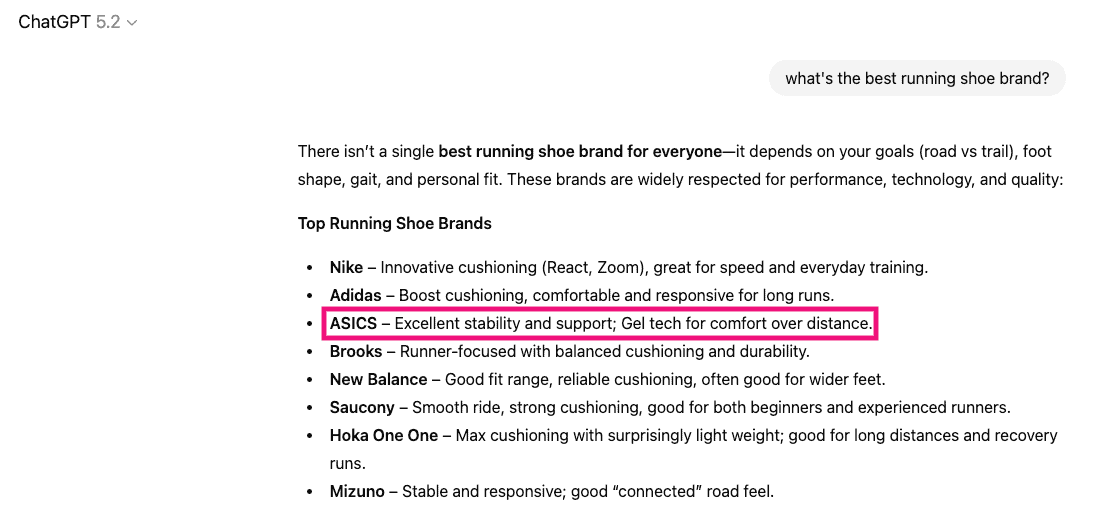
Instead, AI pulls from patterns it’s learned during training. And a large portion of those patterns is shaped by brand signals.
LLMs don’t rank websites in a traditional sense.
They instead predict what is most likely to be true based on recurring information found from trusted sources.
Here’s what that means for you:
You want your brand to be mentioned consistently across trusted sources like:
- News sites
- Industry blogs
- Publications
- Review platforms
…and even places like Reddit threads.
That way, the LLM learns the connection. It starts associating your brand (and your website) with topics, products, and categories.
This significantly increases the likelihood of being sourced or recommended in AI answers.
Who doesn’t want that, right?
The bottom line is that LLMs recommend brands they’ve seen mentioned repeatedly across multiple trusted sources.
No brand signals = no recommendations.
Simple as that.
What LLMs Learn From Brand Mentions
Now that you understand how LLMs use brand signals…
You need to know what they’re actually learning from those signals.
This will allow you to optimise your online presence to maximise the quality and types of information AI understands about your brand.
AI models build associations between-
- Your brand name and what it represents
- Your products/services and where they fit in the market
- Problems your business solves and who you solve them for
- Relationships to competitors and industry leaders
This is why LLMs can give such precise and detailed answers to questions.
It’s also why people tend to trust AI recommendations.
They don’t just understand your brand – they understand what market you fit into and who you best serve.
They also know how you stack up against competitors.
Why This Matters Now
AI-powered search and information discovery are changing rapidly.
Perplexity, Google AI Overviews, ChatGPT, Claude :
These AI tools are all changing how people get answers and evaluate what solutions are right for them.
And it’s only going to increase.
Think about it…
When someone goes to ChatGPT or Perplexity and asks:
“What’s the best CRM for small teams of fewer than 3?”
…The AI model draws from its training data to give very specific answers.
Look at the example search below:
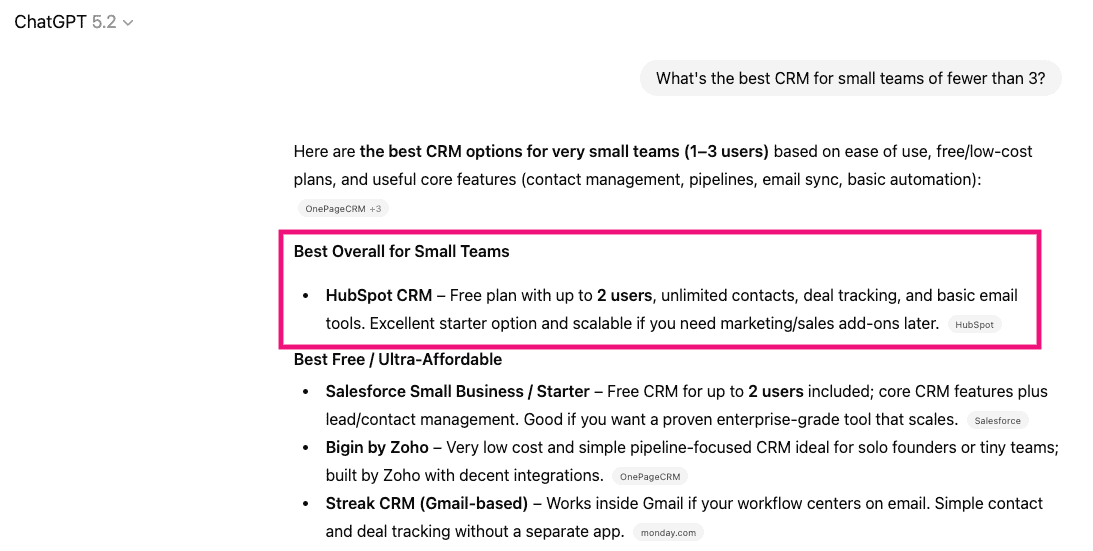
ChatGPT says that HubSpot CRM is the best CRM for small teams overall. But the source of that answer is HubSpot itself.
Crazy, right?
They win because of their brand signals online. Their own website is seen as a credible source, and they win the recommendation.
This change will affect every business in every industry.
Users don’t want generic one-size-fits-all answers.
They want personalised recommendations that will solve their specific issues.
The way to prepare for search over the next decade is to ensure that AI understands-
- Your brands
- What you do
- Who you serve
- Why you’re relevant
The good news?
There has never been a better time to start.

Consistent Brand Descriptor Strategy
With all that in mind, I am going to show you a powerful strategy that works for both Google entity building and LLM training.
LLMs and Google learn from repetition.
Generally speaking, the more something is mentioned online, the more likely LLMs and Google will understand it to be “truth”.
Especially if the information is mentioned on trusted sources and platforms.
This is where your “brand descriptor” comes in.
A brand descriptor is 1-2 sentences that state:
- Who you are
- Where you are based
- What you offer
- Who you serve
Then, you simply publish this on as many relevant places as you can.
All you have to do is follow the formula…
The Consistent Brand Descriptor Formula
Below is the brand descriptor formula that has consistently delivered the best results for our clients.
Fill in this template:
“[Brand] is a [location-based if relevant] [service type] specialising in [core offering] for [target audience].”
Simple, right?
Here are some examples to follow:
- Acme Legal is a London-based commercial law firm specialising in startup funding agreements for tech companies.
- GrowthMetrics is a B2B analytics platform specialising in revenue attribution for SaaS marketing teams.
- LinksThatRank is a link building service specialising in editorial guest posts and link inserts for SEO-focused businesses.
Struggling to get your brand descriptor right?
Give the brand descriptor formula and your website to ChatGPT. It will generate a near-perfect brand descriptor in seconds.
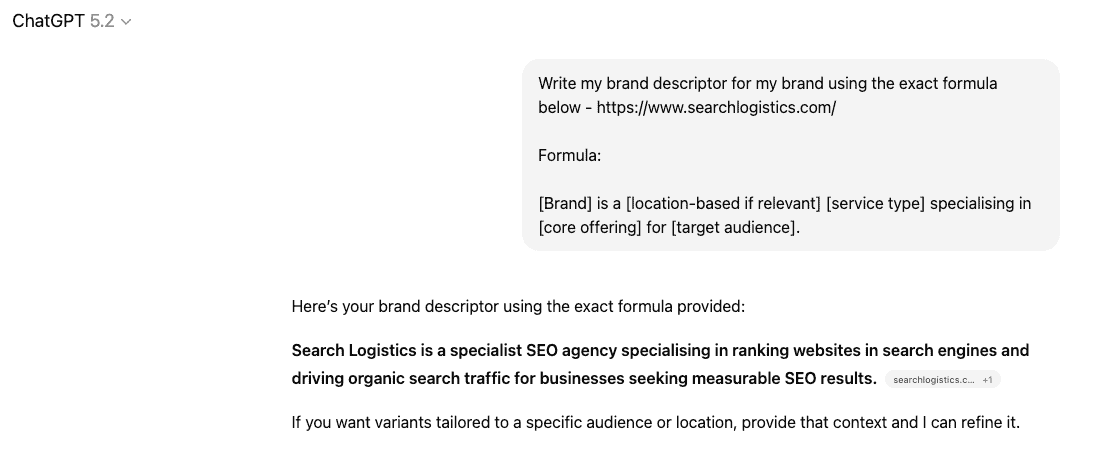
Add any finishing touches to personalise and polish your descriptor, and you’re good to go.
It doesn’t get much easier than that!
Where To Add Your Brand Descriptor
Written out your brand descriptor?
Add it to:
- Website homepage
- About page
- Social media profiles
- Google Business Profile
- Industry directories
- Review platforms
Consistency is what matters most.
You want Google and LLMs to discover the same brand descriptor on multiple trusted websites and platforms online.
Here’s the part that most people get wrong:
Your brand descriptor should say the same thing every time it appears online. Same positioning, language, and core message.
It doesn’t have to be exact, but it should be very close.
This repetition is what builds trust with Google’s entity system and trains the LLMs to understand exactly who you are.
Add your brand descriptor now because next I want to show you my number one strategy for building brand signals quickly…

Why Link Building Is The Best Way To Build Brand Signals
Not all brand mentions are created equal.
Guest posts and editorial link inserts are the most effective ways to build brand signals.
Why?
Because they place your brand on authoritative, topically relevant websites that Google and LLMs already trust.
And the best part is that you also acquire backlinks at the same time.
Here’s how both types of links improve your brand signals.
Guest Posts Give You Full Control Over Brand Positioning
Guest posts are effective because you control the narrative.
Let me explain:
When you place a guest post on a trusted, authoritative site in your industry, you get to decide how your brand is presented.
✅ You choose the words.
✅ You craft the positioning.
✅ You get to control the context.
That’s a big deal.
With other types of brand mentions and links, you’re at the mercy of whoever writes the content.
They don’t know your brand as well as you do.
That means that they miss key details and often don’t mention exactly what makes you unique.
Guest post links eliminate this problem because you can add your brand descriptor and ensure it appears exactly as you want it.
But that’s not all…
Smart guest post writers add their brand descriptor naturally within the content.
This reinforces the associations you want to create within Google and LLMs.
Guest posts allow you to build quality brand mentions on authoritative sites while you also control the way your brand is positioned.
Link Inserts Allow You To Leverage Authority Faster
Links inserts work differently from guest posts.
But they can be just as effective.
Here’s the deal:
With link inserts, you’re placing your brand descriptor into already aged content that Google has indexed.
The content already has authority and is potentially already included in LLM training data.
What does that mean for you?
Short answer: Faster results.⏱️
Think about it like this…
A brand new guest post needs time to be crawled, indexed, and trusted. A link insert allows you to skip all of that.
It’s like being introduced through a friend instead of making a cold introduction yourself.
The value can be passed to your brand almost immediately. The key is to ensure that your link inserts are added to the right kind of content.
Think-
- How-to guides
- Listicles
- Comparisons
- FAQ pages
- Checklists
- Data-rich content
These are types of posts that LLMs love to source in their answers and are frequently used in training data.
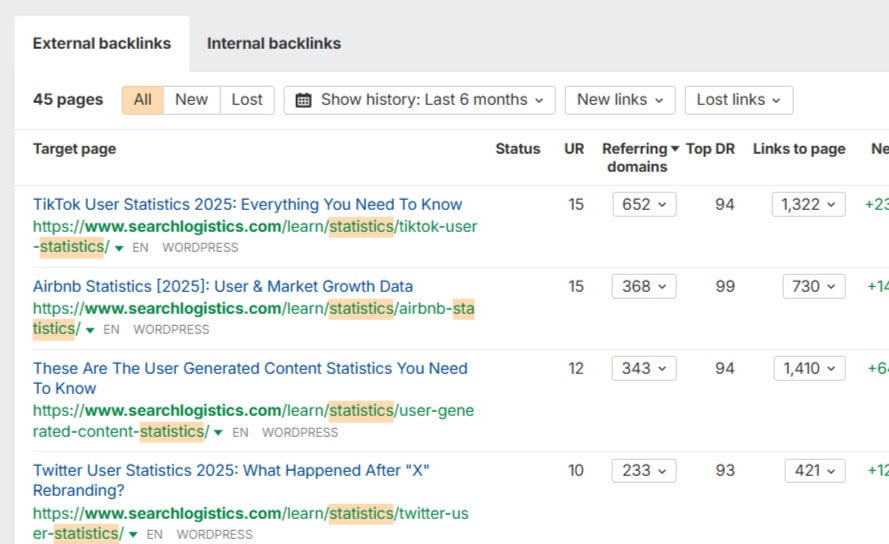
Just one link insert in a quality piece of content can have a significant effect on your brand signals.
And here’s something else to keep in mind…
Link inserts are easier to build, more affordable and less time-consuming.
That means you can build brand signals at a higher volume without blowing your budget. Pretty smart, right?
How To Build Brand Signals Step By Step
Now you understand how Google and LLMs use brand signals and why they are so important in modern SEO.
Follow this step-by-step process to build new brand signals for your business.
✅ Step #1: Audit Your Current Brand Presence
Before building new brand signals…
…you need to understand your current situation.
Here’s how to do a quick audit yourself.
Google Your Brand Name
Search for your brand name on Google.
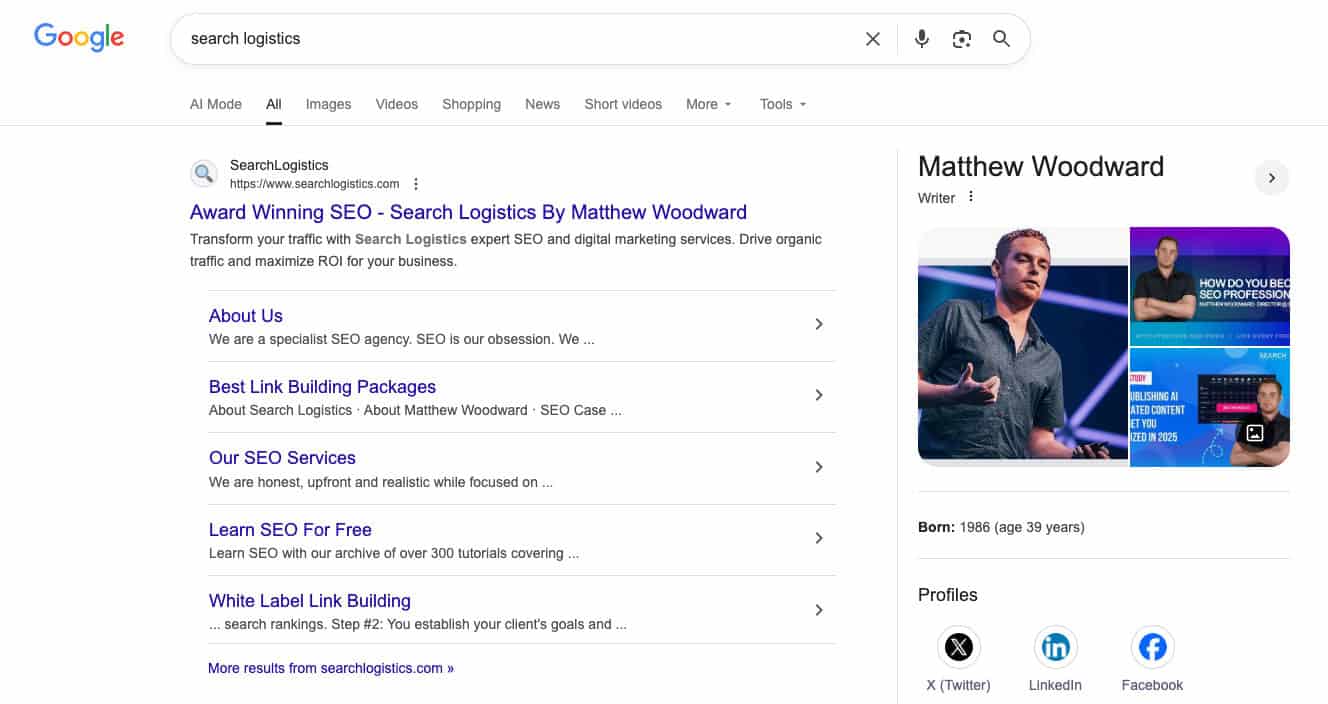
But don’t just look at the first page.
You need to look at the second or third pages.
- What is surfaced beyond your own website?
- Are you mentioned in other authoritative sources?
- Or is it just your own web properties (website, social media accounts, etc) and a bunch of random directory listings?
This will tell you a lot about how Google understands your brand.
By seeing what gets surfaced by Google for your website name, you can see what Google thinks is important.
If it’s quality sites and brand mentions, you have a good foundation to work from. If not, you have some work to do.
Ask ChatGPT, Gemini And Claude About Your Brand
This will be eye-opening.
Go to ChatGPT, Gemini and Claude and use the following prompts one at a time:
- What is [your brand]?
- What does [your brand] do?
- Who is [your brand] best for?
- Can I trust [your brand]?
The LLMs will directly answer from what they know about your brand.
You’ll be able to see what they think of your business, what you offer, who you serve and whether you’re trustworthy.
If they’re drawing a blank or aren’t confident, that’s a clear sign your brand signals need work.
Document Everything
You should have a good idea about what LLMs and Google know about your brand.
Write down key findings, especially about what LLMs say about your services and business in general.
The goal is to identify:
- Inconsistencies between LLM answers
- Any areas AI doesn’t get right (or understand)
- What is being surfaced on Google for your brand name
Take screenshots and notes so you can compare later.
This becomes your baseline for measuring progress with the next steps. Without it, you won’t know if your efforts are actually working.
✅ Step #2: Create Your Brand Descriptor
If you haven’t already, create your brand descriptor now.
This will be the foundation of everything that follows.
Every guest post, every link insert, every mention online will use the brand descriptor to train Google and LLMs about your brand.
Here’s the formula again:
“[Brand] is a [location-based if relevant] [service type] specialising in [core offering] for [target audience].”
Don’t rush this step.
It’s important that you can clearly articulate your-
- Your brand name
- Locations that you serve (if relevant)
- Services/products you offer
- Your primary core offer
- Target audience
…in a concise sentence.
If you can’t do that, how will Google and AI understand your brand?
Pro Tip: Avoid vague positioning like “we help businesses grow” or “we provide innovative solutions”, which doesn’t tell anybody anything.
Be specific about your category, offers and target audience. This is how Google and LLMs will know when to recommend your business over a competitor.
Once you’ve nailed your brand descriptor, write it down and save it somewhere accessible.
Remember:
This will go everywhere online, including your website, social media, review platforms and more.
So it’s worth spending the time to get it right.
✅ Step #3: Identify Target Placements
Your brand descriptor is ready to go.
Now, it’s time to identify some target placements.
You already know that not all websites are created equal.
Your goal is to get placements on niche-relevant, authoritative sites that will move the needle on your brand signals.
Here’s what most people get wrong:
When they think “authoritative sites”, they think major publications like entrepreneur.com, inc.com or Forbes.
Not only is that unrealistic, but your consistency is what matters most when it comes to brand signals.
That means you need to target:
- Industry publications – Target sites for news and insights in your niche. Where does your audience learn about your niche?
- High-authority blogs – Established blogs with real readership and solid domain authority. What are the quality blogs in your niche?
- Resource pages – “best tools”, “top niche websites list”, or “recommended resources” type content in your niche. Use my resource page link building process.
- Complementary sites – Websites that serve the same audience but are non-competitive. Who can you collaborate with?
Here’s the important thing to keep in mind…
Not every site needs to have a 60+ domain authority score.
While domain authority is a factor, relevance, consistency and organic site traffic are just as important.
A placement on a niche-specific blog with a domain rating of 35 can be more valuable than a mention on a massive site that isn’t relevant.
Why?
Because being topically relevant reinforces your brand associations.
That’s the end goal!
Create a list of 50 realistic targets using the four types of sites above. You’re aiming for a mix of higher authority sites with niche blogs/publications.
That’s the sweet spot for building brand signals.
Struggling to find good target opportunities? Check out my link building strategies tutorial.
✅ Step #4: Build Placements Systematically
With your target list in hand, it’s time to do some outreach.
Here’s the thing:
Building quality placements at scale isn’t easy.
It requires a good outreach process, building relationships with publishers and having the time and skill needed to execute well.
You’ve got two options:
Option #1: Do It Yourself
Run a complete outreach campaign yourself.
This means using the right link building tools, coming up with an effective approach, doing outreach to publishers, building relationships with site owners and negotiating link placements.
You’ll also need to have a process in place to create the content when you secure a guest post or link insert.
This works.
But… it’s slow, time-consuming and requires a significant amount of experience before you get it right.
Option #2: Outsource To A Link Building Service
Unless you already have significant prior experience in link building, outsourcing your needs is often the best option.
That’s where LinksThatRank comes in.

You simply select the links you need and they will handle the rest, including:
- Finding relevant opportunities for your business
- Publisher outreach and negotiation
- Guest post content creation
LinksThatRank are the best in the business when it comes to ordering the links you need and delivering quality placements that deliver results.
That’s exactly what you need when improving your brand signals.
Consistency Is Key
Whichever option you choose, consistency is the most important thing.
A good starting point is 5-10 quality placements per month. Mix up guest posts for deep brand positioning with link inserts for volume and speed.
Remember:
Don’t try to do everything at once.
Focus on systematically building links, and your results will compound over time. That’s how you will win!
✅ Step #5: Monitor And Compound
Here’s the most important thing:
As you start to build more brand signals using your brand descriptor in guest posts and link inserts, you need to monitor your results.
It sounds obvious, but you’d be surprised at the number of SEOs and marketers who don’t measure their results properly.
What should you monitor?
Rinse and repeat step 1 of the process:
- Google your brand name, as you get more placements
- Ask LLMs like ChatGPT, Claude and Gemini about your brand
- Track your non-branded SEO rankings
All of these should be going up.
When you Google your brand, you should start to see the sites your brand is mentioned in surfaced in the SERPs.
LLMs will start to answer the prompts with information from your brand descriptor.
And because you’re building relevant branded links, you should start to see your rankings and traffic increase as well.
That’s why I love this strategy so much…
You’re building the brand signals needed to be recognised in Google’s entity system and LLM training data, while also boosting your SEO.
Who doesn’t want that, right?
Keep in mind that this isn’t an overnight strategy.
Building brand signals takes time.
But if you’re consistent and stick to the process, you can reap the rewards over competitors that won’t adapt.
The Compounding Effect
Here’s what makes this strategy so powerful…
Each placement compounds over time.
What we’ve realised is that after building brand signals for 9 months, each placement works together to create strong brand signals for Google and AI large language models.
That guest post you placed 6 months ago is still teaching Google about your brand today. And by now, it’s linking it to other placements you built.
The more placements you build, the stronger the signals…
…The stronger your signals, the more Google and AI trust your brand.
And it reinforces that all the other placements are accurate, establishing you as a trusted source and strengthening your connection to key non-branded searches.
The whole strategy compounds together!
Compare this to a marketing strategy like Google Ads.
Not only are you paying for every click, but the moment you turn off the ads, you also turn off the traffic.
Now consider the trajectory of building brand signals…
- In Month 1, you build the initial signals for Google and AI to understand your brand.
- In Month 6, Google understands your brand as a distinct entity, and LLMs understand how your brand relates to the services/products you offer.
- In Month 12, you are in AI recommendations regularly and dominating the SERPs for important keywords.
- By Month 18, you’ve built a competitive moat around your business that is not easily taken away.
That’s a long-term advantage that your competitors will struggle to replicate quickly.
The bottom line is this:
Brand signals are an investment. Every placement you build today continues working for you months and even years down the line. And most of your competitors haven’t even caught on yet.
Ready To Build Brand Signals That Work For Google and AI?
Most businesses are not thinking about brand signal right now.
But that won’t last forever.
The businesses that start building brand signals today will have a serious advantage as AI search and discovery grow and Google leans more on its entity system.
LinksThatRank specialises in building quality guest posts and link inserts that establish your brand across relevant, authoritative sources.
- Guest posts – Quality placements on trusted, relevant websites
- Link Inserts – Faster impact at a lower cost by getting placed in aged, authoritative content
- Discounted Packages – Save 15% off with a personalised done-for-you link building package
- Volume Discounts – Save up to $30 per link with larger volume orders
Ready to get started?
LinksThatRank will take care of the brand signal link building while you focus on growing your business.

Wrapping It Up
Brand signals are no longer optional.
Google and LLMs only want to recommend brands they know and trust.
If your brand exists only on your website, you will struggle to drive any meaningful organic traffic in the future.
The good news is that building brand signals online doesn’t need to be complicated.
The Consistent Brand Descriptor Strategy gives you a clear plan to create quality signals online that AI and Google will notice.
Spend the time to create your brand descriptor NOW.
Then, start getting it placed with authority-building guest posts and link inserts.
Consistency is the key. Start building today and take advantage of the compound effect.