





































 Subscribe to my YouTube
 Join My Facebook Group
 Connect on Linkedin
 Free SEO Tutorials
 SEO Case Studies
 Links That Rank


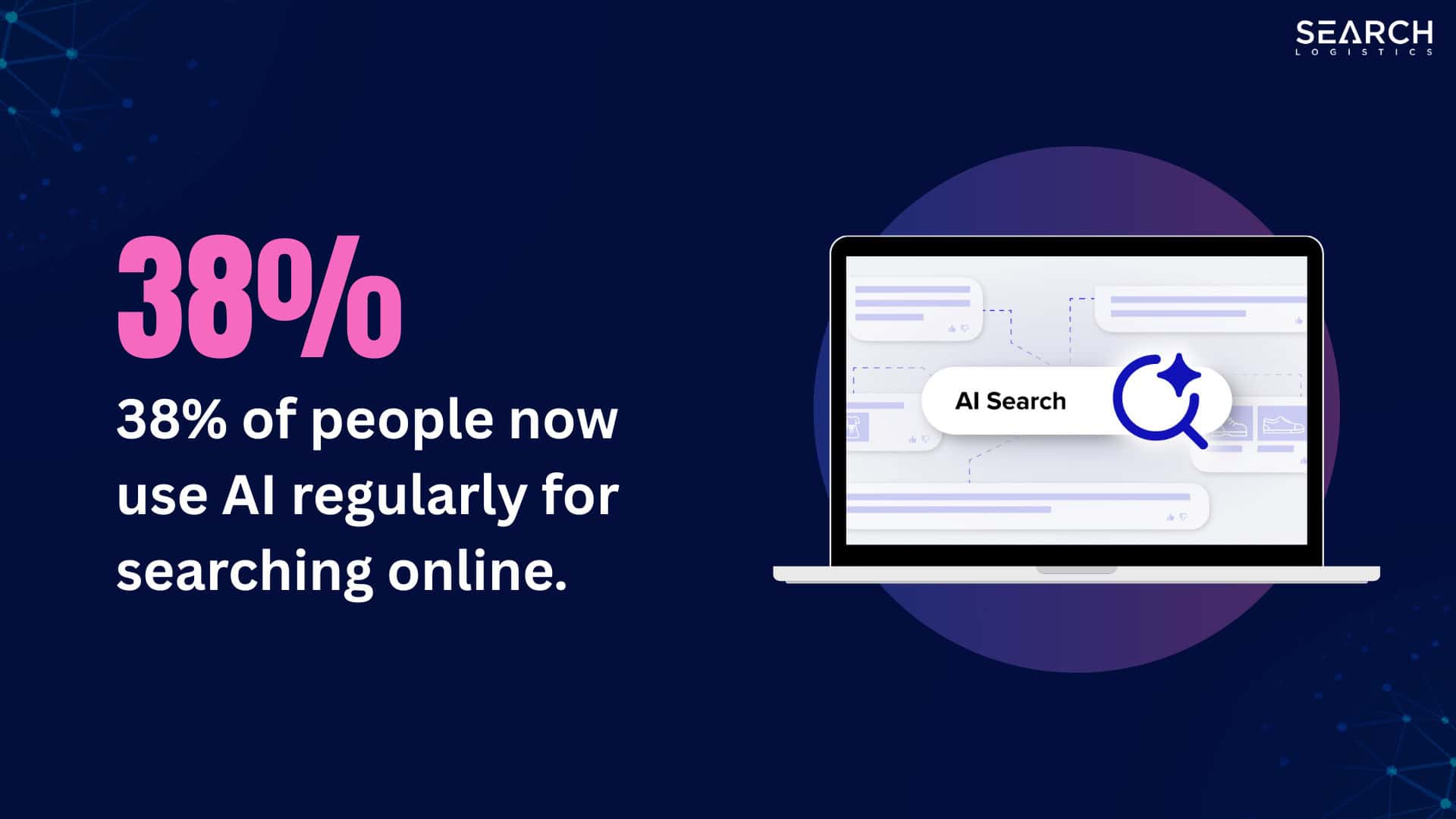
38% of people now use AI regularly for searching online.
37% of consumers start a search with an LLM instead of using traditional Google search.
The problem?
Most SEOs and marketers still aren’t sure what to do about it.
Google AI Overviews, ChatGPT, and Perplexity are changing how people search and discover information online.
Does that mean traditional search is dead?
No, not at all!
Google still has 90% of the entire search market share and sends 345x more traffic than AI search engines.
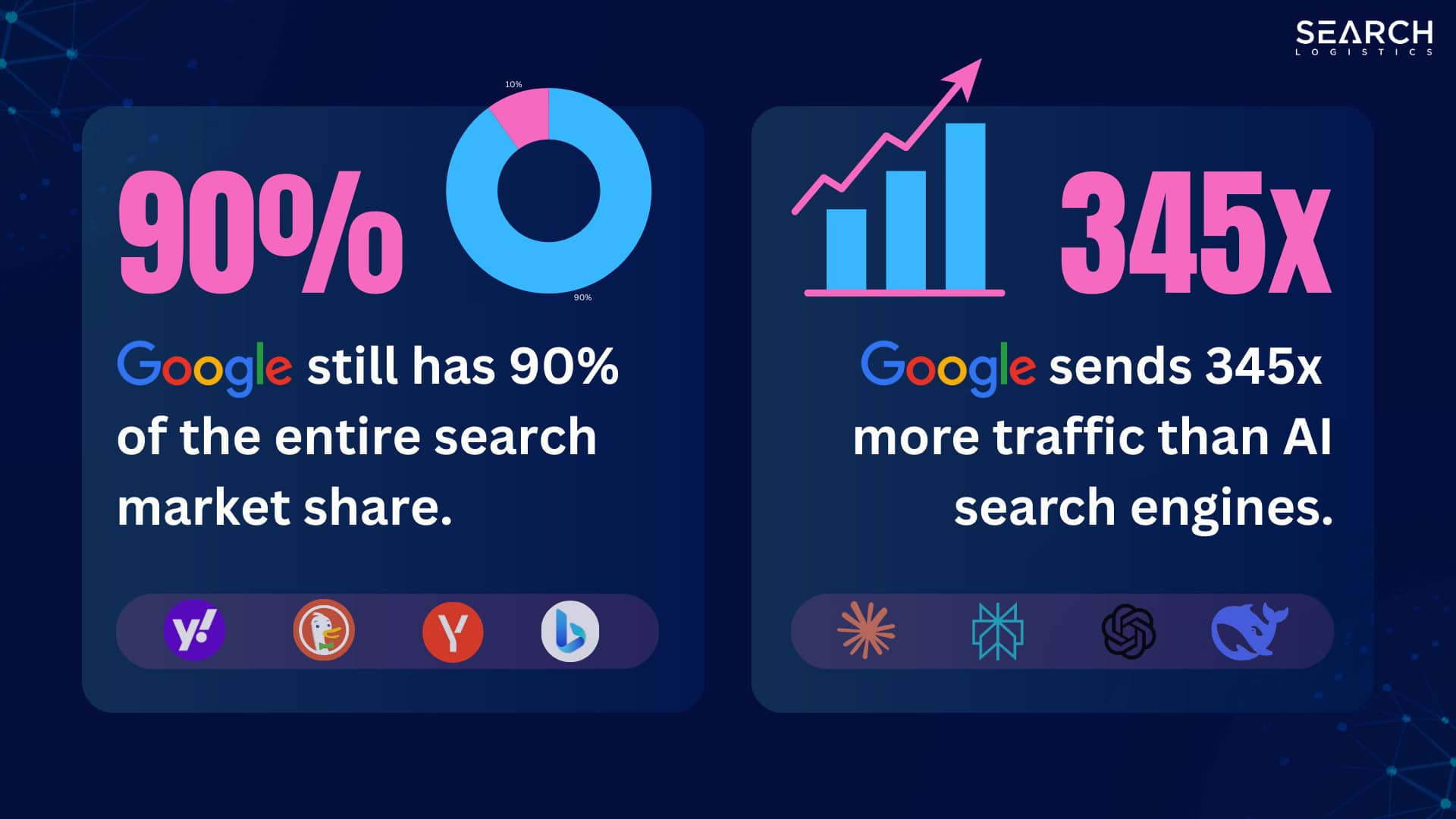
And with the introduction of AI Overviews, they’ve merged traditional search with AI-powered answers to create a hybrid search engine.
The truth is that SEO isn’t dying.
It’s just evolving – fast.
So to find out what’s really going on and help you prepare for the future, I put together a list of these AI SEO statistics that show where SEO is right now and where it’s going.
What Will I Learn?
Key AI SEO Statistics
These are the essential AI SEO statistics you need to know:
-
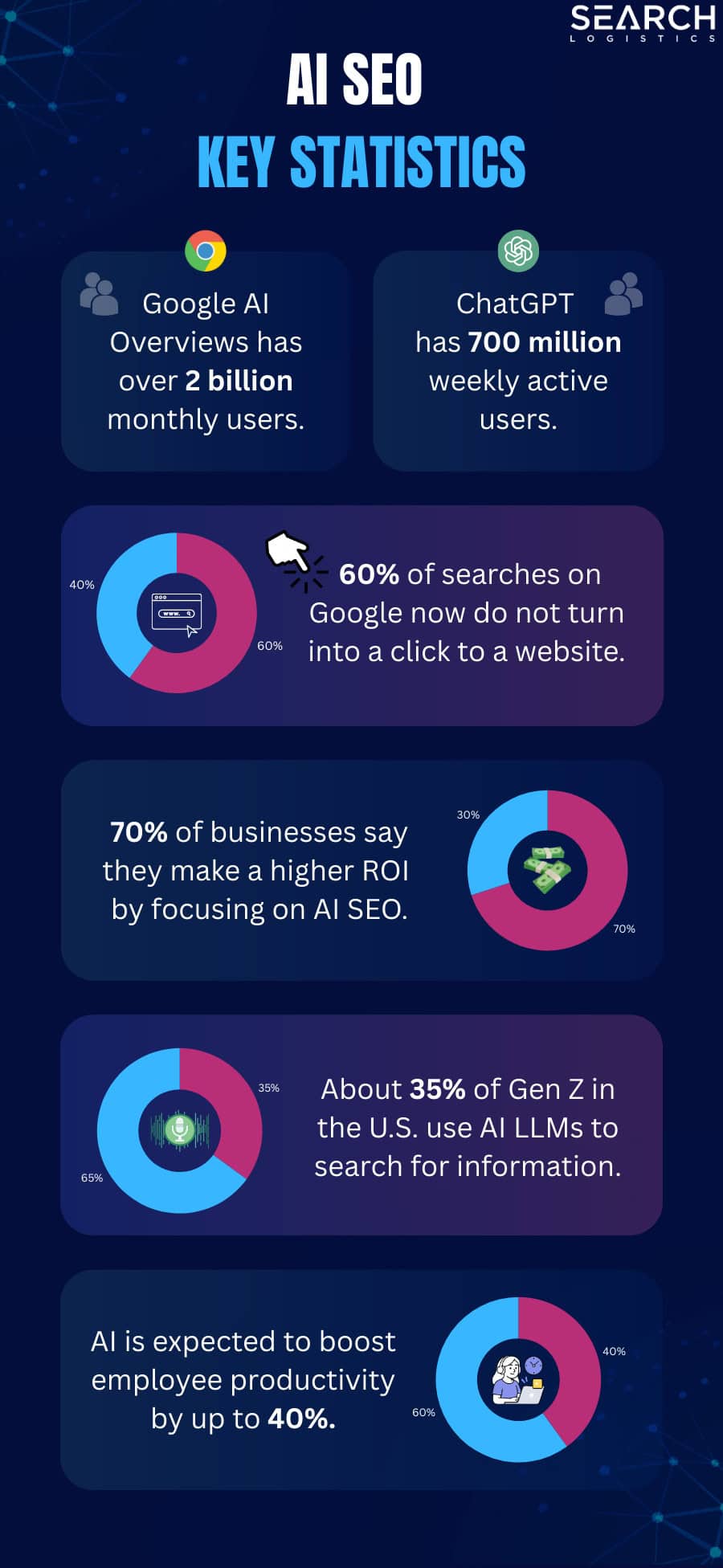
- Google AI Overviews reach over 2 billion users every month
- ChatGPT has 1 billion weekly active users
- Experts predict that website traffic from AI search could surpass organic traffic from traditional search by 2028
- 60% of searches on Google now do not turn into a click to a website
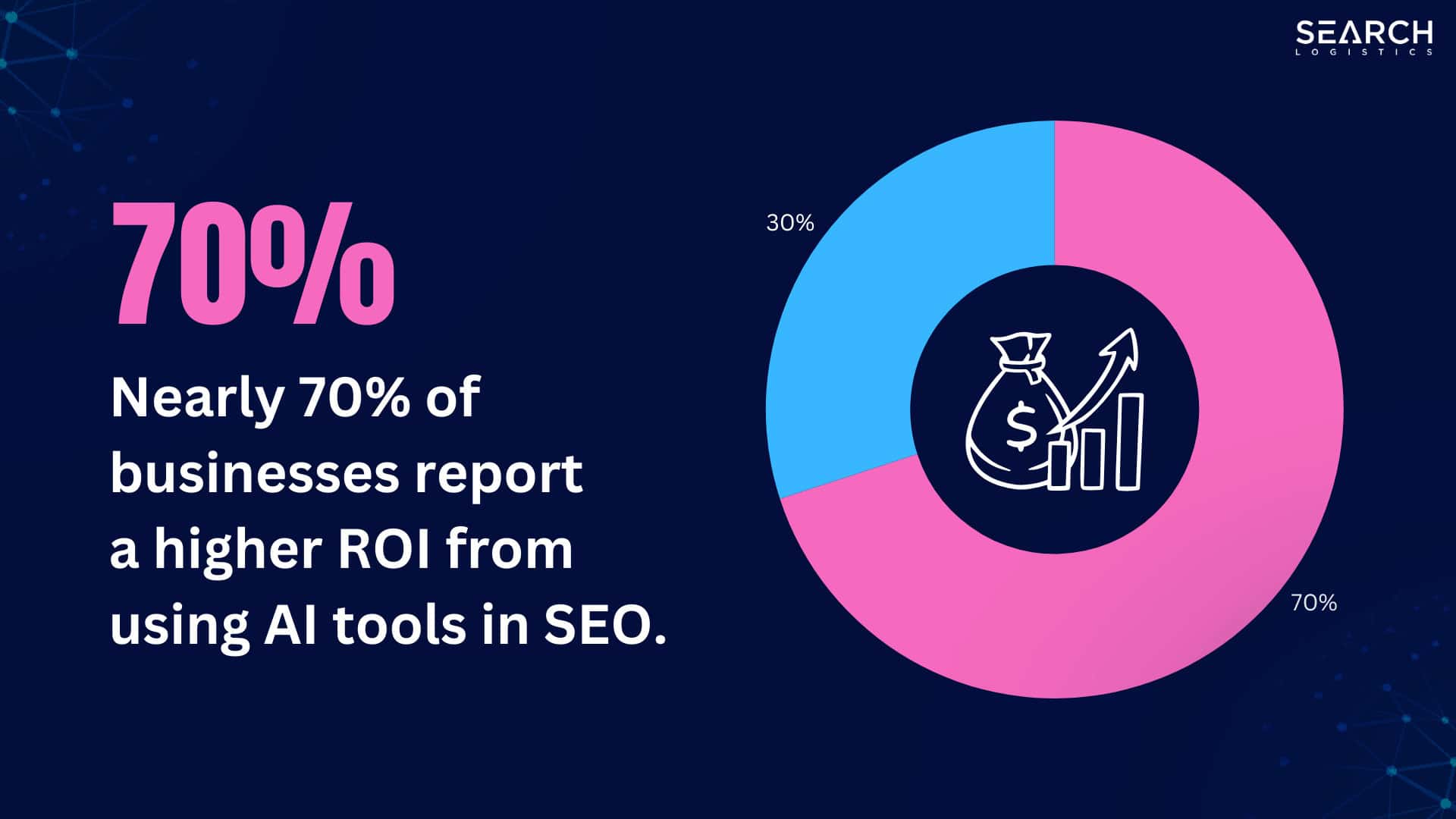
- 70% of businesses say they make a higher ROI by focusing on AI SEO
- About 35% of Gen Z in the U.S. use AI LLMs to search for information
- 90% of users find it easier to use voice with AI tools, accelerating the adoption of voice search
- AI is expected to boost employee productivity by up to 40%
- Companies that use AI to improve their customer experience will achieve an estimated 25% more revenue than companies that don’t
- Google still sends up to 345x more traffic than all other major AI search engines combined including ChatGPT, Gemini, Claude and Perplexity
With all that in mind, let’s jump into the AI SEO statistics, findings and trends.
AI Impact On SEO Performance
With the changes that AI is having on the SEO industry, you can expect an impact on your overall website performance.
It’s completely transforming how SEO professionals create content, drive results and track campaign success.
Let me break down exactly what’s happening.
Content Creation
The first major sector that AI disrupted was creating written content.
87% of marketers and SEOs use AI for tasks such as-
-
- Brainstorming
- Outlining
- Drafting content
AI is being used for the first foundational task of content creation.
Then, a human can go over the top and add the extra pieces that take content from average to high-quality.
And that makes sense, right?
AI has been trained on essentially all known information and can search sources in seconds.
What would take a human 2 hours to do in terms of brainstorming, research and drafting can be done in less than 3 minutes by AI.
It speeds up the time to create quality content!
More than that…
47% of ecommerce sellers use AI to write and polish product descriptions.
With AI being able to understand images, it can draft reasonable-quality descriptions in seconds.
70% of companies say they appreciate the fact that ChatGPT helps them create content faster.
The bottom line is that AI should be a part of your content creation process, whether it’s blog content, articles or even product descriptions.
AI Content Creation & Traffic
74% of all new content produced on the web today is written by or with the help of AI. That means only 26% of all new content produced is human-written.
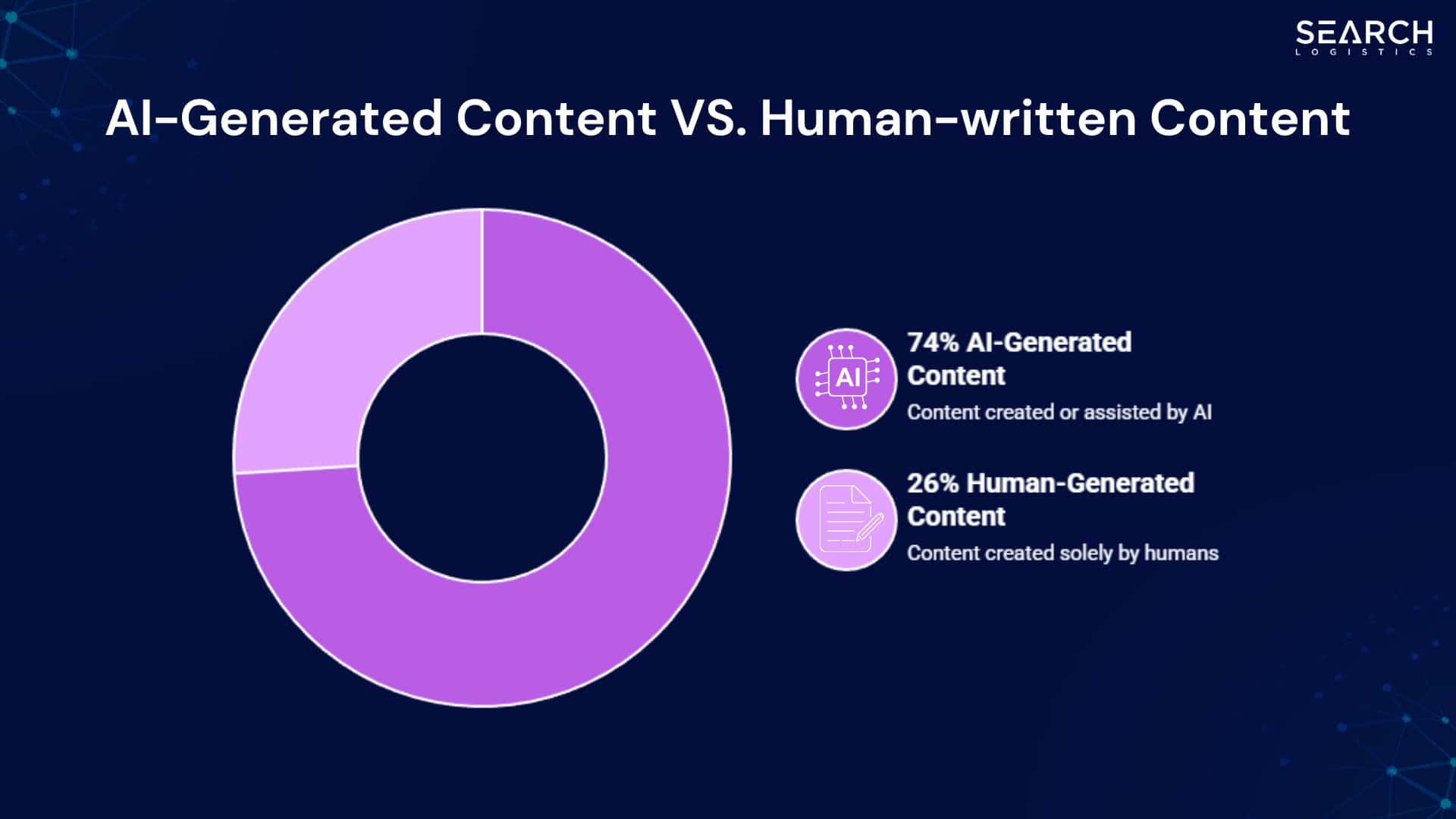
For most users, AI content has become a core part of their overall workflow.
But purely AI-generated content rarely reaches the 1st page of Google.
While you can use AI to research, outline and help create a first draft, your final content should be human-written.
What kind of content does AI like the most?
These are the top types:
-
- “Best of” content
- Product pages
- In-depth guides
AI likes skimmable, in-depth, data-heavy content that it can quickly understand and summarise.
This type of content should become a priority for you if you want to be featured in AI answers.
So, should you focus on AI search exclusively?
Short answer: No.
Google sends more than 345x more traffic than all the major AI search engines like ChatGPT, Gemini, and Perplexity combined.
And AI only makes up less than 1% of all web referral traffic.
An Ahrefs study also showed that websites that receive less than 10,000 visitors per month can expect about 0.3% of their traffic from LLMs.
The truth is that Google is still the number one organic traffic provider for all website owners.
While AI search should be something that’s on your radar, traditional Google search traffic is still king.
Content Quality & E-E-A-T
One of the biggest critiques of AI is that it doesn’t produce “quality” content.
And for good reason…
“AI slop” is a word that gets thrown around regularly, as AI content tends to be thin and offers very little unique insights.
That’s why 93% of marketers edit or significantly change AI content before publishing.
Human oversight is a must when using AI to help create content.
AI hasn’t experienced anything.
So it often struggles to demonstrate the high Experience, Expertise, Authoritativeness, and Trustworthiness (E-E-A-T) standards that Google and AI search engines have.

What’s more?
28% of users said they don’t trust AI-generated search results at all, while 12% of users in the US said AI-powered search results are more trustworthy.
What’s clear is that AI should be a part of your content creation process. But human oversight and unique input are essential.
If you’re not using AI to help with content creation, you will get left behind.
But if you overuse it, the content will lack the quality and unique insights needed to deliver results.
SEO Performance & ROI
Nearly 70% of businesses report a higher ROI from using AI tools in SEO.
And that’s not all…
58% of marketers believe that AI helps them create a more personalised experience for their customers and plan to use AI for content generation more.
52% of marketers say that AI has helped them improve their efficiency.
What does this tell us?
AI tools can help you:
-
- Create more personalised content
- Improve the speed at which you execute
- Increase your ROI on campaigns
That’s huge!
AI-driven campaigns are leading to significant increases in content quality, efficiency, and ultimately your ROI.
Brand Visibility In AI Search
But what about ranking in AI search?
That’s a different story…
26% of all brands have zero mentions in Google AI Overviews.
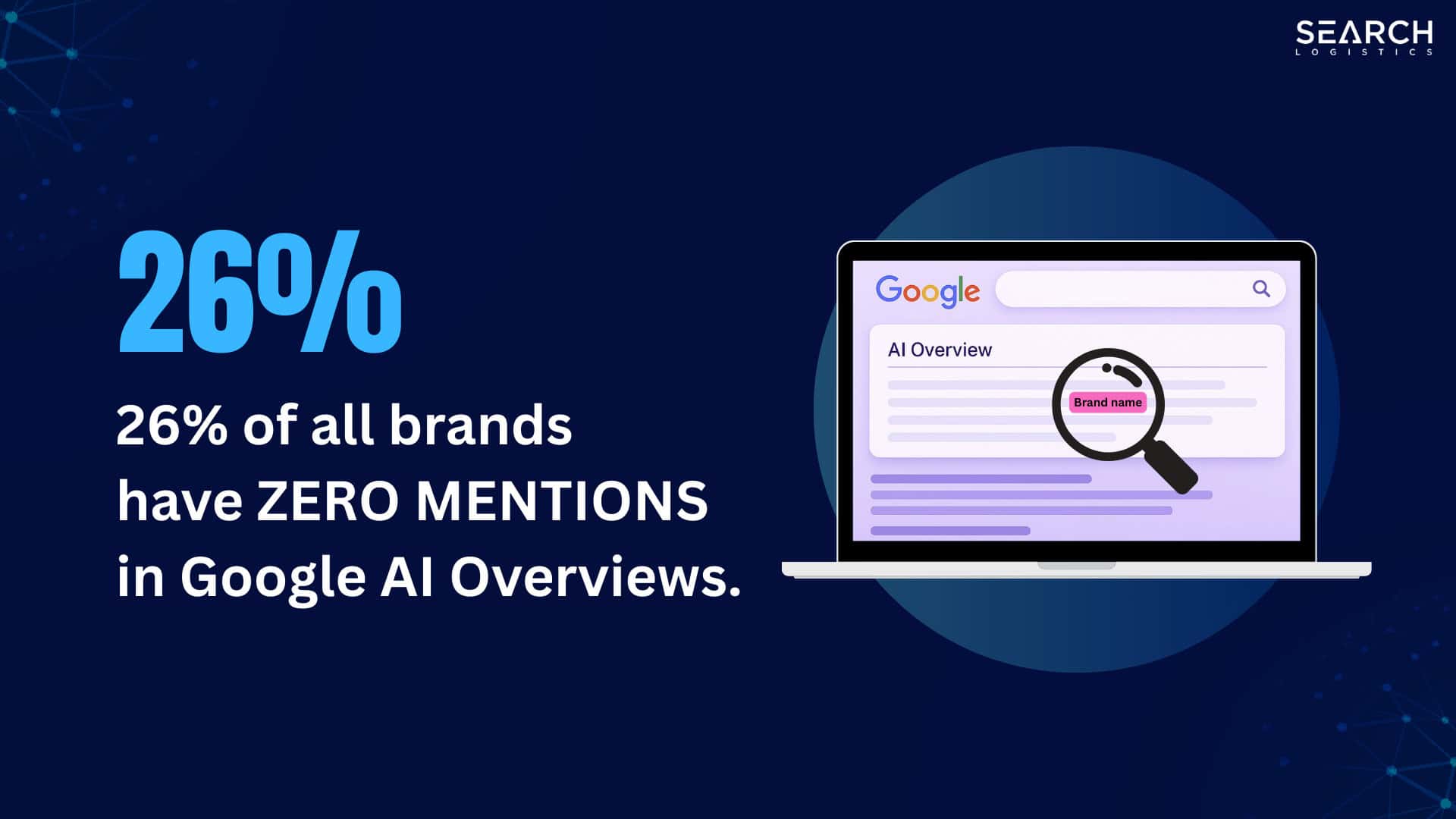
More than that, the top 50 brands appearing in AI account for 28.9% of all citations and mentions.
Brands in the top 25% of all web mentions earn over 10x more Google AI Overview mentions than the next 25% of brands.
But it’s not all bad news. 63% of marketers reported that Google AI Overviews positively impacted their organic traffic or rankings. While it’s harder to rank in AI Overviews, it’s also extremely valuable.
What’s the big takeaway here?
Building brand signals across the web is essential to getting more citations and mentions in AI search in general.
The best way to do that? Get mentioned in content that AI already trusts.
New SEO Metrics
AI search is eating a lot of clicks.
60% of all searches done on Google are now zero-click searches.
That means the AI Overview or AI Mode is answering 6 out of 10 searchers, which leads to the user not clicking through to a website.
Why does this matter?
Less traffic for one. But with fewer clicks going to external sites, SEOs are shifting focus from organic traffic volume metrics to mentions in AI.
The most important new metric is called “AI Visibility”.
It measures how often your brand is mentioned in AI search and what topics or prompts you’re being shown for.
The big switch is from volume of clicks to quality of clicks.
AI clicks are 4.4x more valuable to a website than traditional organic traffic, based on conversion rate alone.
SEOs are now focusing on measuring their visibility across different AI models instead of just the volume of traffic.
AI SEO Trends & Predictions
What can we expect from AI SEO in the future?
These are the latest statistics and the trends that are emerging.
Trend #1: Zero-Click Searches Will Increase
AI Overviews have reduced clicks to websites by 35.4%.
And as I mentioned before…
60% of all searches done on traditional search engines like Google and Bing now result in zero clicks to an external website.
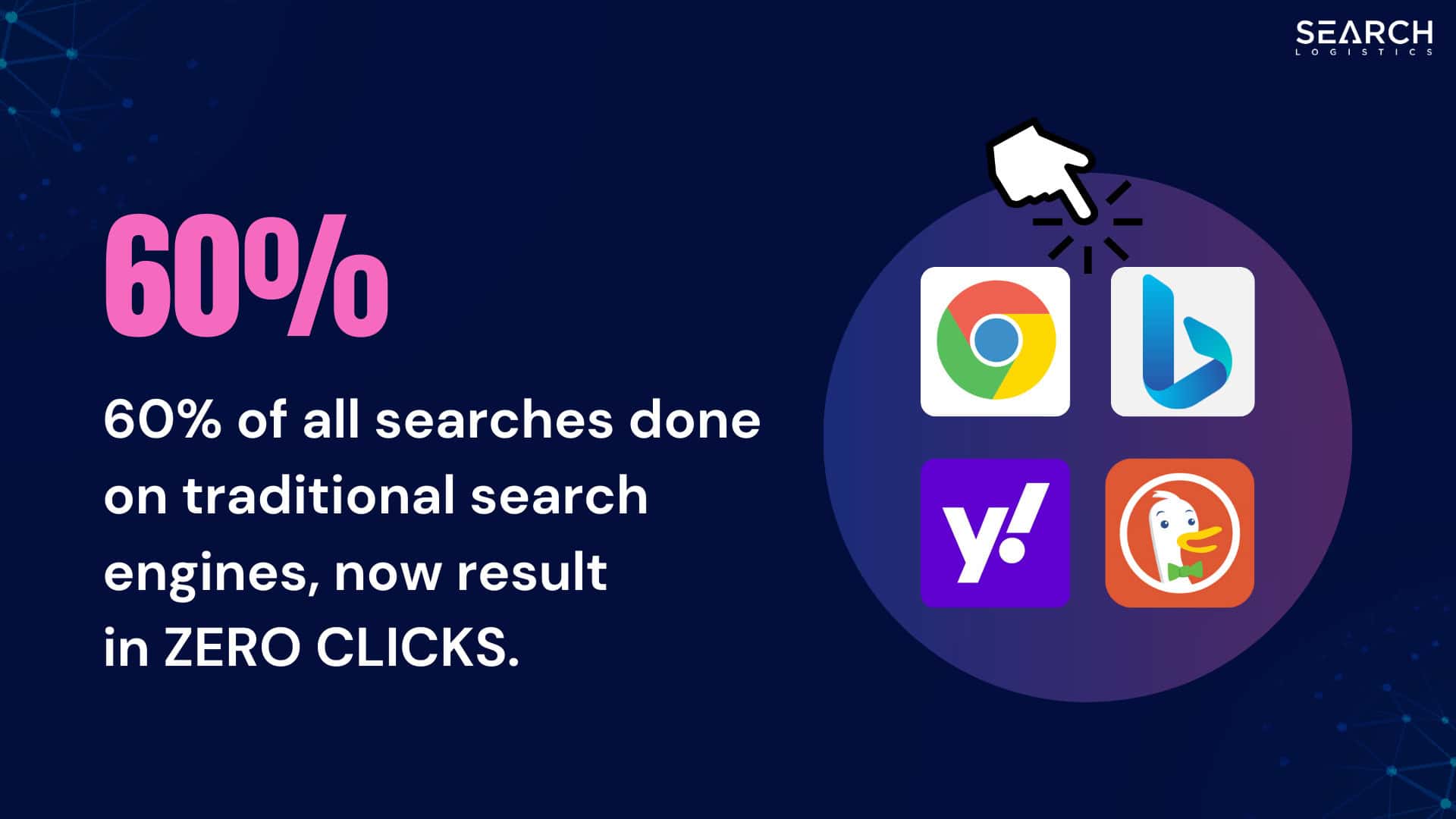
In other words, AI is able to satisfy 6 out of 10 searches.
That’s a pretty big deal!
And that’s not all…
Google “AI Mode” has a 93% zero click rate, meaning that only 7% of all searches in AI Mode lead to a click to an external website.
That’s not a lot.
Experts also predict that AI search traffic may surpass traditional organic search traffic by early 2028.
What does this all mean for you?
Put simply: AI search should be an upcoming priority for your business.
The good news is that most of what is relevant in traditional SEO (technical SEO, content, backlinks, etc.) is also important for AI SEO.
But there are some subtle differences that are worth paying attention to…
Trend #2: Summary-Worthy Content
AI essentially summarises content on the web and personalises it.
That’s why most SEOs are now shifting their content strategy to focus on “summary-worthy” content.
What’s that exactly?
AI prefers to cite content that is easy to skim.
Think-
-
- Headings
- Clear lists
- Direct answers
- Data points
When an AI LLM does a search, it skims the top results and decides which articles it will summarise for the user.
AI favours articles where information is structured well and laid out clearly.
Does that mean you should stop creating content for traditional search?
No!
76% of AI Overview citations are pulled from pages that are already ranking in the top 10 positions on Google.
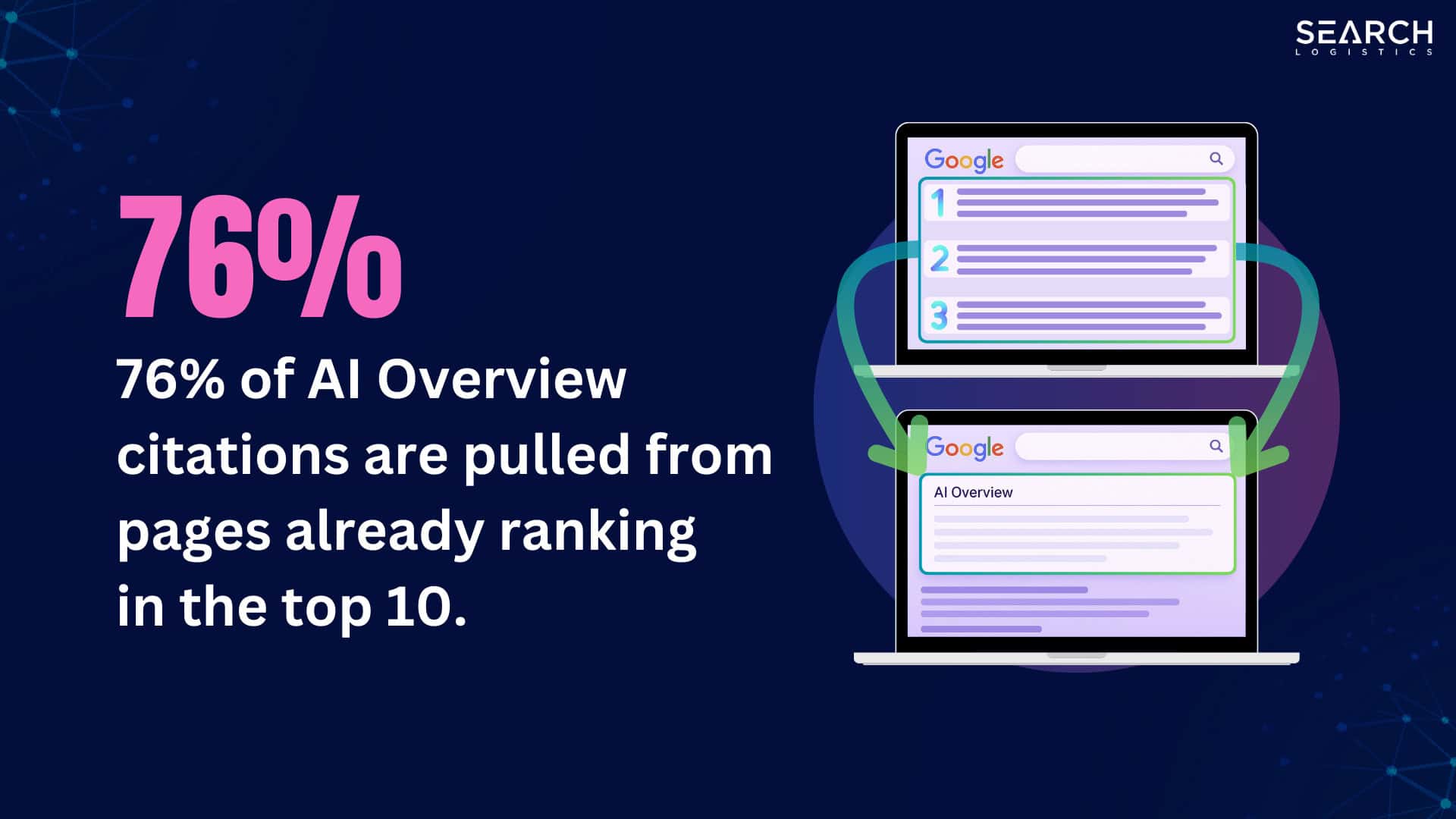
It’s not about completely revamping your content strategy.
It’s about optimising it for AI search as well. Businesses that have an AI SEO strategy capture 3.4x more organic traffic than businesses that don’t.
ChatGPT is the most likely AI model to cite newer or updated content.
Because ChatGPT has 1 billion users, it’s important that you refresh and update your content as well.
Trend #3 – Voice & Visual Search Integration
We’ve all been waiting for voice search takeover for years.
For the most part, it’s been a slow adoption. But it seems that’s about to finally change. And visual search is going to play a role aswell.
🎙️ Voice Search
35% of Gen Z users rely on AI chatbots for information.
They’re not rushing to their phone to type a search out – they just speak to get the information.
More than that?
32% of all consumers use voice search at least once per week, which they would have typed in the past.
27% of people regularly use voice search on their mobile phone.
Why does this matter?
Users speak naturally when they use voice search.
They’re not typing “best coffee near me”, they’re speaking “where’s the best coffee with comfortable seating near me”.
It’s more casual and specific.
AI is also able to give them a more personalised answer, which is the reason why so many people are turning to voice search.
📸 Visual Search
Visual search, powered by AI, is also growing rapidly.
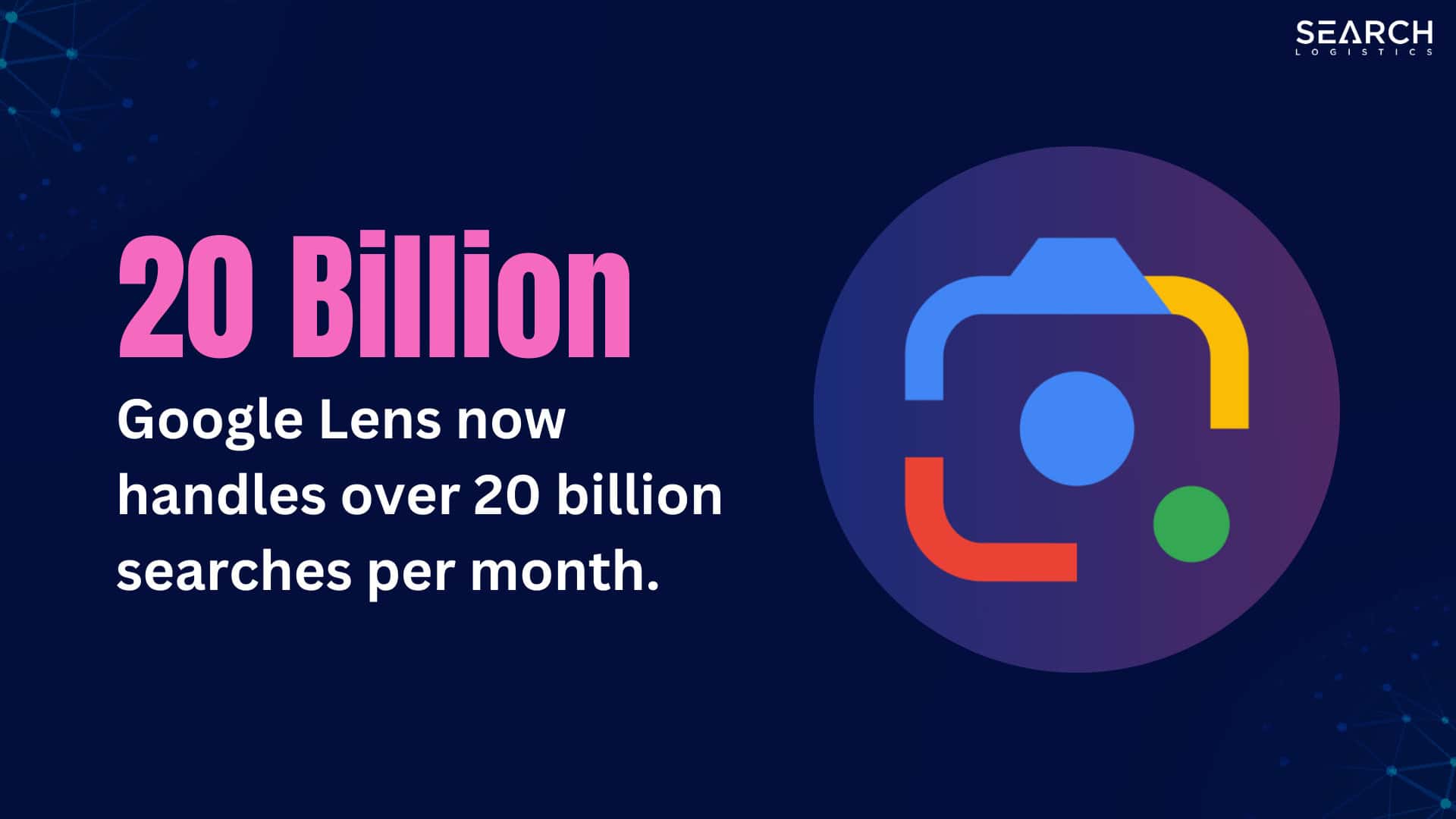
Google Lens now handles over 20 billion searches per month, of which about 20% are shopping-related and 25% have commercial intent.
How are people using visual search?
The biggest trend is screenshot and search.
This is when…
-
- An user finds something they like on a platform like TikTok and Instagram.
- Then screenshots it and adds it to an AI platform like Google Lens or ChatGPT.
- Then the AI model shows them where they can buy the product.
This is particularly important for retail and ecommerce.
People aren’t just using text search to find your products. They discover it on a social media platform and then do a visual search to find it.
That’s a completely different customer journey that’s worth paying attention to!
Trend #4: Predictive Search Intent Modelling
AI is now being used by Google to predict what you’re searching for before you even hit enter.
23% of all Google searches end up using the Google autocomplete feature.

This means that Google is literally shaping and guiding almost 1 out of 4 searches through a real-time AI model.
It uses-
-
- Location
- Language
- Past searches
- Trending topics
- Common searches
…to personalise and guess what you’re searching for before you even type it.
This is only becoming more accurate and personalised as AI continues to grow.
Businesses and brands using predictive AI insights see an average customer lifetime value (CLV) increase of 5%-25%.
What does that really mean?
Businesses that take advantage of predictive search are able to increase their CLV significantly.
For SEO, the biggest impact of this is in the way you write content.
You can use AI predictive search to understand all the searches people make when researching a topic.
Then include all of those answers in one piece of content targeting the first search keyword people usually type.
Traditional keyword optimisation is just a starting point now.
You need content that anticipates the users’ needs and answers their follow-up questions before they even know to ask them.
AI SEO Market Growth Projections
The AI search market is expected to reach $750 billion in revenue by 2028.
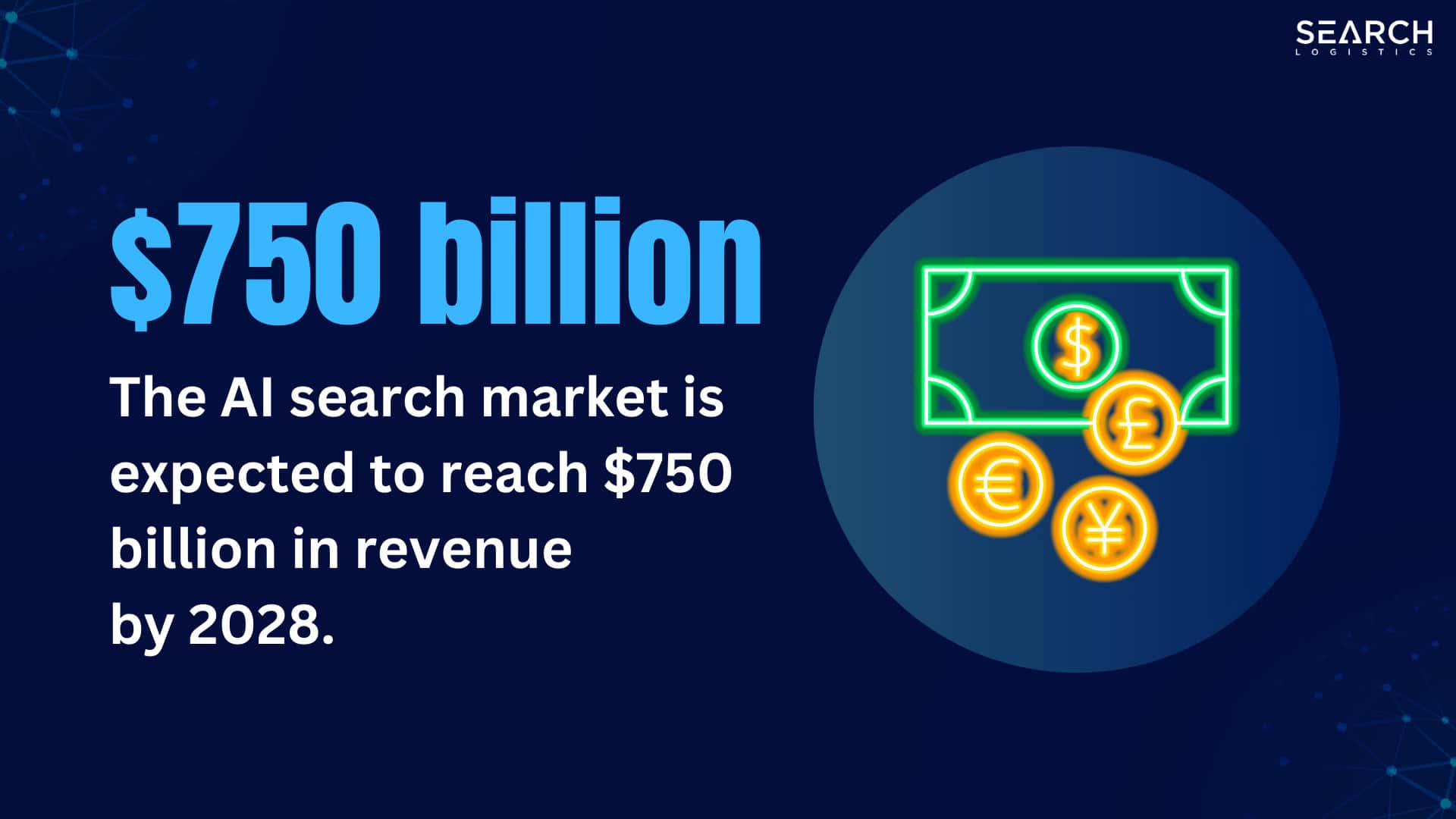
In 2025, it was $67 billion, meaning it’s expected to experience a 1003% increase over the next 3 years.
But the big AI SEO statistics to keep in mind…
AI search traffic is expected to surpass traditional SEO traffic by 2028.
That represents a pretty big shift in the future of search and is why Google invested $75 billion into AI during 2025.
It’s no surprise then that 25% of business owners worry that AI may affect their website traffic.
More than that, 1 in 3 consumers hope that AI tools will be more helpful when it comes to research in the future.
Here’s what’s clear:
-
- Search engines and LLMs are investing more and more resources into AI-powered search.
- On the consumer side, users want more help from AI search tools.
The shift is clear…
AI search will continue to grow over the next few years and could be the primary way users search as early as 2028.
Now is the time to adapt.
It’s also predicted that 25% of all organisations will use AI-powered chatbots as their primary customer service channel by 2027.
User Behaviour & Search Landscape
There are a lot of predictions about AI search and the impact it will have on business, jobs and everyday life.
But the thing that matters most is user behaviour.
Let me explain…
How the everyday user adopts AI will be the key factor in how AI search evolves.
These are the statistics you need to know.
AI Search Adoption
The adoption of AI search has increased faster than most experts predicted.
ChatGPT has over 1 billion active weekly users and is now the fourth most visited website on the planet.
| Ranking | Website |
|---|---|
| 1 | |
| 2 | Youtube |
| 3 | |
| 4 | ChatGPT |
| 5 |
Google’s AI Overviews reach over 2 billion monthly users across more than 200 countries and regions worldwide.
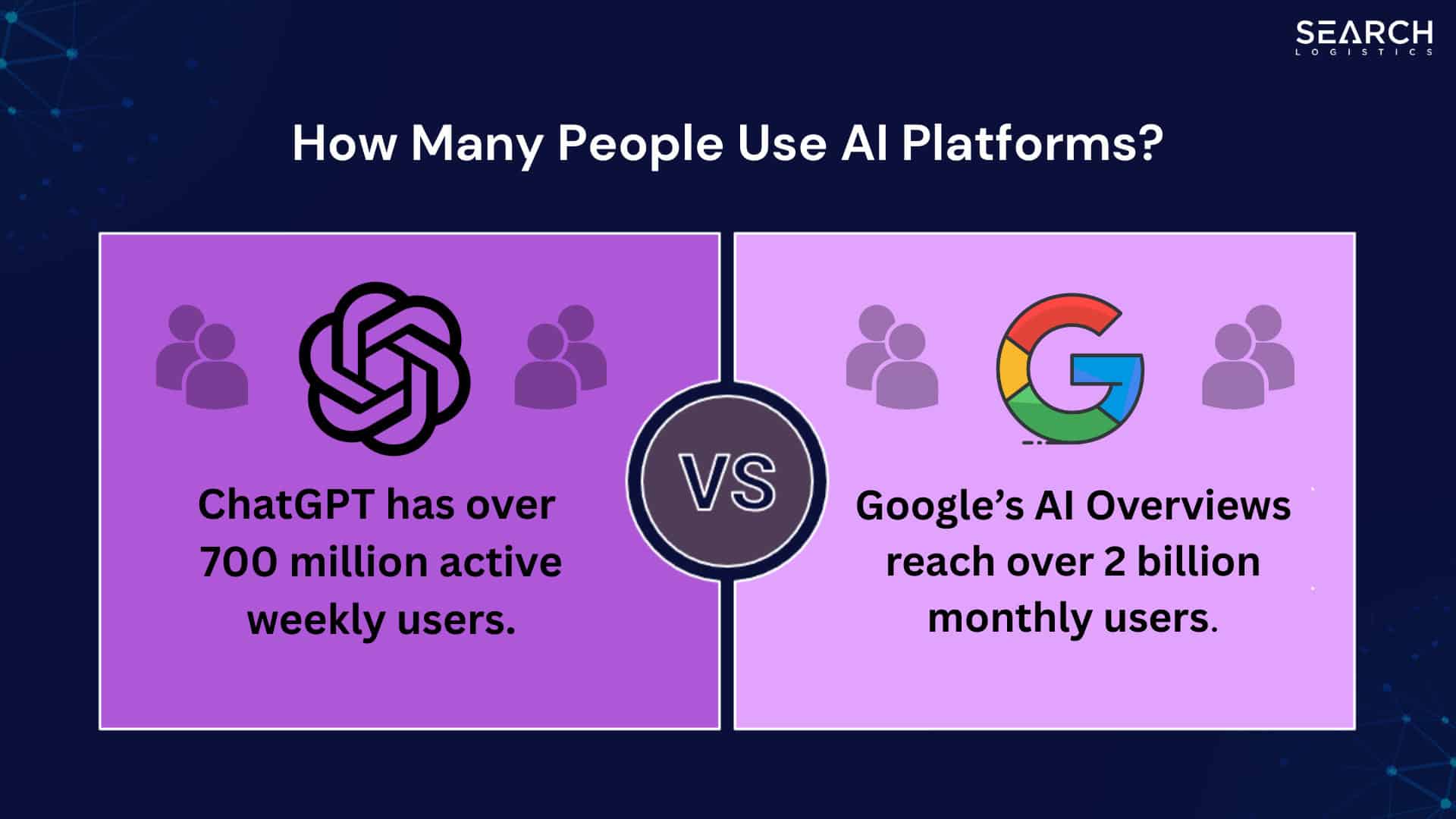
In the first quarter of 2025, AI overviews reached about 1.5 billion people, which represented about 18.3% of the entire world’s population.
AI Overview users increased by over 500 million people throughout 2025.
Right now, Google search is estimated to have about 4.9 billion users worldwide, which means AI Overview usage will only increase.
The top 3 countries that have the highest amount of AI Overviews are:
- Indonesia
- Phillippines
- Mexico
The truth is that Google users didn’t really have a choice with AI Overviews. Google released AI Overviews in the US in May 2024.
They’ve slowly been ramping them up, so they now show on 55% of searches.
Combine this with the fact that 60% of searches are now zero-click – it shows that AI search will only continue to grow.
Currently, 44% of people in the US use AI search as their primary way of searching, compared to just 33% using traditional search engines like Google.
The shift is clear…
Major companies like ChatGPT, Google and Perplexity are focused on building better AI search features, and users are adopting them fast.
AI Traffic & Conversions
So it’s clear that AI search is growing…
…but are website owners actually benefiting?
Short Answer: It’s complicated.
AI search traffic has increased by a massive 527% year-over-year in early 2025.
Now, that’s a huge increase in AI search traffic (user activity on AI platforms), not website traffic.
Remember that while AI search has increased, traffic to websites is decreasing.
It’s estimated that about 1% of all AI searches result in a referral to a website.
Compare that to traditional Google searches, where about 40% of all searches result in a click to a website.
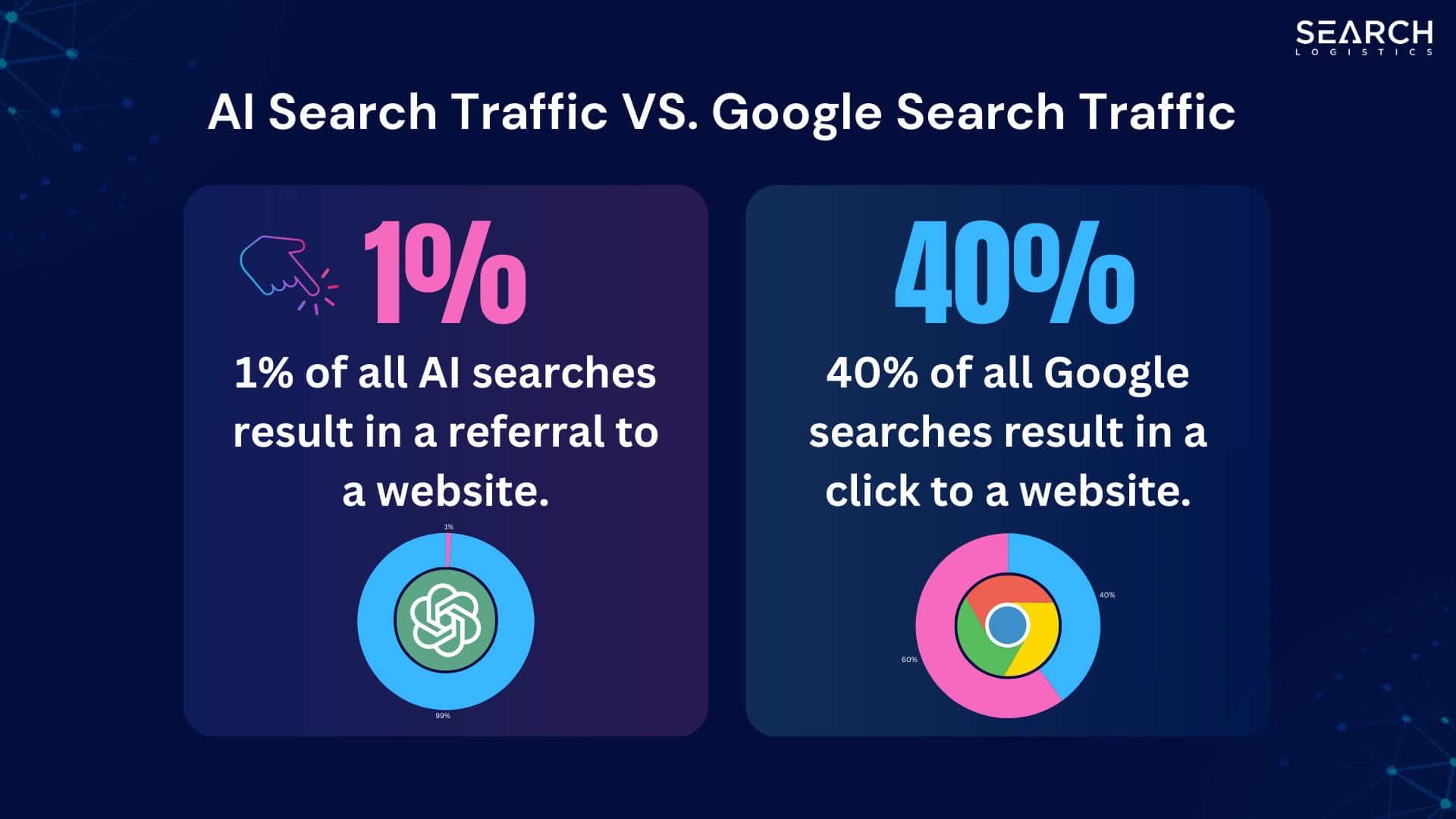
That’s a big difference!
Google’s AI Overview show rate has increased by 116%, doubling since Google’s March 2024 core update.
There are two takeaways for website owners from these statistics:
- AI Search Engines don’t send nearly as much traffic as traditional search engines
- Google’s traditional search should still be the priority for website owners
But don’t neglect how AI search as a whole.
While traditional Google search will still send more traffic, you need to be laying the foundation as AI search starts to grow.
What are the niches most affected by AI search?
These are the industries that AI Overviews show the most for:
| Industries | Percentages |
|---|---|
| Science | 43.6% |
| Health | 43.0% |
| Pets & Animals | 36.8% |
| People & Society | 35.3% |
If your business is in these industries, you will be feeling the effects of AI search the most.
What about the least affected niches?
Those are:
| Industries | Percentages |
|---|---|
| Shopping | 3.2% |
| Real Estate | 5.8% |
| Sports | 14.8% |
| News | 15.1% |
What’s interesting is that shopping is the least affected industry when it comes to AI. This is likely because the end “product” isn’t information or digital.
It’s a physical product where users need to click through to the website to purchase.
Is there any good news?
Yes. AI traffic converts 4.4x better than traditional search.
That means if you can get an LLM to cite or recommend your brand, you generate potentially more conversions than ranking in a Google SERP.
In a future of AI search, traffic will become less important.
Conversions and visibility are more likely to be the main measurements of success in AI SEO.
User Trust & Scepticism
It’s common knowledge that AI makes things up.
That has led to a lot of scepticism amongst users when it comes to AI answers in Overviews and LLMs.
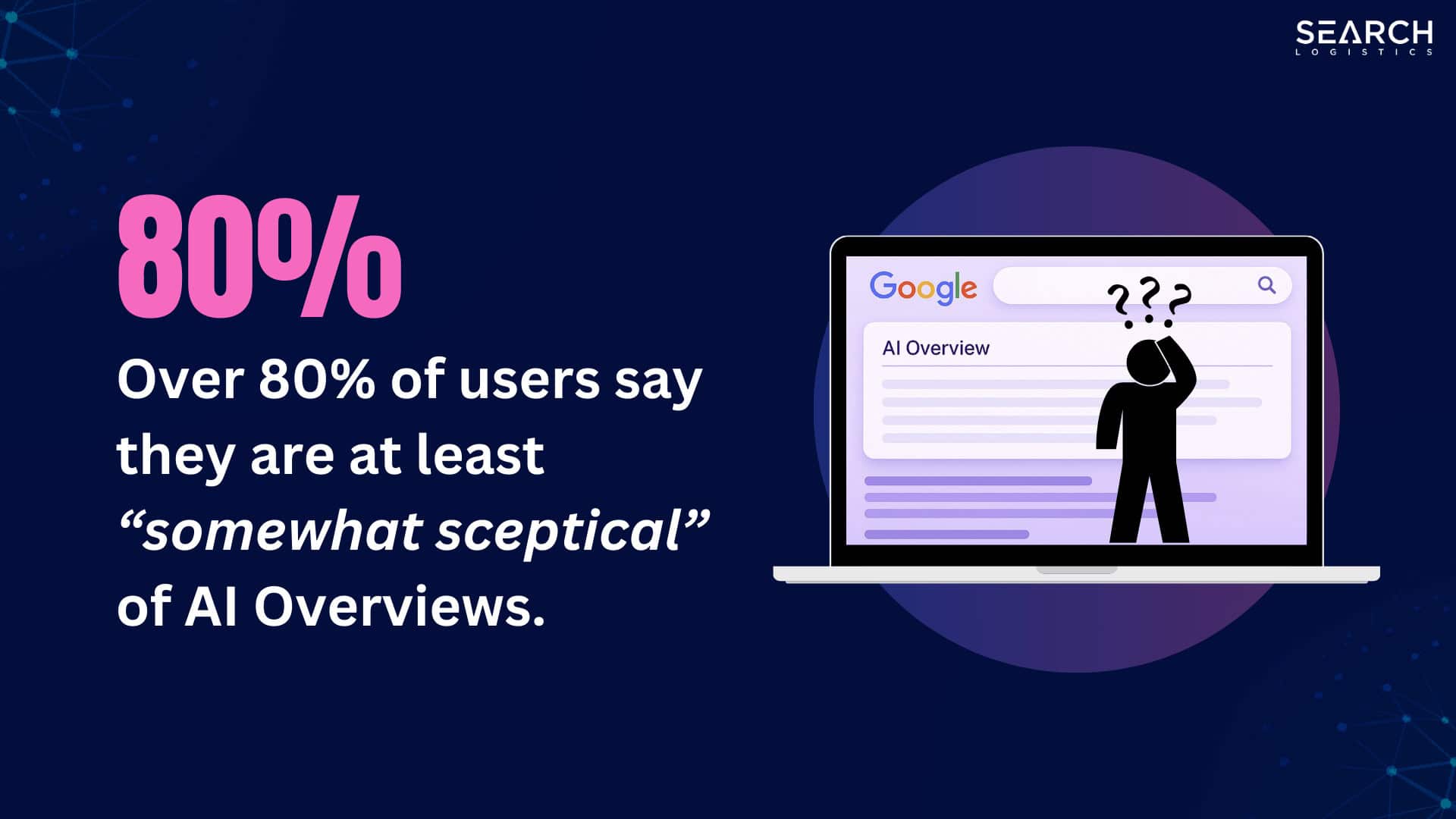
Over 80% of users say they are at least “somewhat sceptical” of AI Overviews, but only 19% of all users click through to sources to double-check information.
Only 5% of Americans say they trust AI a lot when getting information from AI, with the lowest trust in responses related to:
-
- Finance (19%)
- Healthcare (23%)
A further 68% of people say they wouldn’t let AI act or do anything for them without human oversight and approval.
Here’s the interesting part…
The use of AI agents is growing in almost all aspects of life.
But with trust in AI so low, the question is – what percentage of people will adopt them?
There is a clear trend that people value AI assistance as a tool for work and life.
But there is scepticism about how much we can trust AI, especially in important areas of life like finance and health.
The Future Of SEO Jobs
AI is fundamentally changing how SEOs do their jobs.
75% of digital agencies have already launched generative engine optimisation (GEO) and AI SEO services because of how the industry is changing. The fact that SEO are adapting to AI-driven search so quickly means you should too.
And that’s now all…
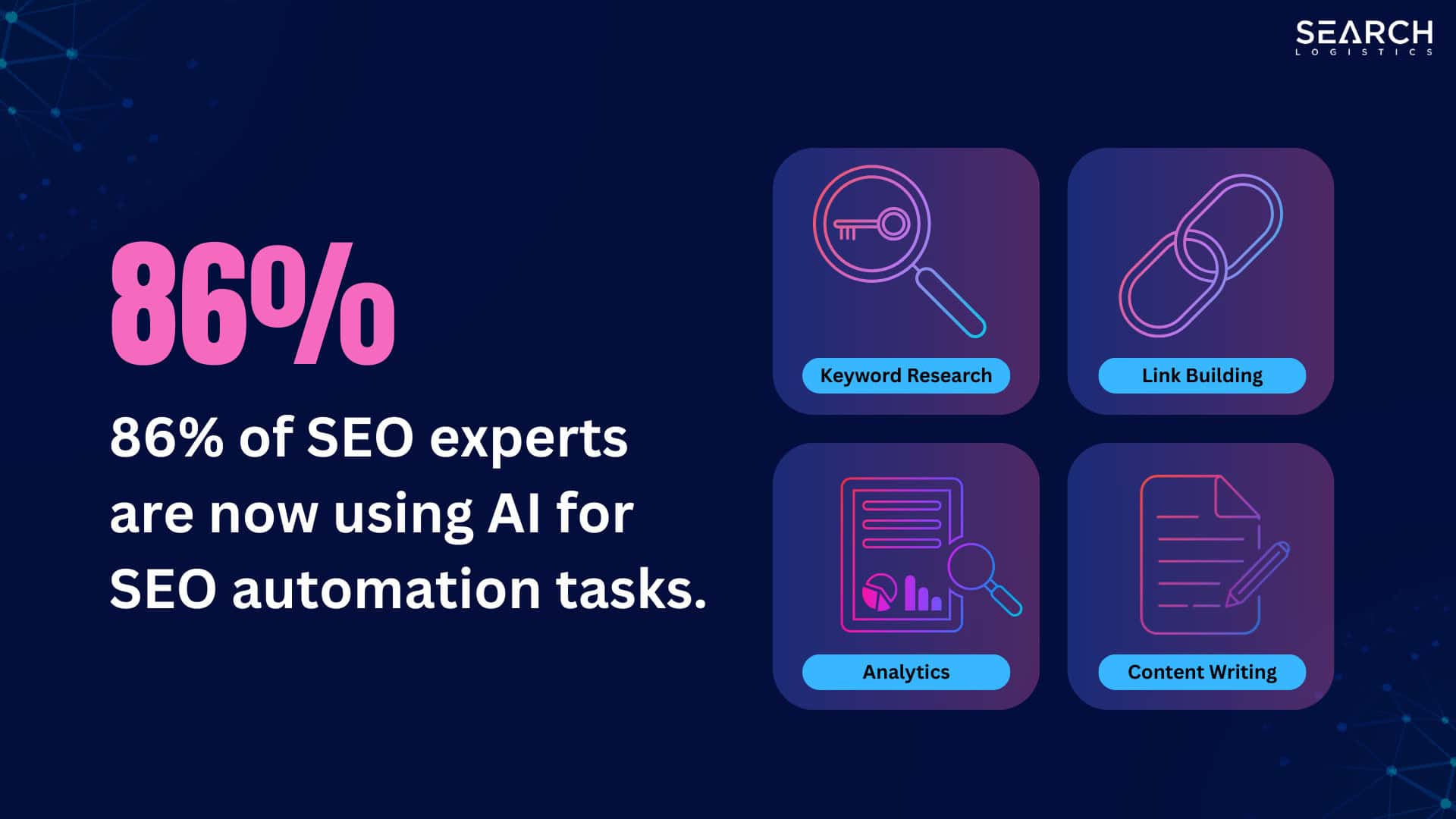
86% of SEO professionals are now using AI for SEO automation tasks like:
-
- Keyword research
- Internal linking
- And metadata
67% of SEO professionals say that AI tools and software improve their search results.
Does that mean AI is taking SEO jobs?
No, it’s just changing the roles of SEOs and the process of how they execute tasks. 75% of SEOs use AI to reduce manual tasks.
SEO roles have changed from lots of manual work to high-level strategy.
AI handles a lot of the tedious work, while SEOs focus on what actually moves the needle.
AI is a productivity tool, not a replacement.
And the numbers back it up…
The truth is that the SEO services market is stronger than ever, with a market size of $83.98 billion. In 2025, it was $74.9 billion.
The entire AI SEO services market is projected to grow to $148.86 billion by 2031, with an annual growth rate of 12.12%.
AI search and AI SEO aren’t threats to the SEO industry. They’re just changing what skills matter most.
Wrapping It Up
AI search is here to stay.
And it’s going to continue to evolve quickly.
But here’s what you still need to remember:
Google still dominates. They send significantly more traffic than AI search engines and are still the major search engine by a long way.
If anything, traditional search isn’t dead…
It’s just evolving!
But AI search will continue to grow, which is why you should start to make AI SEO a priority now.
That way, you’ll position your brand and business to take advantage of it!
Want more statistics posts? Take a look at these blogs: